Best Free Time Pass Games to Play When You're Bored
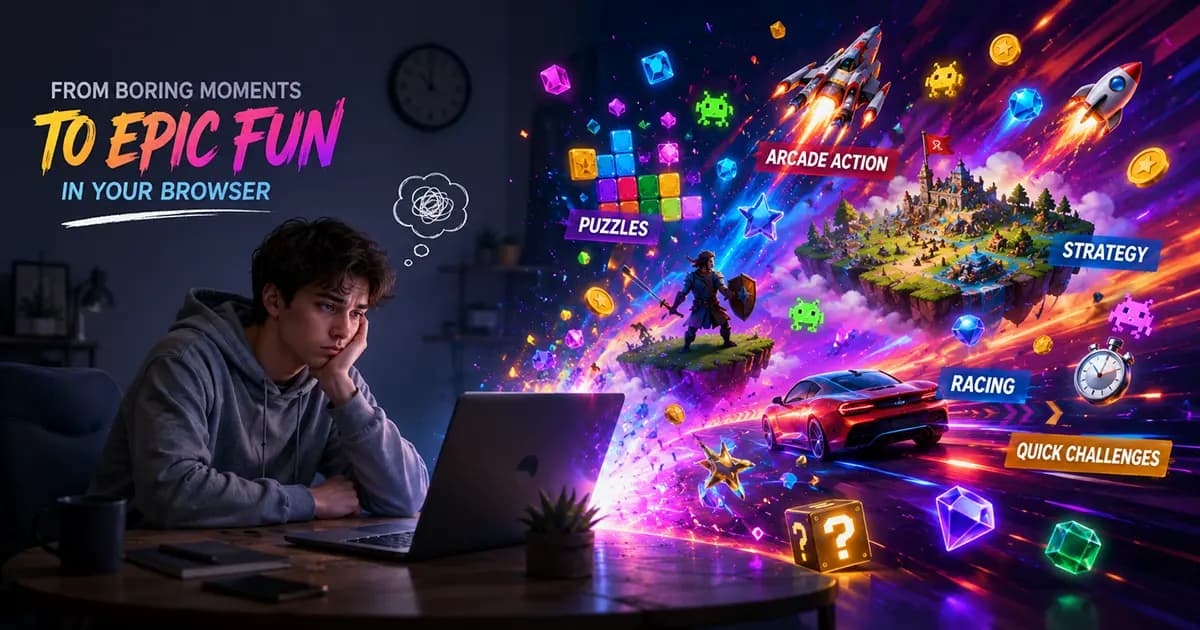
Not all boredom feels the same. Discover the best free time pass games for every mood, whether you want a quick distraction, a satisfying challenge, a relaxing puzzle, or a social game to enjoy with friends.
Format
Curated Article
Reading Time
10 min read
Published
July 4, 2026
Last Updated
October 3, 2026
Written by
Kaushik Hirpara
Developer · Game Reviewer
Kaushik Hirpara is a full-stack developer and game reviewer at Unihfy Games. He does most of the work of bringing games to the site — adapting them to run properly in a browser, getting them working on phones, playing them, and writing up what players need to know.
View Author ProfileDon't Choose a Game—Choose the Feeling You Want
A fast arcade game can be the perfect answer when you simply want to fill a few quiet minutes with something enjoyable. The immediate feedback, simple controls, and short sessions make these games ideal when your attention keeps drifting and you don't want to commit to a larger experience. They replace aimless scrolling with a clear objective, whether that's beating a high score or surviving one more obstacle.
On other days, boredom comes from a lack of mental stimulation rather than a lack of activity. Puzzle games, strategy games, and word challenges work well because they give your brain a satisfying problem to solve without becoming overwhelming. If your evening feels unusually long, you may even enjoy deeper experiences that reward patience, planning, or multiplayer cooperation instead of quick reactions. Throughout this guide, we'll look at games that fit these different moods so you can spend less time deciding what to play and more time actually enjoying it.
Sometimes Repetition Is Exactly What You Need
Not every game has to surprise you with new mechanics every few minutes. Titles such as Cookie Clicker show that repetitive progression can be strangely satisfying when your goal is simply to occupy your mind for a while. Watching numbers increase, unlocking gradual upgrades, and setting small personal milestones gives your free time a sense of direction without requiring constant concentration.
This style of game works particularly well when you aren't looking for a serious challenge. Instead of demanding perfect timing or careful planning, it creates gentle momentum that encourages you to keep playing just a little longer. If your boredom comes from having nothing specific to focus on, these gradual progression games often provide exactly enough stimulation without becoming mentally exhausting.
Word Games Can Refresh Your Attention in a Different Way
When your brain feels restless rather than tired, word-based games often provide exactly the right balance between entertainment and concentration. Wordle has become popular because it transforms a small vocabulary challenge into a satisfying daily puzzle, while crosswords reward players who enjoy working through clues instead of relying on quick reactions.
Little Alchemy 2 offers another type of mental engagement altogether. Rather than solving a single puzzle, it encourages experimentation by combining elements to discover new creations. That gradual process of trial and error appeals to curious players who enjoy exploring possibilities instead of chasing high scores or surviving difficult obstacles.
Small Mental Challenges Often Beat Endless Scrolling
Simple memory-matching and code-breaking puzzles show that keeping your attention occupied doesn't require huge worlds or complicated mechanics. A few minutes spent recognizing patterns, remembering positions, or solving small puzzles can feel much more rewarding than passively browsing the internet without any clear goal.
These lighter puzzle experiences also work well because they're easy to pause whenever real life interrupts. You don't need to remember a complicated storyline or commit to a lengthy session. Instead, you can enjoy a satisfying mental workout, step away when needed, and return later without feeling lost. That's one reason puzzle games remain one of the most reliable choices whenever boredom comes from wanting your brain to stay active.
Choose 2048 If You Want
- ✓ A puzzle you can keep playing for as long as you like
- ✓ Strategic planning across every move
- ✓ Continuous improvement through repeated sessions
- ✓ A game that rewards long-term board management
Choose Wordle If You Want
- ✕ A short daily word challenge
- ✕ Vocabulary and deduction instead of number strategy
- ✕ A quick mental break with a clear finish
- ✕ A puzzle that's easy to share and discuss with friends
Sometimes the Satisfaction Comes From Finally Getting It Right
Not every challenging game relies on speed alone. Stack rewards careful timing by asking you to place each block as accurately as possible, while Mastermind-style code-breaking puzzles focus on recognizing patterns and making precise decisions instead of reacting instantly. Both create a satisfying sense of improvement because success depends more on consistency than luck.
Games like these are ideal when boredom comes from feeling mentally under-stimulated rather than restless. They replace passive entertainment with achievable goals that gradually become more rewarding as your skills improve. Instead of simply passing time, you're developing better timing, concentration, or decision-making with every successful attempt, making each session feel genuinely worthwhile.
Classic Board Games Never Really Go Out of Style
Chess remains one of the best choices when you want a game that rewards careful thinking over quick reactions. Every match feels different because your opponent constantly changes the challenge, making it easy to spend an hour completely focused without noticing how quickly time has passed. Whether you're learning basic tactics or refining long-term strategy, every game teaches something useful.
Ludo offers a very different experience. Luck plays a much larger role, making it welcoming for families and casual players who simply want to spend time together. The conversations, playful rivalries, and unpredictable moments often become more memorable than the final result, which is exactly why Ludo continues to be a favorite for relaxed game nights.
Creative Party Games Turn Simple Ideas Into Great Memories
Games like Skribbl.io and Gartic Phone prove that multiplayer entertainment doesn't always require fast reflexes or complicated mechanics. Drawing ridiculous pictures, guessing strange prompts, and watching simple ideas evolve into hilarious misunderstandings naturally creates moments that groups remember long after the session ends.
These games work especially well over voice chat because conversation becomes part of the gameplay itself. Even players who don't usually enjoy video games can participate comfortably since success depends far more on creativity, communication, and a willingness to laugh than on technical gaming skill.
Competitive Browser Games Keep Everyone Engaged
If your group prefers direct competition, games such as Slither.io and Agar.io offer a different kind of excitement. Every session begins with everyone on equal footing, but surviving, growing larger, and outplaying opponents quickly creates natural rivalries that keep players invested from start to finish.
Unlike many larger multiplayer games, these browser titles are easy to join and don't require lengthy downloads or complicated matchmaking. That convenience makes them ideal for spontaneous gaming sessions when friends suddenly have free time and simply want something entertaining to do together.
A Few Simple Questions Can Help You Pick the Right Game
Start by asking yourself how much attention you want to give the game. If you're waiting for a meeting or taking a short break, quick arcade experiences like Snake or Fruit Ninja are ideal because they deliver immediate fun without requiring a long commitment. If you have an entire evening available, strategy games or multiplayer experiences can provide a much deeper sense of engagement.
Next, think about the kind of challenge you're looking for. Some days you want to relax with gentle puzzles such as 2048 or a word game, while on other days you may enjoy testing your reflexes in Flappy Bird or an endless runner. Neither choice is objectively better—they simply satisfy different moods and different kinds of boredom.
Finally, consider whether you'd rather play alone or with other people. Solo games are excellent for personal improvement and quiet concentration, but multiplayer games often create memorable conversations, friendly competition, and shared laughs that make an evening feel far more rewarding. Matching the game to your mood, available time, and company is the easiest way to turn boredom into genuine entertainment.
Related Articles
Trends
Hardest Browser Games Ranked By Frustration Level
Think browser games are easy? Think again. Discover the hardest browser games ever made, ranked by pure frustration level, brutal difficulty, unforgiving mechanics, and rage-inducing challenges.
Trends
The Psychology Behind 'One More Game'
Discover why gamers constantly say 'just one more game'. Learn how reward loops, dopamine, competition, progress systems, and habit formation keep players engaged.
Trends
We Ranked Gaming Excuses From Most to Least Believable
Feeling called out? We mapped out the most legendary, unhinged, and painfully common gaming excuses used by everyone from casuals to sweat lords.
Trends
15 Random Facts That Sound Fake But Are Actually True
Get ready to question everything. From berry-lying fruits to prehistoric sharks, these 15 mind-blowing facts will make you the most interesting person in your group chat.
Continue Exploring
Ready For More?
Jump into browser games or challenge yourself in Quiz Arena. There's always something new to discover.