Unihfy Games

Full Review
Game Reviews

Crimson Desert Review: The Game That Scored a 6 and Finished the Year in the Top Five

Critics gave Crimson Desert middling scores. Players put it in 2026's top five anyway. Having spent a very long time in it, we think both camps are describing the same game — they just stopped playing at different points.

A lone rider on a ridge looking out over an enormous landscape of forest, desert and distant castle walls, with a dragon circling far above.

Developer

Pearl Abyss

Genre

Open World Action Adventure

Platforms

PC · PS5 · Xbox Series

Release

19 March 2026

Part of:Best Games of 2026 So Far: The Year Nobody Predicted
Kaushik Hirpara

Written by

Kaushik Hirpara

Editor · Game Reviewer

Kaushik Hirpara is an Editor and Game Reviewer at Unihfy Games, where he works on gameplay testing, browser game guides, gaming articles, controls, mechanics, and player-focused game information.

The Most Argued-About Game of 2026

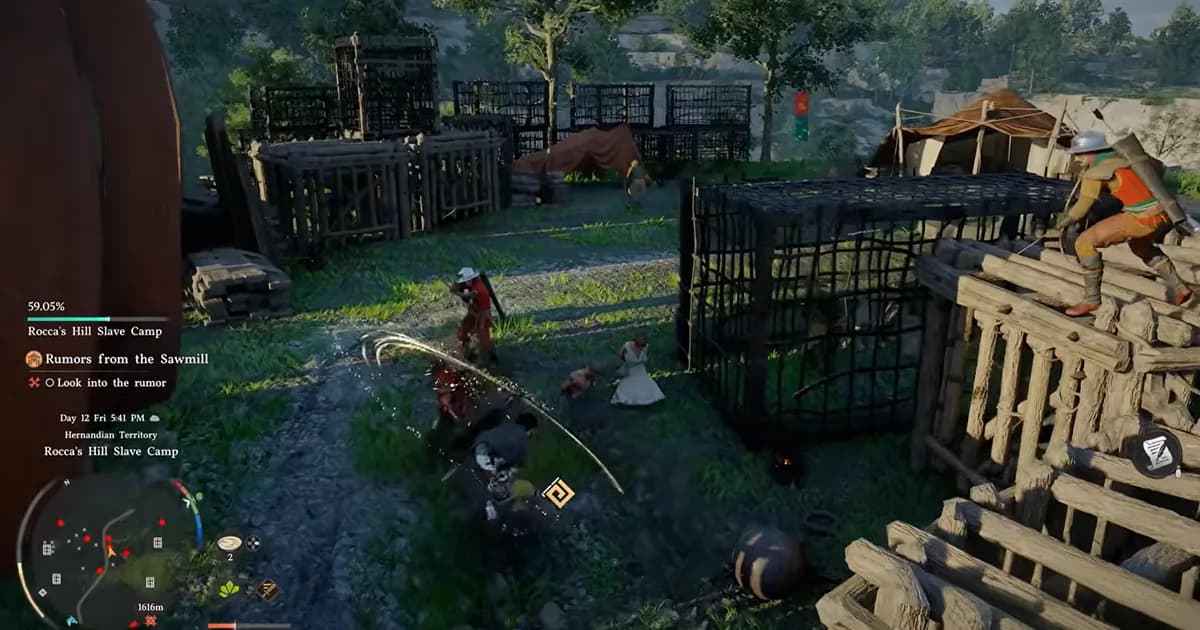
Crimson Desert arrived in March carrying six years of expectation and immediately split the room. Review scores landed around a six. A lot of best-of lists dropped it entirely. And then, three months later, when players were asked what they had actually loved most this year, Crimson Desert finished in the top five.

That gap is not a mystery and it is not people being wrong. Having put a very large number of hours into this game, we think both reactions are honest descriptions of it. They are just descriptions of different parts of it, and the part you get depends almost entirely on how long you stay.

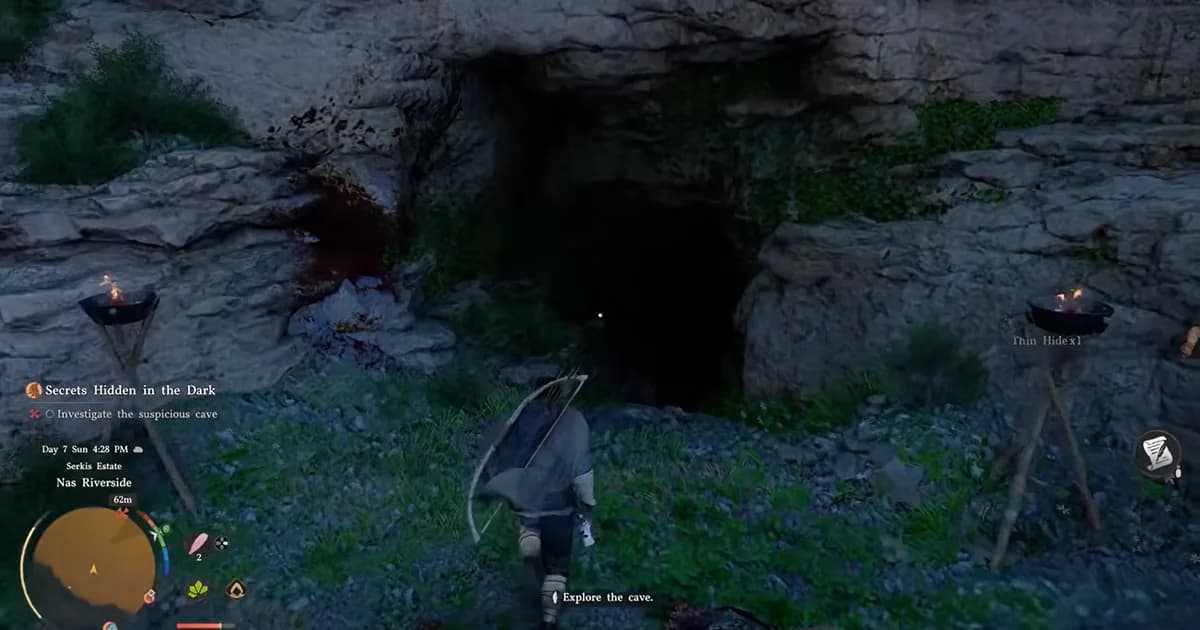
Here is the blunt version. The first eight hours of Crimson Desert are bad. Not disappointing — bad. Boring quests, no reason to care, systems dribbled out one at a time, an inventory that fights you, and a story that gives you nothing to hold on to. If you were reviewing this on a deadline against a ninety-hour game, those eight hours were a meaningful chunk of what you saw. And then somewhere around hour ten it opens up, and it keeps opening up for the next eighty, and it becomes one of the most generous games anybody has made in years.

Story Playthrough

~90 Hours

Hours in the First Region Alone

50+

Map Uncovered After Finishing

60%

Regions

5

A lone rider on horseback at the edge of a canyon, a dragon circling far above a landscape that shifts from forest to desert.
One reviewer finished the entire main story and had still only uncovered about sixty per cent of the map. That is the scale we are dealing with.

The Basics

Developer
Pearl Abyss
Release Date
19 March 2026
Platforms
PC, PS5, Xbox Series
Length
90+ hours for the story
Protagonist
Cliff of the Grey Mains
Playable Characters
Several, swapped GTA-style
Difficulty Setting
None — the world gates you
In Development Since
Revealed over six years ago

You Have to Get Past the Opening

You play as Cliff, a warrior of the Grey Mains, who is killed by a rival faction in the opening and brought back by something that does not explain itself. The early game asks you to find your people, build a camp, and get your bearings. On paper that is a fine setup. In practice it is hours of errands with almost no narrative pull behind them, in a game that is simultaneously trying to teach you two dozen systems by trickling them out one at a time.

It also glosses over things. Mechanics appear without explanation. Some of the most useful abilities in the game are locked behind side content you have no reason to seek out yet. And the inventory at launch was so restrictive that reviewers reported spending a quarter of their playing time in menus. Pearl Abyss raised the starting slots from twenty to fifty during the review period after feedback, which helped enormously, and which also tells you how bad it was.

We are being this direct about it because it is the single most useful thing we can tell you. Everything that people disliked about Crimson Desert is concentrated in its opening, and everything that people love about it is spread across the eighty hours after. If you bounce off this game at hour five, your opinion of it is accurate and incomplete at the same time.

Through Time

How Crimson Desert Actually Unfolds

This is the shape of it, and it explains the split in reactions better than any argument about scores.

01

Hours 0–8

The worst part of the game

Dull errands, weak motivation, systems introduced one drip at a time, and an inventory you fight constantly. Nothing here suggests what is coming. This is where most negative impressions were formed and they were formed fairly.

Push through

02

Hours 8–20

It opens up

The move set expands, the grapple arrives, the skill tree starts paying out, and the map stops being a corridor. Around here the game stops being something you are enduring and starts being something you are exploring.

The turn

03

Hours 20–50

The first region, still

You can spend fifty hours in the opening area before the story moves you on. Faction questlines, bounties, contribution shops, hidden villages, dozens of things nobody told you existed. This is the game people fell in love with.

Peak Crimson Desert

04

Hours 50–90

Four more regions

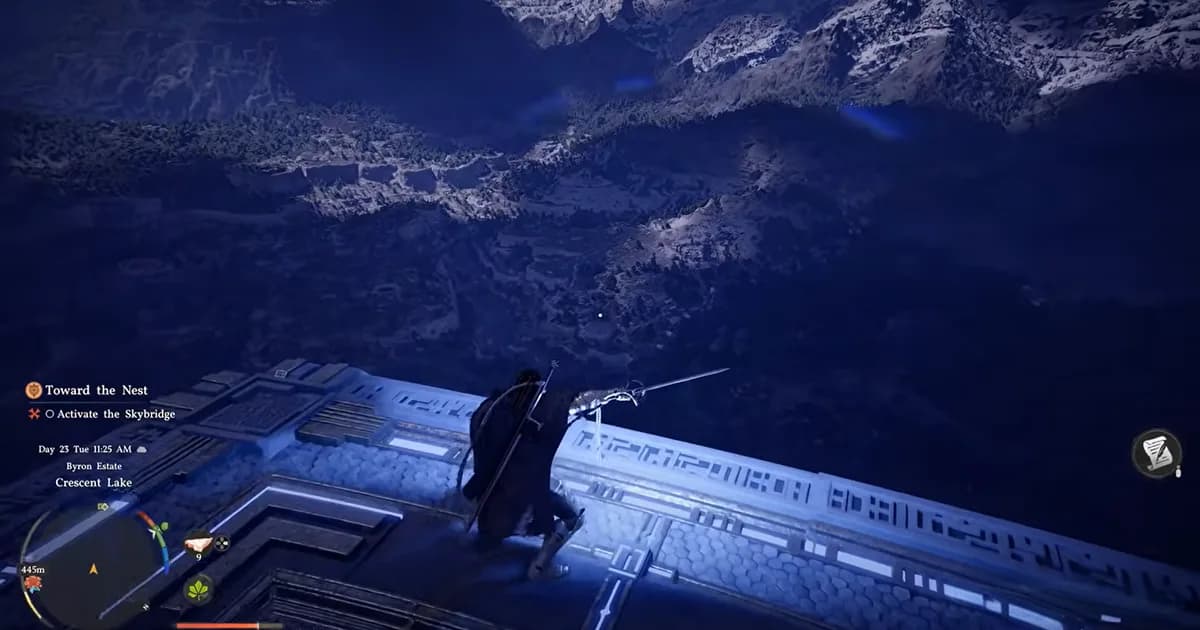
Castle sieges, boss fights with genuine set-piece staging, mechs, dragons, sky islands. Also where the bugs get noticeably worse and the polish thins out. The best and roughest hours are the same hours.

Best and worst

05

After the credits

You have seen about half of it

One thorough playthrough finished the story with roughly sixty per cent of the map uncovered, and was still finding entire cities afterwards. There is no version of this game where you exhaust it.

60% seen

A vast castle siege at dusk, siege towers against enormous walls, hundreds of small figures on the field and fire catching along the battlements.
When Pearl Abyss stages something, it stages it properly. The castle sieges are genuine set pieces and they are why people forgive the rest.

The Combat Is the Best Thing in It

It starts almost too simple. Light attack, heavy attack, block, parry. Then you get a force push. Then a grappling hand that works a lot like Tears of the Kingdom's Ultrahand, letting you seize enemies and rearrange the environment. Then a skill tree where individual nodes have multiple upgrade paths, each unlocking new moves. Eighty hours in we were still finding combinations we had not tried.

What makes it feel different from most action games is how physical it is. You can throw people. You can clothesline them. You can grab someone, drag them somewhere else, and drop them off a thing. Swords land with real weight and a small punctuation of gore. It is expressive in a way that invites messing about rather than optimising, which is the correct instinct for a game this size.

Character swapping deepens it further. You switch between playable characters in the style of GTA 5, and each one has their own weapons, their own skill tree and their own gear. These are not reskins. The downside is administrative — you have to carry everyone's equipment and swap it manually, skills do not appear to transfer between characters despite earlier indications they would, and you end up permanently short of skill points across several trees at once.

The one place combat overreaches is crowd size. Enemy camps ask you to grind a percentage counter down to zero, and that can mean thirty unbroken minutes of cutting through dozens of bodies. With that many enemies you find one reliable tactic and repeat it, because giving them room to react gets you killed. Smaller, sharper encounters would have shown the combat system off far better than a mob does.

Things You Can Genuinely Do In This World

🎮 Hunt a bounty properly

Track them, tackle them, beat them, hogtie them, sling them over your horse and ride them to a prison. Not a menu transaction — an actual sequence of physical things you do.

🎮 Ride a dragon

Exactly as good as it sounds once you are on it. Getting on it is weirdly clunky and often needs a workaround, which is a very Crimson Desert sentence.

🎮 Pilot a mech

The high-fantasy-meets-crude-robotics thing is one of the strangest choices in the game and the mech sections work far better than they have any right to.

🎮 Commit ordinary crime

Pickpocket, rob wagons, steal livestock and sell it. The world lets you be a nuisance in a way most fantasy games do not bother supporting.

🎮 Build and run a camp

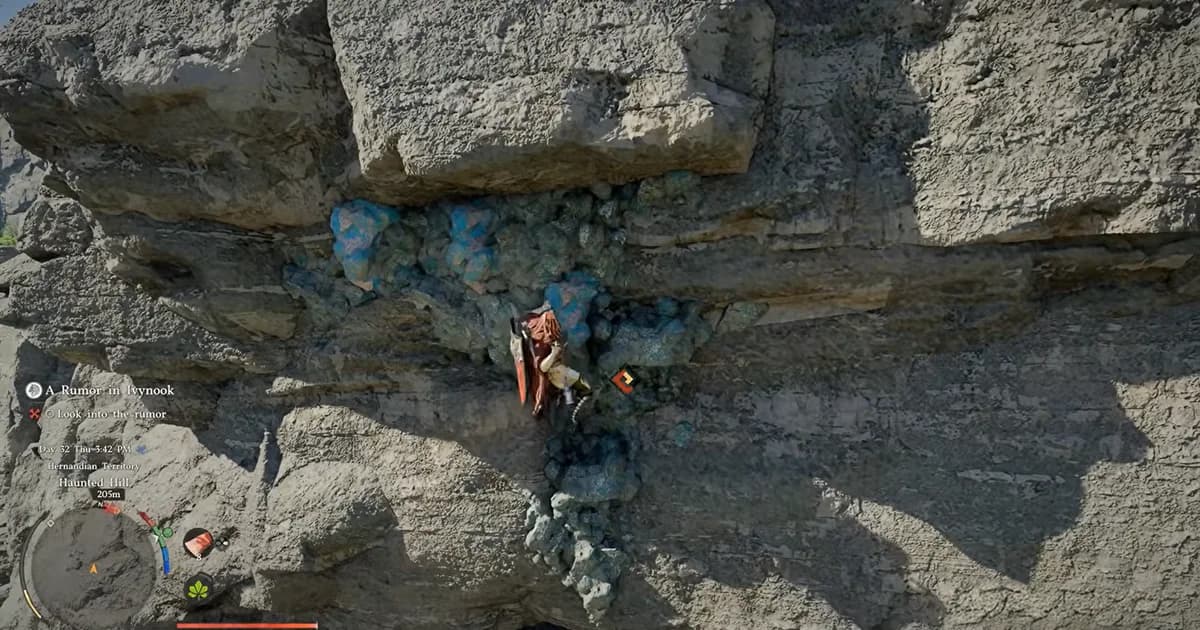
Base building, crafting, fishing, mining. Every one of these has its own little subsystem and none of them feel like a checkbox.

🎮 Bank goodwill at contribution shops

Side quests for random villagers earn a separate currency spent at special shops for unique gear. It is the cleanest solution to pointless side content we have seen in years.

🎮 Fight on horseback

The horse drifts, upgrades, takes its own gear, and you can fight from the saddle. Somebody clearly cared a great deal about the horse.

🎮 Glide off a sky island

Upgrade the glide and it starts rocketing you forward on stamina. There are also hot air balloons, because of course there are.

Where It Genuinely Falls Down

The puzzles are the worst of it. Some are optional and fine to walk away from. Others sit directly in the main story and will stop you dead, because they introduce mechanics the game has not explained and offer no hints of any kind. During the review period Pearl Abyss set up a Discord so that reviewers could share puzzle solutions with each other. That is an extraordinary thing to need to do, and it means you should expect to look up a guide at some point.

Bosses are wildly inconsistent. The good ones are excellent — long, tactical, properly staged, and a real test of whether your gear investment paid off. The bad ones are simply too aggressive to react to, and dying to one is expensive: fast travel points are sparse, you often respawn a long way back, and you may have to redo a puzzle you already solved to get another attempt. Between-phase cutscenes can be sped up but not skipped. Some of the early bosses are harder than later ones, so the difficulty curve wanders.

Then there are the bugs. Individually most are small. Collectively they are constant, and they get noticeably worse in the back half — including quest bugs that can block progression. The day one patch cleared out a lot and Pearl Abyss has been unusually quick to respond, but the honest read is that this game needed longer in development.

And the story never really arrives. There are strong moments, particularly the quieter ones, and the sense of scale between warring factions is genuinely Game of Thrones-ish. But Cliff is not a character you will think about afterwards, the flashback-helmet device used to deliver backstory is a poor substitute for actual cutscenes, and we finished the game feeling attached to the world and to nobody in it. The world is the main character. That is a real limitation, and it is also, for this particular game, survivable.
So is Crimson Desert a 6 or a 9?

The case for the low score

  • The first eight hours are genuinely poor, and a reviewer on a deadline cannot skip them.
  • Mandatory story puzzles with no hints will hard-stop you, and reviewers needed a shared Discord to get past some of them.
  • Bugs are constant and get worse in the second half, including progression-blocking quest bugs.
  • The story is weak and no character in it is worth caring about.
  • Boss balance is inconsistent and dying can cost you ten minutes of repeated ground.
  • A game that gets good after ten hours is still a game that was not good for ten hours.

The case for the high one

  • Once it opens up there is more genuinely well-made content here than in almost any open world of the last decade.
  • Combat keeps revealing new depth eighty hours in, which almost nothing else manages.
  • The world has a density and a draw distance that make it feel like a technical generation ahead.
  • Contribution shops make side content meaningful instead of filler.
  • Pearl Abyss patched significant complaints inside the review window and has kept going since.
  • Nearly every flaw is fixable with time. The scale, ambition and craft underneath are not things you can patch in.
An overstuffed fantasy backpack spilling crafting materials, food, armour pieces and trinkets across a camp table by lantern light.
At launch, reviewers were spending a quarter of their playing time in menus. The starting inventory was raised from twenty slots to fifty before release.

Our Actual Advice: This Is a Game Worth Waiting On

Crimson Desert is better today than it was in March and it will be better again in three months. Pearl Abyss has been genuinely responsive — raising inventory limits mid-review, patching unfair stun-lock deaths, fixing crashes and quest blockers — and the remaining problems are almost all the kind that patches fix. If you are itching to play it now, you will still have a great time and you will forgive most of it. If you are on the fence, waiting is the smart move, because the version of this game that exists at the end of the year is likely to be the one people remember. Either way, commit to at least ten hours before you decide. Five is not enough to judge it and everybody who quit at five thinks it is.

"The people who scored it a six and the people who put it in their top five played the same game. One group's copy ended at hour eight."

Our Verdict

An enormous, generous, frequently broken open world with an awful opening and eighty of the most rewarding hours anyone released this year, and the clearest example in recent memory of a review score and a player base being right about different things.

What Works

  • Combat starts simple and is still revealing new depth eighty hours later, with real physicality and genuine freedom.
  • The world is staggeringly large and dense, with a draw distance and level of detail that feel a generation ahead.
  • Set pieces, particularly the castle sieges and the staging around boss fights, are consistently spectacular.
  • Contribution shops give side quests a purpose, which is a problem most open worlds never bother solving.
  • Character swapping gives you several distinct combat systems rather than one with skins.
  • Pearl Abyss is patching aggressively and has already fixed several of the launch complaints.

What Concerns Us

  • The first eight hours are genuinely poor and will lose a lot of people before the game starts.
  • Mandatory story puzzles come with no hints and will send you looking for a guide.
  • Constant small bugs that get worse in the back half, including some that block quest progress.
  • Boss balance is erratic, and dying can cost you ten minutes of repeated ground each attempt.
  • The story and characters give you very little to care about across a ninety-hour game.
  • Inventory and camera both fight you, and thirty-minute enemy-camp grinds flatten the combat.

Who It's For

People who want to disappear into a world for a hundred hours and are happy to be left to figure it out. If Elden Ring's lack of guidance appealed to you rather than annoyed you, and you have the patience for a slow start, this is one of the most generous games in years.

Who Should Wait

Anyone who needs a story worth following, anyone with limited playing time, and anyone whose tolerance for jank is low. If you want polish, wait a few months and it may well arrive. If you want a tight thirty-hour experience, this is emphatically not that.

How We Reviewed This

This is a review of the finished, released game. We played on PC, went past the credits, and deliberately spent time on side content and exploration rather than rushing the main quest, because the structure of this game makes those two experiences very different. The opinions here are ours and the wording is ours. Crimson Desert has produced one of the widest splits between critical scores and player reaction of any game this year, so rather than take a side we have tried to explain what each group is actually responding to — in our view the disagreement is about how far into the game people got, not about the facts. This game is being patched frequently, so specific bugs and balance issues described here may already have been addressed. All artwork on this page is original illustration created for this article. None of it is a screenshot or promotional art from the game.

  • Reviewer

    Time with the released version on PC, past the credits

  • Official

    Pearl Abyss patch notes and post-launch updates

  • Store

    Storefront listings, pricing and platform availability

  • Community

    Player discussion around difficulty, puzzles and patches

Opinions reported by other reviewers and players are attributed as theirs. Read our review process for how we handle games we cannot test ourselves.

Related Articles