01
Start Quickly
A good break game reaches meaningful gameplay without requiring a lengthy setup or tutorial.
No games found
Unihfy Games
Loading identity...
Quick Access
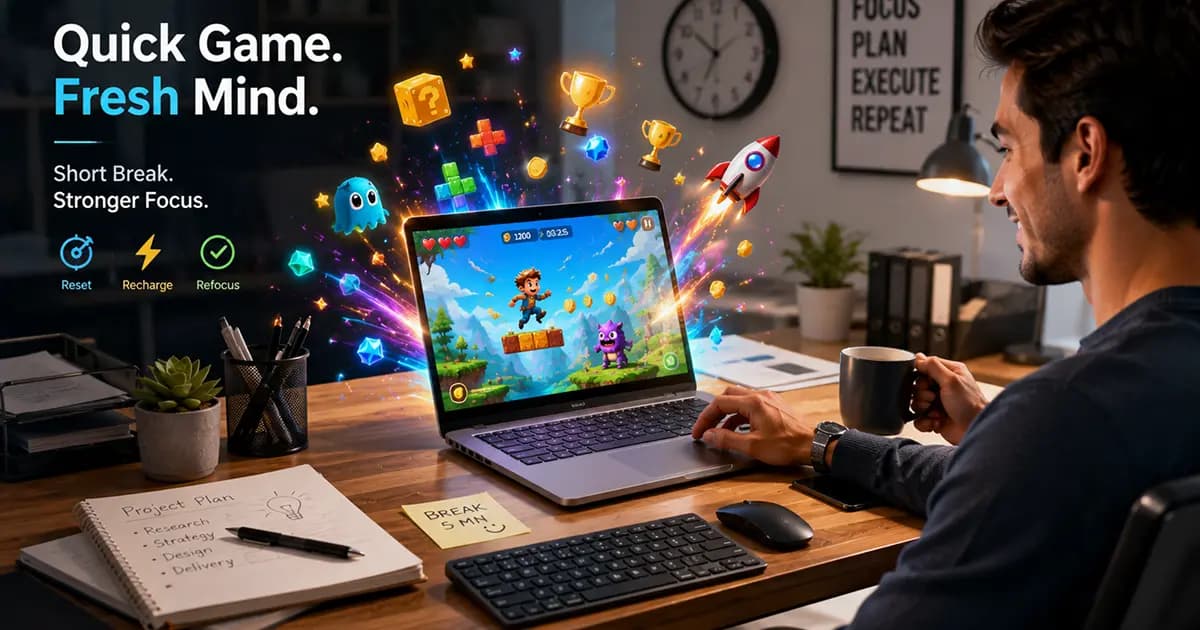
Discover free browser games that fit different kinds of work breaks, from quick pauses between tasks to longer lunch breaks. Learn how to choose games that are easy to start, simple to pause, and enjoyable without demanding your entire afternoon.
Format
In-Depth Guide
Reading Time
10 min read
Published
July 6, 2026
Last Updated
October 3, 2026
Written by
Developer · Game Reviewer
Kaushik Hirpara is a full-stack developer and game reviewer at Unihfy Games. He does most of the work of bringing games to the site — adapting them to run properly in a browser, getting them working on phones, playing them, and writing up what players need to know.
View Author ProfileGaming Between Tasks
Not every pause in the workday looks the same. You might have five quiet minutes before your next meeting, twenty minutes for lunch, or a short window after finishing a demanding task. The best work-break game isn't necessarily the shortest one. Instead, it's the game that fits the time and energy you have available without making it difficult to stop when it's time to get back to work. Browser games are especially useful because they can usually be started quickly, but choosing the right style still matters. A score-chasing arcade game may feel ideal after a repetitive task, while a slower puzzle may suit a calm coffee break. This guide explores different types of work breaks and helps you match them with games that feel satisfying without turning a short pause into an unfinished commitment.
Understand what makes a game practical for different kinds of work breaks.
Choose browser games that fit your available time, mood, and desired pace.
Quick Overview
A good break game reaches meaningful gameplay without requiring a lengthy setup or tutorial.
Natural stopping points make it easier to return to work without feeling that you've abandoned an important objective.
A five-minute pause and a lunch break often call for different styles of games.
Sometimes a fast arcade challenge feels right, while other moments are better suited to slower puzzle-solving.
Choosing Wisely
Many games can technically be closed after a few minutes, but that doesn't automatically make them enjoyable choices for a busy workday. The experience before and after those minutes matters just as much.
How It Flows
A few quick questions can help you pick something that fits naturally into the time you have available.
Estimate your actual free time instead of assuming the break will last longer than it probably will.
Choose an energetic arcade challenge or a quieter puzzle depending on how you want the break to feel.
Games with clear endings after each attempt or puzzle are usually easier to pause when work resumes.
Finish the session with a small buffer so you're not rushing straight from a game into your next task.
Two Kinds of Break
Sometimes the right game depends less on the clock and more on how your day has been going. Puzzle and arcade games suit very different moments, so it helps to know which kind of break you need before you start.
Match the Moment
The same game can feel completely different depending on how your day has unfolded. A demanding morning filled with meetings may leave you looking for something calm, while repetitive work might make a faster arcade challenge feel more refreshing. Instead of searching for one universal recommendation, think about what kind of change of pace would make the break feel worthwhile.
Choose Your Path
Each style offers a different pace and suits different moments throughout the working day.
Jump straight into fast-paced action.
What defines it
Best for
Players who want an energetic burst before returning to work.
Slow down and think carefully.
What defines it
Best for
People who enjoy puzzles, strategy, and thoughtful play.
Relax without chasing intense competition.
What defines it
Best for
Anyone who wants a gentle change of pace during the workday.
Avoid Common Pitfalls
Choosing a game is only part of the decision. The way you approach a work break can also determine whether the session feels refreshing or unexpectedly stressful.
Myth vs Reality
The Myth
Every work-break game has to last only five minutes.
The Reality
The better question is whether the game fits the time you actually have available and lets you stop comfortably when needed.
The Myth
Puzzle games are always more relaxing than action games.
The Reality
Some players enjoy thoughtful puzzles, while others find quick arcade action a better change of pace. Personal preference matters.
The Myth
Longer games can never fit into a work break.
The Reality
A longer lunch break may comfortably accommodate a more involved game, provided it offers sensible stopping points.
The Myth
The most exciting game is always the best choice.
The Reality
The right game depends on your available time, energy level, and the kind of break you want rather than excitement alone.
Build Your Own Routine
Different moments deserve different kinds of games. Rather than relying on a single favorite for every break, keeping a small rotation of familiar options makes it easier to choose something that genuinely matches your schedule and mood.
Quick Decision Guide
Use this simple checklist before your next break to choose a game that matches the moment instead of forcing every pause into the same routine.
Pick a score-chasing game when you want one focused burst of action.
Choose a puzzle if you're in the mood for quieter, deliberate thinking.
Try a reaction game when you're looking for a more energetic change of pace.
Save slightly longer but naturally stoppable games for lunch or larger breaks.
When time is very limited, choose a familiar game so you can begin playing immediately.
Continue the journey
Guide Complete
Free browser games can be excellent companions throughout the working day, but the most satisfying choice depends on the break you actually have rather than the game with the biggest reputation. Fast access, comfortable stopping points, and a play style that matches your current mood all contribute to a better short session. Instead of expecting one game to suit every situation, build a small collection of favorites that cover different kinds of breaks and let your schedule—not the game—decide which one to play.
A coffee break, lunch break, and end-of-day pause may each suit different kinds of games.
Games that reach meaningful play quickly make better use of limited break time.
Short runs, individual puzzles, and self-contained challenges help you leave without feeling interrupted.
Keeping several different game styles available makes it easier to choose something that fits your mood and your schedule instead of expecting one game to do everything.
Gaming
Choosing browser games for an older or modest computer is about more than finding titles that run in a browser. Learn what affects browser-game performance, which game styles are sensible starting points, and discover free games worth trying first.
Gaming
Discover how to choose the right relaxing browser games to unwind after a tiring day. Explore the balance between calm thinking and simple arcade action for evening gaming.
Gaming
Discover some of the best online games for kids by comparing gameplay, controls, reading requirements, challenge level, and online features. Learn how to choose games that match different interests, abilities, and play styles rather than assuming one game suits every child.
Gaming
Discover free games that genuinely fit short breaks. Learn what makes a great five-minute game and find browser games that offer satisfying play without demanding a long session.
Continue Exploring
Jump into browser games or challenge yourself in Quiz Arena. There's always something new to discover.