Why Some Games Help You Unwind, and Others Just Keep You Busy
A relaxing game is not one where nothing happens. A look at why gentle focus rests a tired mind better than doing nothing, how pace, sound, light and predictability shape a calm game, and what to look for when you want to switch off after a long day.
Format
Curated Article
Reading Time
9 min read
Published
July 9, 2026
Last Updated
October 20, 2026
Written by
Nikunj Hirapara
Founder · Writer
Nikunj Hirapara founded Unihfy Games and decides what the site works on next. He writes the explanatory guides about how browser games work, and the geography and sports quizzes.
View Author ProfileRest Is Not the Same as Doing Nothing
At the end of a long day, the obvious way to rest is to stop doing anything at all. Yet many people find that the moment they sit still, their mind fills straight back up: the email they did not answer, the conversation that went badly, the list for tomorrow. Doing nothing leaves plenty of room for the day to come back in.
That is part of why a gentle game can feel more restful than an empty sofa. It gives the mind something light to hold, enough to crowd out the day without demanding much in return. The game is not the rest itself; it is a way of making room for rest.
But not every game does this. Some feel calm and leave you calm. Others look calm and leave you oddly wired. The difference comes down to a handful of design choices, and understanding them makes it much easier to pick the right thing when you are too tired to think about it.
Soft Attention and Hard Attention
Psychologists studying why time in nature feels restorative have described two kinds of attention. One is the effortful, directed kind we use at work: holding a goal in mind, ignoring distractions, pushing through. It tires with use. The other is what they call 'soft fascination': the easy, drifting interest of watching clouds, water or leaves moving in the wind. It holds attention without effort, and seems to let the effortful kind recover.
Relaxing games tend to live closer to the soft end. They give the eye something pleasant to follow and the hands something simple to do, without asking for the kind of sustained concentration the working day already used up. Water, wind, growth and slow light show up again and again in calm games for good reason.
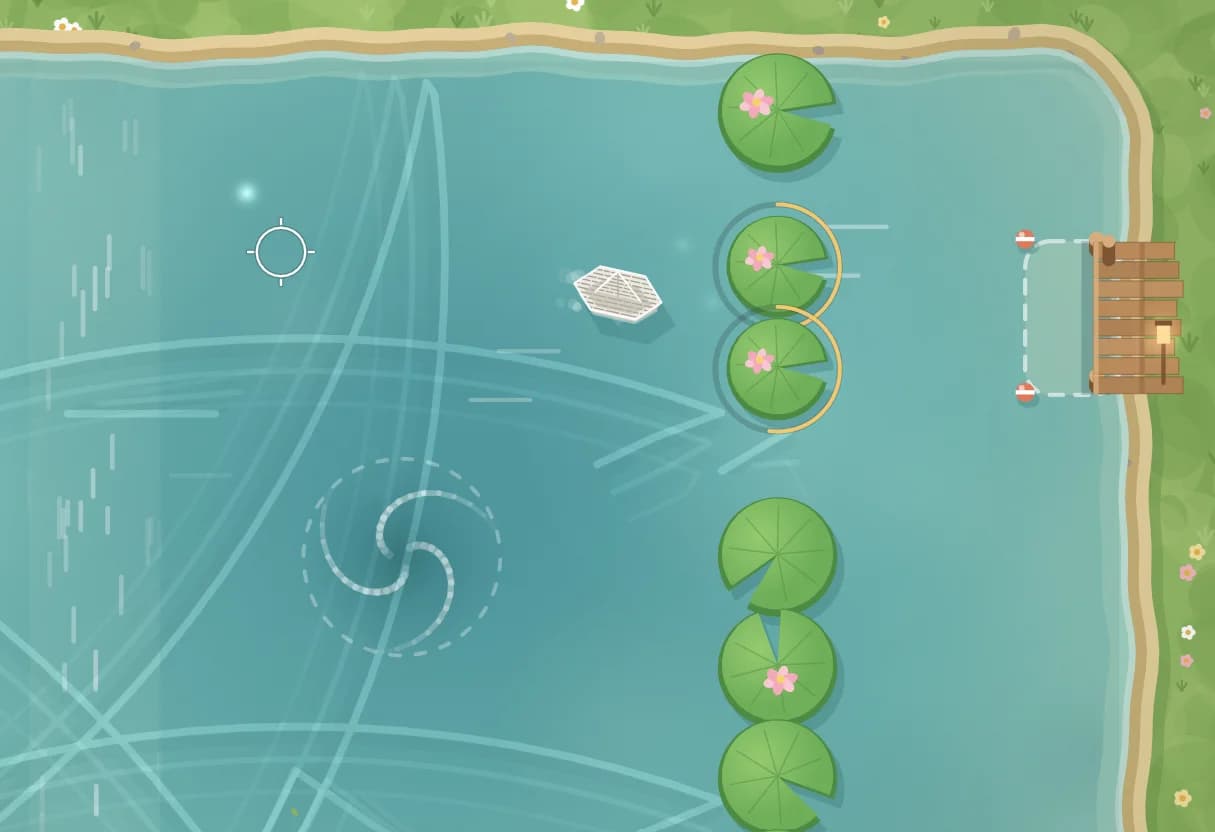
Ripplewake, for example, is set on a quiet pond where falling leaves float and drift with the ripples you make, which gives the eye something gentle to watch even between moves.
Calm Is Not the Absence of Challenge
A good relaxing game still asks something of you. It just asks in a way that holds your attention softly instead of gripping it.
Relaxed Is Not the Same as Bored
There is an old and well-known idea in psychology that people perform and feel best at a middle level of arousal: too little and we are bored and restless, too much and we are anxious and scattered. Where that middle sits depends on the person and the moment.
After a quiet day spent alone, the right level might be higher than you expect, and a game with some pace can feel good. After a day of meetings, noise and decisions, the right level is much lower. A game that would be pleasantly lively on a Sunday afternoon can feel like too much at nine on a Thursday night.
That is why there is no single list of relaxing games that suits everyone. The more useful question is what the day has already used up. If it was full of decisions, look for something that asks for very few. If it was full of noise, look for something quiet. If it was dull, a little tension might be exactly what helps.
A World That Behaves
Much of what makes a day tiring is uncertainty: other people's moods, shifting plans, problems with no clear answer. A calm game offers the opposite. Its rules are fixed, its responses are consistent, and the same action always gets the same result.
That predictability is quietly soothing. It gives a sense of control that the rest of the day may not have offered, and it lets the mind relax into the game instead of staying on guard. Surprises are not banned, but they arrive gently and make sense once they have happened.
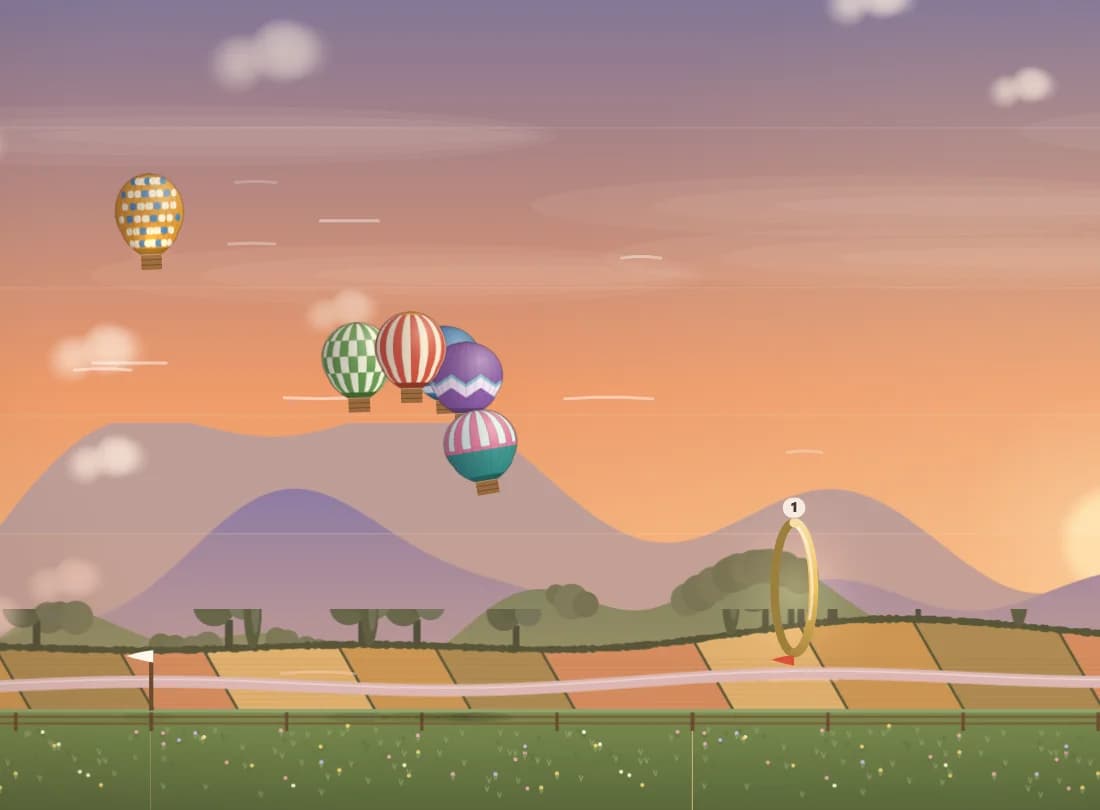
Loftwind shows how this can still be engaging. It is a calm balloon race in which you cannot steer at all, only rise and sink into bands of wind, and once you have learned how the air behaves, it always behaves the same way.
Features That Tend to Calm
- ✓ Play that waits for you, or moves at a steady, gentle pace
- ✓ Consistent rules and responses you can rely on
- ✓ Soft, warm colours and slow movement
- ✓ Quiet ambient sound and slow, unhurried music
- ✓ Progress that stays saved, with no penalty for leaving
Features That Tend to Wind You Up
- ✕ Countdown timers and sudden, fast threats
- ✕ Random outcomes that decide whether you win
- ✕ Flashing effects, high contrast and constant motion
- ✕ Loud, urgent sound effects and fast music
- ✕ Daily streaks, rankings and limited-time rewards
What You Hear Matters as Much as What You See
Sound is often the part of a game people notice least and feel most. Fast music and sharp, urgent effects raise alertness almost automatically, which is exactly what they are for in an action game. Slow tempos, soft tones and ambient background sound do the opposite.
Many calm games lean on natural sounds, such as water, wind, birds and distant weather, because they sit easily in the background without demanding attention. A short musical phrase for a success is pleasant; a blaring alarm for a failure is not, even if the failure is small.
Light works in a similar way. Warm, low-contrast scenes such as dusk, lamplight and soft daylight feel calmer than harsh, bright, high-contrast ones. Loftwind's courses, for instance, are lit from a golden afternoon to a deep sunset, chapter by chapter.
Making Something Instead of Beating Something
Not every relaxing activity is passive. Knitting, gardening, sketching and cooking are all busy, and people find them calming precisely because they produce something. The focus is on building rather than winning, and progress is something you can see.
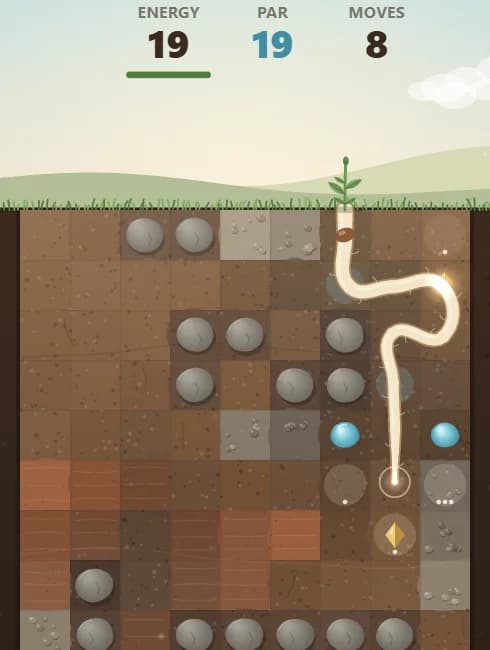
Games can offer the same feeling. A game where you grow, paint, tidy or build gives a quiet sense of accomplishment that does not depend on defeating anyone. In Rootwell, the plant above the soil grows taller and leafier as your root reaches deeper, and flowers when the water arrives.
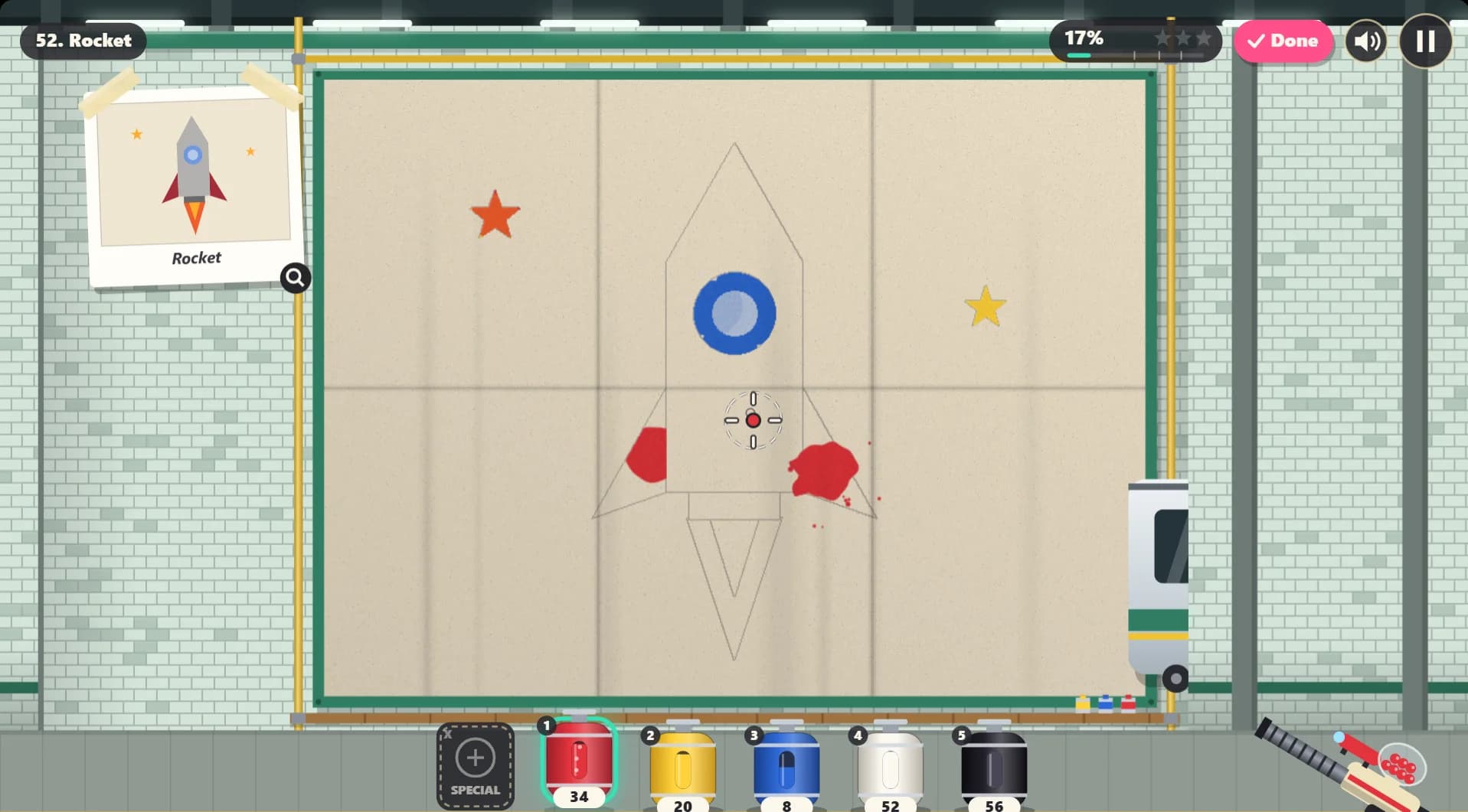
There is also something restful about having made something you can look back at. Splashwright keeps a photo of every wall you paint and hangs them in a gallery on washing lines, so the evening leaves something behind besides a score.
What People Often Assume About Relaxing Games
Fantasy
A relaxing game has to be easy.
Reality
Difficulty matters less than pressure. A tricky puzzle with no timer can be far calmer than an easy game with a clock running.
Fantasy
Slow games are always more relaxing than fast ones.
Reality
After a dull day, a little pace can feel better than stillness. The right speed depends on what the day has already used up.
Fantasy
Calm games are only for casual players.
Reality
Plenty of experienced players keep calm games for the end of the day, because a quiet game rests a tired mind better than an intense one.
Fantasy
Any game will help you switch off.
Reality
Games built around urgency, rankings or random rewards can leave you more alert than when you started, even if they look gentle.
Winding Down Before Sleep
If the game is the last thing before bed, its effect on alertness matters more than usual. Exciting, competitive or tense games are designed to raise your heart rate and sharpen your attention, which is the opposite of what sleep needs. A close match or a narrow loss can also leave your mind replaying it long after the screen is off.
Calmer games make a better last activity, especially ones with clear points to stop, such as the end of a level or a round. Turning the screen brightness down and deciding in advance how long you will play also help the evening wind down rather than drift on.
Quick Picks
Calm Games Built Around These Ideas
These games were made in-house at Unihfy Games and run in the browser with nothing to install. Each one leans on an idea from this article.
Puzzle
Ripplewake
A quiet pond puzzle where your ripples push a paper boat, and falling leaves drift on the water.
Racing
Loftwind
A calm balloon race at golden hour, steered only by rising and sinking into the wind.
Puzzle
Rootwell
A root-growing puzzle where the plant above the soil grows as you reach deeper and flowers when you find water.
Shooting
Splashwright
A paintball painting game about copying murals onto a wall, with every finished wall kept in a gallery.
Key Takeaway
A relaxing game holds your attention softly: it waits for you, behaves predictably, sounds and looks calm, and lets you make something rather than beat someone. Choose by what the day has already used up, and when the game is the last thing before bed, choose the calmest one.
Related Articles
Gaming
What Makes a Racing Game Worth Playing, Even Without a Download
Why do racing games feel so good, and why do we keep pressing restart? A look at the psychology of speed, risk, personal bests and fairness, and what that means for the racers you can play straight from a browser.
Gaming
What Makes a Great Arcade Game, and Why It Still Works Online
Arcade games were built to be learned in seconds and to end on purpose. A look at the design ideas behind them, from a single control and a readable screen to rising pressure and risky rewards, and what to look for in a free arcade game online.
Gaming
What Makes a Good Online Game for Kids, Beyond the Cartoon Art
A game is not good for children because it looks friendly. A look at the design ideas that matter: teaching without text, challenge that fits, mistakes that cost little, visible cause and effect, tension without harm, and the habits that pull the other way.
Gaming
Why Some Games Run Well on Old Laptops, and What Makes Them Feel Smooth
A game that feels good on modest hardware is not just a small game. A look at what a game asks of a computer every frame, why steady and responsive beats sharp and detailed, and how design choices decide whether an old laptop can keep up.
Continue Exploring
Ready For More?
Jump into browser games or challenge yourself in Quiz Arena. There's always something new to discover.