Most Painful Ways A Cricket Match Can End: A Complete Guide To Sports Heartbreak
Explore the most painful ways a cricket match can end. From last-ball losses and run-outs to dropped catches and heartbreaking collapses, discover the psychology behind sports pain and why fans never truly recover.
Format
Curated Article
Reading Time
7 min read
Published
July 1, 2026
Last Updated
August 4, 2026
Written by
Omik Babariya
Developer · Quiz Editor
Omik Babariya is a full-stack developer and quiz editor at Unihfy Games. He writes most of the quiz questions, works on the sports and entertainment articles, and has built and tested a number of the games on the site.
View Author ProfileEmotional Recovery Time
Several Days
Painful Replays Watched
Too Many
Times Fans Say 'Why'
Unlimited
Heartbreak Intensity
10/10
Matches Never Forgotten
Forever
Every Cricket Fan Has That One Match
Ask any passionate cricket fan about the most painful match they have ever watched and something fascinating happens. They remember everything. The score. The over. The batter. The bowler. The room they were sitting in. The people around them. The exact moment hope disappeared. Years may have passed, but the memory remains perfectly preserved. It is almost unfair how clearly sports heartbreak stays inside the mind. Victories eventually blend together. Painful defeats become permanent residents.
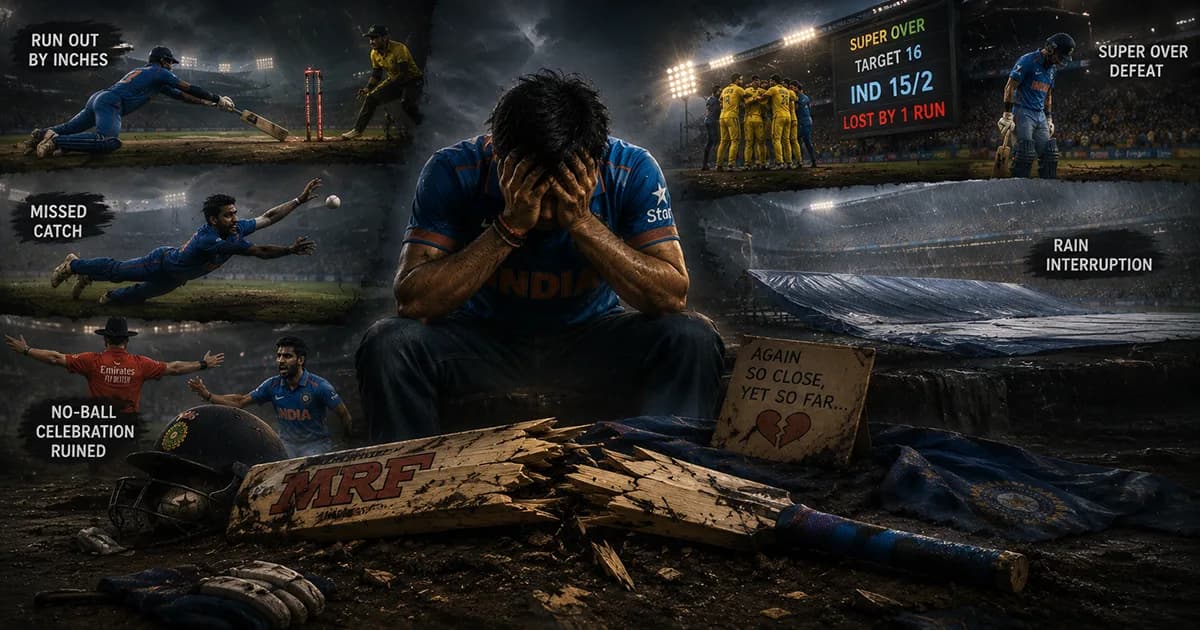
The strange thing about cricket heartbreak is that it rarely arrives without warning. Fans can often feel it approaching. A dropped catch. A missed run-out. A batter surviving by inches. Tiny moments start stacking together like pieces of a disaster movie. Supporters notice the signs but desperately convince themselves everything will still work out. Sports fandom is essentially an endless cycle of optimism fighting evidence.
Football fans understand this too. A last-minute penalty concession. A missed open goal in a final. A stoppage-time equalizer after celebrating too early. Every sport has unique methods of emotional destruction. Cricket simply offers an impressive variety of ways to break hearts. It does not settle for ordinary disappointment. It creates personalized emotional damage designed specifically for invested supporters.
What makes these endings so painful is not just the result. It is the possibility that existed before the result. Fans do not mourn what never felt achievable. They mourn opportunities. They mourn moments when victory felt close enough to touch. The closer success appears, the more devastating failure becomes. That psychological gap between expectation and reality is where sports heartbreak lives.
And somehow, despite all the suffering, fans keep returning. They watch the next match. They believe again. They convince themselves this time will be different. Maybe that is the most incredible thing about sports fandom. The ability to survive emotional destruction and immediately volunteer for another round.
How Different Fans React To Heartbreak
The Silent Starer
Processes pain by staring at nothing.
The Replay Addict
Keeps watching the painful moment.
The Blame Finder
Needs a culprit immediately.
The Emotional Fan
Feels every defeat personally.
The Social Media Disappearer
Avoids the internet for survival.
The Alternate Timeline Expert
Obsesses over what could have been.
The Recovery Specialist
Needs snacks and silence.
The Trauma Collector
Adds another painful memory to the archive.
The Timeline Of A Typical Sports Heartbreak
Confidence
Victory feels likely.
Optimism
Everything is going well.
Concern
Something feels off.
Nervousness
The pressure is building.
Panic
This might actually happen.
Hope
Maybe one miracle remains.
Impact
The painful moment arrives.
Shock
Nobody speaks.
Acceptance
Reality settles in.
Storytelling
The trauma becomes a legend.
"The most painful cricket matches are not the ones you lose badly. They are the ones that convince you that victory is guaranteed before taking it away."
— Every Long-Suffering Fan
Why Close Defeats Hurt More Than Heavy Losses
One of the strangest truths in sports psychology is that a crushing defeat often hurts less than a narrow one. Losing by eight wickets is disappointing, but emotionally straightforward. The better team won. The contest ended. The mind can process that. Losing by one run after a dramatic chase is completely different. Suddenly there are endless possibilities to analyze. One boundary. One catch. One decision. One extra run. The brain becomes obsessed with tiny details because the margin feels painfully small.
This is why fans replay close defeats in their minds for years. The match never truly ends. It continues through imaginary scenarios and alternate realities. What if the batter had left that ball? What if the captain chose a different bowler? What if the catch had stuck? Human beings naturally search for explanations when outcomes feel unfair. Close defeats create unlimited opportunities for those explanations.
Football provides similar examples. A team losing 4-0 in a final suffers disappointment. A team losing on penalties after dominating for 120 minutes experiences something far deeper. The emotional investment remains because success felt possible until the very end. The dream was visible. That visibility is what creates the pain.
Fans often describe these matches as exhausting. That word appears repeatedly because close contests demand emotional energy. Supporters spend hours investing hope into a result. When the ending goes wrong, all that emotional investment suddenly loses value. It feels like spending an entire day building something only to watch it collapse in seconds.
Ironically, those same painful matches become legendary. Nobody enjoys them while they are happening. Yet years later they remain unforgettable. Sports heartbreak creates memories with remarkable efficiency. The brain may hate the experience, but it never forgets it.
The Cruel Art Of Last-Moment Disaster
There is a special category of sports pain reserved for endings that arrive unexpectedly. The match appears safe. The equation looks manageable. Fans start discussing celebrations. Then everything changes. A wicket falls. A catch appears from nowhere. A batter mistimes a shot. Within seconds an expected victory transforms into a devastating defeat. The emotional whiplash is brutal because supporters have no time to prepare.
Last-ball losses belong in this category. Few experiences are more painful than watching a match come down to a single delivery and ending on the wrong side. Fans spend hours navigating tension only to receive maximum emotional damage at the finish line. The final ball becomes frozen in memory forever. Every replay feels personal.
Run-outs create another unique form of suffering. They often feel preventable. A bowler delivering an unplayable ball earns respect. A run-out creates questions. Communication. Judgment. Decision-making. Fans immediately imagine how easily disaster could have been avoided. That illusion of preventability makes the pain sharper.
Dropped catches may be the ultimate torture. The ball is in the hands. Victory is visible. The moment appears complete. Then gravity and heartbreak take over. Supporters experience joy and despair within the same second. Very few sporting moments generate such a dramatic emotional swing.
These endings survive because they tell stories. Sports fans are storytellers at heart. They revisit dramatic finishes because those moments contain tension, surprise, emotion, and consequence. The pain remains, but so does the memory. Sometimes the two become inseparable.
The Stages Of Post-Match Heartbreak
Mild Disappointment
The result is annoying.
Quiet Frustration
The replay hurts slightly.
Deep Analysis
Searching for turning points.
What If Mode
Imagining alternate endings.
Replay Trauma
The moment keeps returning.
Social Media Avoidance
Protection becomes necessary.
Historical Scar
The match joins fan folklore.
Permanent Memory
Never fully forgotten.
Most Painful Cricket Match Endings
Losing By One Run
Pain 10/10Maximum emotional devastation.
Last Ball Wicket
Pain 10/10Hope disappears instantly.
Dropped Match-Winning Catch
Pain 10/10The replay lasts forever.
Run-Out On The Final Ball
Pain 9/10Cruel and unforgettable.
Collapse From A Winning Position
Pain 10/10The nightmare scenario.
Boundary Needed, Caught On Rope
Pain 9/10Victory was centimeters away.
Rain Rule Disaster
Pain 8/10Weather becomes the villain.
Tournament Elimination
Pain 10/10The season ends instantly.
Why Fans Secretly Love These Painful Matches
This sounds ridiculous, but some of the most painful matches eventually become fan favorites. Not immediately, of course. Nobody finishes a heartbreaking defeat and says, 'What a wonderful experience.' That appreciation arrives years later. Time softens the pain and highlights the drama. Fans begin remembering the tension, atmosphere, and unforgettable moments rather than the emotional damage.
The reason is simple. Sports are ultimately stories. Comfortable victories provide satisfaction. Dramatic heartbreak provides narrative. Fans remember where they were. They remember who they watched with. They remember the exact emotions. Painful endings become cultural moments shared by entire communities. Everyone has a version of the story.
Some rivalries are built on these memories. Cricket and football fans often measure time through famous heartbreaks and miraculous escapes. One generation remembers a last-ball defeat. Another remembers a missed penalty. These moments become reference points within fan culture. They create inside jokes, legends, and cautionary tales.
There is also something strangely beautiful about collective suffering. Millions of supporters experience the same disappointment simultaneously. They process it together. They complain together. They recover together. Sports fandom transforms personal emotion into a shared experience. That community helps make even the worst defeats meaningful.
In the end, fans keep coming back because heartbreak is proof that they cared. The pain only exists because the hope existed first. Without risk, victories would feel ordinary. Without heartbreak, triumph would lose much of its magic. Sports somehow require both.
Top 10 Fan Reactions After A Brutal Match Ending
Just Staring At The Screen
The universal response.
Replaying The Turning Point
Mental torture begins.
Silencing Group Chats
Self-preservation mode.
Blaming The Dropped Catch
A popular choice.
Saying 'We Had It'
Painful but accurate.
Watching Highlights Anyway
Emotional self-destruction.
Questioning Every Decision
The analysis phase.
Avoiding Sports Media
Temporary retreat.
Telling The Story Repeatedly
Trauma becomes conversation.
Believing Again Next Match
The cycle continues.
Sports Psychology Fact
Close losses often create stronger emotional reactions than heavy defeats because the brain becomes fixated on missed opportunities and alternate outcomes.
The Ultimate Fan Truth
The most painful cricket match ending is always the one that made you believe victory was certain five minutes earlier.
Final Verdict: The Matches That Never Truly End
The most painful ways a cricket match can end all share one thing in common. They leave unfinished conversations inside the minds of fans. The scoreboard says the contest is over, but emotionally the match continues. Supporters replay moments. They imagine different decisions. They create alternate histories where one small change produced a different outcome.
That lingering feeling is what separates ordinary defeats from legendary heartbreaks. The truly painful matches refuse to disappear. They become stories passed between friends, discussed during future tournaments, and referenced whenever similar situations appear. The emotional impact stretches far beyond the final result.
Every fan eventually collects these memories. A last-ball loss. A dropped catch. A collapse that seemed impossible. These moments hurt because they mattered. Nobody remembers meaningless games with this level of intensity. Pain is often evidence of emotional investment.
Years later, supporters may laugh about these defeats. They may exaggerate details and turn suffering into entertainment. But somewhere inside, the original emotion remains. The memory still carries weight. The wound may heal, but the scar becomes part of the fan experience.
And that is why sports remain so powerful. They create moments capable of producing joy and heartbreak in equal measure. The most painful cricket match endings stay with us forever not because they ruined our day, but because they reminded us how deeply we cared in the first place.
Quick Picks
Games That End As Abruptly As The Matches Above
No slow decline and no time to prepare yourself. One moment it is going well, and then it is simply over.



Related Articles
Sports
Why Every Cricket Fan Becomes A Coach During The Match
Discover the psychology behind why every cricket fan suddenly becomes a coach during live matches. Explore fan emotions, match-day behavior, superstitions, heartbreaks, tactical opinions, and the fascinating culture of cricket fandom.
Sports
Ranking Cricket Fans By Panic Level: From Chill Spectator To Full-Time Emergency Broadcaster
A hilarious and relatable ranking of cricket fans based on panic levels during matches. Explore fan psychology, emotional reactions, superstitions, heartbreaks, last-over stress, and why every cricket fan slowly transforms into a nervous wreck.
Sports
Why Sports Fans Take Losses Personally: The Social Identity Behind Saying "We Lost"
You never faced the bowler or missed the penalty, so why does the defeat feel like yours? An explanation of social identity and why supporters instinctively say "we lost", the expectation gap that turns hope into pain, and the reason a defeat to a rival keeps stinging for weeks afterwards.
Sports
The Science Behind Last Over Heart Attacks: Why Sports Fans Age 10 Years In 6 Balls
Explore the psychology and science behind last-over stress in cricket. Discover why fans panic, freeze, scream, create superstitions, and experience emotional chaos during the most dramatic moments in sports.
Continue Exploring
Ready For More?
Jump into browser games or challenge yourself in Quiz Arena. There's always something new to discover.