Why Every Cricket Fan Becomes A Coach During The Match
Discover the psychology behind why every cricket fan suddenly becomes a coach during live matches. Explore fan emotions, match-day behavior, superstitions, heartbreaks, tactical opinions, and the fascinating culture of cricket fandom.
Format
Curated Article
Reading Time
10 min read
Published
June 28, 2026
Last Updated
August 3, 2026
Written by
Omik Babariya
Developer · Quiz Editor
Omik Babariya is a full-stack developer and quiz editor at Unihfy Games. He writes most of the quiz questions, works on the sports and entertainment articles, and has built and tested a number of the games on the site.
View Author ProfileFans Giving Advice Per Match
Unlimited
Captain Decisions Criticized
99%
TV Coaches Created
Millions
Mood Swings In One Chase
25+
Expertise Level Before Match
Normal
Expertise Level During Match
National Selector
The Strange Transformation That Happens To Every Cricket Fan
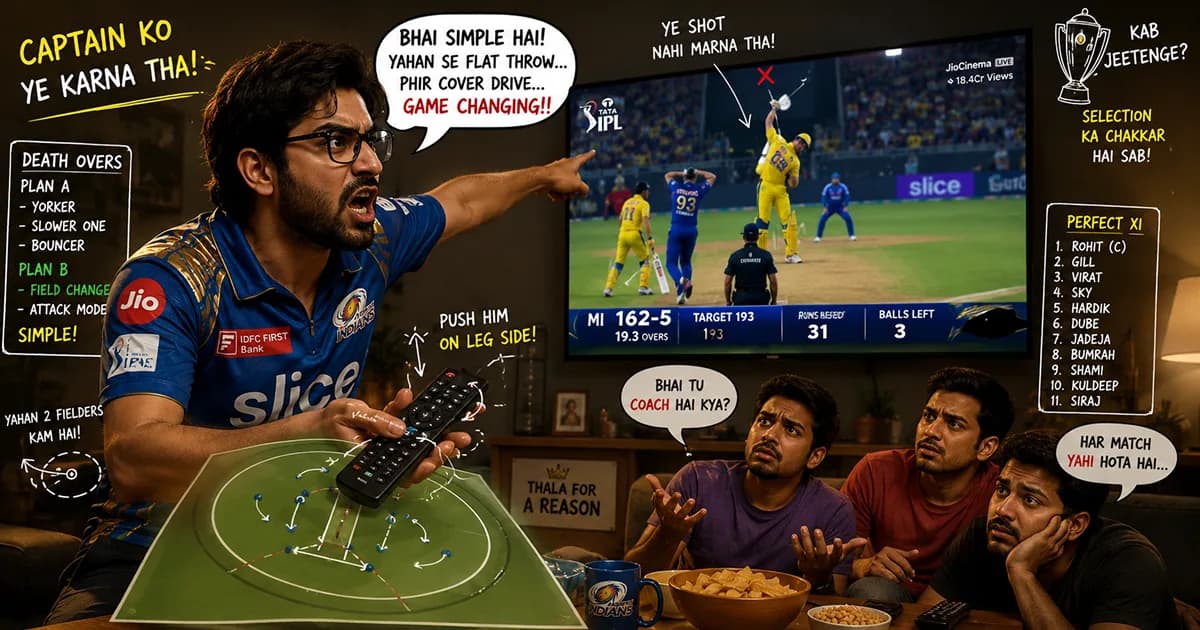
A cricket match starts innocently enough. You sit down with snacks, open group chats, maybe tell yourself you are just going to relax and enjoy the game. Then the first wicket falls. Suddenly something changes inside your brain. You are no longer a spectator. You are now head coach, batting consultant, bowling strategist, selection committee chairman, and part-time sports psychologist. Every ball comes with an opinion. Every field placement becomes a debate. Every player decision becomes a personal challenge to your cricket intelligence. It is one of the most fascinating transformations in sports culture, and the funniest part is that almost every fan experiences it.
You can see it everywhere. In living rooms, tea stalls, offices, college hostels, train journeys, and social media timelines. The moment pressure arrives, millions of cricket fans begin delivering tactical masterclasses that nobody asked for. A batter leaves a ball outside off stump and fans immediately explain what should have happened. A captain chooses a spinner and thousands disagree. A fast bowler misses yorkers for two deliveries and suddenly every viewer has a complete death-over plan ready. Cricket somehow convinces ordinary people that they would make outstanding coaches if only someone handed them the clipboard.
What makes cricket unique is the amount of time available for thinking. Unlike faster sports where action barely stops, cricket gives fans space between deliveries. Six seconds here. A field adjustment there. A replay. A discussion. A scoreboard graphic. Every pause becomes an invitation for analysis. The brain hates empty space, so fans fill it with theories, predictions, criticism, and tactical genius. Whether those ideas are actually good is a completely different question.
The funny thing is that fans are often aware of this transformation while it is happening. They know they are sitting on a sofa hundreds of kilometers away from the stadium. They know international players have spent decades training. Yet none of that matters. During a tense run chase, confidence levels rise to unbelievable heights. The fan who forgot where they left their house keys three hours ago suddenly believes they can solve a complicated bowling strategy better than professionals operating under immense pressure.
And honestly, this behavior is not a flaw. It is proof of emotional investment. Fans become coaches because they care. They become obsessed with possibilities. They imagine different outcomes. They mentally participate in the contest. The match stops being something they watch and starts becoming something they feel responsible for. That emotional ownership is one of the biggest reasons sports remain so powerful around the world.
The Different Types Of Match-Day Coaches
The Tactical Genius
Has a detailed plan for every over and believes captains should consult him.
The Angry Selector
Wanted three different players before the match and reminds everyone constantly.
The Statistics Professor
Carries historical records for every possible argument.
The Superstitious Coach
Believes changing seats influences run rates.
The Meme Analyst
Turns every tactical discussion into comedy content.
The Commentary Replacement
Talks more than the commentators themselves.
The Calm Expert
Claims everything is under control until the final over arrives.
The Group Chat Captain
Provides nonstop instructions from a smartphone command center.
The Emotional Journey Of A Cricket Fan During A Tight Match
Pre-Match Confidence
Easy win. No concerns. Everything looks perfect.
Comfortable Start
The plan appears to be working.
First Doubts
Maybe the batting order should change.
Unexpected Wicket
Why did he play that shot?
Tactical Frustration
I would never have made that decision.
Superstition Phase
Nobody move from the couch.
Last Over Panic
Heart rate reaches dangerous levels.
Chaos
Every ball feels like destiny.
Victory Euphoria
The team is unbeatable.
Heartbreak
Sports are cruel and unfair.
"The average cricket fan spends half the match supporting the team and the other half explaining how they would run the team better."
— Every Cricket Group Chat Ever
Why Our Brains Love Coaching From The Couch
Sports psychology has a surprisingly simple explanation for this phenomenon. Fans create emotional bonds with teams over years, sometimes decades. They celebrate victories, suffer defeats, remember iconic moments, and build personal memories around matches. Because of that connection, the brain begins treating team outcomes as personally significant. When something important feels partly connected to your identity, you naturally want influence over the result. Since fans cannot physically step onto the field, they participate through opinions, analysis, and imaginary decision-making.
There is also the incredible power of hindsight. Watching from home gives fans access to information players do not always have in real time. Replays show mistakes repeatedly. Commentators discuss alternatives. Slow-motion footage reveals tiny details. By the time fans evaluate a decision, they often possess more context than the player had in the moment. This creates the illusion that the correct answer was obvious all along. Suddenly everyone knows exactly where the fielder should have been standing or which bowler should have delivered the over.
Football fans experience this too. During penalty shootouts, millions become expert psychologists. During transfer windows, they become sporting directors. During tactical discussions, they transform into managers. Yet cricket takes the phenomenon to another level because the sport constantly invites strategic thinking. Every over presents dozens of possible choices. Every field setting tells a story. Every batting partnership opens debates. The game practically encourages fans to imagine alternative realities.
Then there is community. Nobody wants to sit silently during a thrilling match. Friends discuss tactics. Families debate selections. Social media erupts with theories. Group chats become digital coaching seminars. One brilliant prediction can earn legendary status among friends for months. One correct tactical call feels like proof of cricket intelligence. Fans chase those moments because being right during a dramatic match feels incredibly satisfying.
The result is a beautiful cycle. The more emotionally invested fans become, the more they analyze. The more they analyze, the more connected they feel. Eventually the line between supporter and strategist becomes wonderfully blurred. Nobody receives a coaching badge, yet somehow an entire nation becomes available for consultation during every important game.
The Last Over Effect And The Rise Of Emergency Experts
Nothing creates instant coaching expertise faster than a final over. Logic leaves the building. Rational thinking packs its bags. Heart rates increase. Hands become sweaty. Suddenly every fan knows exactly what should happen next. If six runs are needed from three balls, everyone has a plan. If ten runs must be defended, everyone has a bowling strategy. The pressure creates a strange confidence where uncertainty feels unacceptable, so the brain invents certainty.
Think about famous run chases. A batter hits two boundaries and instantly becomes a genius. The same player mistimes the next delivery and fans wonder why he ignored their imaginary advice. Outcomes dramatically reshape opinions. Decisions are often judged entirely by results rather than context. A risky move that succeeds becomes bravery. The exact same move failing becomes stupidity. Fans rewrite entire narratives within minutes.
This emotional volatility explains why sports discussions are so entertaining. During one over, a captain can be praised as a mastermind and criticized as clueless. Fans swing between extremes because they care deeply about outcomes. Every ball feels larger than life. Every moment carries emotional weight. The match becomes a roller coaster where strategic opinions rise and fall with each scoreboard update.
The funniest examples usually happen after dramatic victories. Fans celebrate while simultaneously explaining what should have been done differently. The team wins and supporters still conduct post-match tactical reviews. It is impossible to stop. Coaching mode does not disappear when the result arrives. It simply evolves into retrospective analysis powered by confidence that somehow becomes stronger after the fact.
In many ways, these conversations are part of the entertainment. Matches do not end at the final ball anymore. They continue through social media debates, highlight clips, reaction videos, and endless discussions. Fans keep coaching because the emotional experience remains alive long after the scoreboard stops changing.
The Evolution Of A Cricket Fan Coach
Casual Viewer
Simply watches the game and enjoys the action.
Opinion Starter
Suggests one or two changes during difficult moments.
Batting Order Expert
Has strong views on who should bat next.
Field Placement Analyst
Questions every fielding decision.
Selection Committee Member
Ready to replace half the squad.
Tournament Strategist
Planning knockout matches months ahead.
Group Chat Coach
Delivers nonstop tactical updates.
National Team Savior
Convinced only their ideas can fix everything.
Superstitions, Rituals, And Other Completely Rational Coaching Methods
Every cricket fan claims to trust skill, preparation, and strategy. Then the match gets close and suddenly superstition becomes a respected science. Fans refuse to change seats because the team scored boundaries while they were sitting there. Someone leaves the room and a wicket falls, so they are banned from returning. Lucky jerseys emerge from closets. Certain snacks become mandatory. Remote controls are treated like sacred artifacts. Rational adults become believers in the strangest cause-and-effect relationships imaginable.
These rituals exist because fans desperately want control over uncontrollable situations. Watching a live match can feel powerless. You care deeply, yet you cannot influence events. Superstitions create an illusion of participation. They give fans actions to perform when emotions become overwhelming. Whether it is sitting in a particular spot or refusing to check the score during a chase, these behaviors help people manage stress and uncertainty.
What is fascinating is how widespread these habits become. Entire friend groups develop shared rituals. Families create traditions. Some fans genuinely believe they are helping. Deep down most understand that a batter on the field has no idea what couch position they are currently occupying. Yet abandoning the ritual feels dangerous because sports have a way of making coincidence look meaningful.
The coaching mindset fits perfectly into this world. Fans do not just want tactical influence; they want emotional influence too. They want to feel connected to outcomes. Every lucky cap, every carefully timed tea break, every match-day routine becomes part of a personal support system. It sounds ridiculous until you remember how many people secretly do exactly the same thing.
That shared irrationality is actually part of sports culture's charm. Fans know these rituals make little sense. They laugh about them. They mock them. Then they continue doing them anyway. It is a collective agreement that emotional investment occasionally deserves its own strange set of rules.
Cricket Fan Heartbreak Rankings
Dropped Catch In A Final
Pain 10/10The replay hurts for years.
Run Out Mix-Up
Pain 9/10Everyone saw disaster coming.
Collapse After A Great Start
Pain 9/10Hope disappears rapidly.
Losing By One Run
Pain 10/10Every earlier mistake returns.
Rain Interruption Disaster
Pain 8/10The weather becomes the villain.
Missed Straightforward Catch
Pain 8/10Painful and unforgettable.
Last Ball Six Against Your Team
Pain 10/10Instant emotional devastation.
Tournament Exit
Pain 9/10The season ends abruptly.
Top 10 Things Cricket Fans Say During Every Match
He Should Have Played Straight
The universal reaction after almost any dismissal.
I Said This Would Happen
Usually spoken after the event already occurred.
Wrong Bowling Change
A classic coaching complaint.
Send The Finisher Earlier
Fans love promoting aggressive batters.
Why Is That Fielder There
Field placements trigger endless debate.
This Match Is Over
Frequently proven incorrect.
Don't Panic
Usually spoken while panicking.
Just Rotate Strike
Sounds easy from the sofa.
Captain Has Lost The Plot
Appears whenever pressure rises.
I Could Have Predicted That
The unofficial slogan of sports fandom.
Sports Psychology Insight
Fans become more analytical when emotionally invested because the brain seeks influence over important outcomes, even when actual control is impossible.
The Secret Nobody Admits
Most cricket fans do not actually want to stop coaching during matches. The opinions, debates, predictions, and emotional overreactions are part of the fun. Supporting a team means imagining possibilities, arguing tactics, and believing your plan might have worked.
Why We Will Never Stop Doing It
At the end of the day, cricket fandom is not just about watching athletes perform. It is about participation. Fans contribute energy, emotion, conversation, tradition, and identity. Coaching from the couch is simply another way supporters engage with the game. It transforms passive viewing into active involvement. It turns spectators into storytellers and analysts. The match becomes something experienced rather than merely observed.
Every great rivalry fuels this behavior. Whether it is a tense international clash, a dramatic league playoff, or a historic final, fans become emotionally attached to every decision. They replay moments for years. They remember missed chances and brilliant moves. They construct alternate universes where one different choice changed everything. Those conversations keep sports alive between matches.
There is also something wonderfully human about believing we would have handled the situation differently. Sports invite imagination. They encourage fans to project themselves into moments of pressure. What would you have done facing the final over? Which bowler would you trust? Which batter would you send next? These questions create endless engagement because there are rarely simple answers.
The next time you find yourself criticizing a field placement, redesigning a batting order, or explaining strategy to everyone around you, remember that millions of fans are doing exactly the same thing. Somewhere, another supporter is convinced they have solved cricket forever. Somewhere else, a group chat is conducting emergency tactical meetings after every boundary. It is all part of the experience.
So yes, every cricket fan becomes a coach during the match. Not because they truly believe they can run an international team better than professionals, although some definitely think that. They do it because they care, because they dream, because they hope, and because sports have a magical way of making people feel like they are part of something bigger. The scoreboard may belong to the players, but the emotional journey belongs to the fans. And that is exactly why the world's largest unofficial coaching staff will be back again for the next match.
Quick Picks
You Think You Could Do Better? Here Is The Clipboard
Every game below hands you the tactical control this article says you have been demanding all match. No captain to blame afterwards.

Strategy
Defender
Twenty lives, limited gold, and every single tower placement is your call. Lose one and there is genuinely nobody else to criticise.

Strategy
Chess
No pitch conditions, no umpire, no luck. Every result traces directly back to a choice you made.

Strategy
Pixel Defense
Work out what is coming, commit your resources early, then find out whether the plan survives contact.
Related Articles
Sports
Ranking Cricket Fans By Panic Level: From Chill Spectator To Full-Time Emergency Broadcaster
A hilarious and relatable ranking of cricket fans based on panic levels during matches. Explore fan psychology, emotional reactions, superstitions, heartbreaks, last-over stress, and why every cricket fan slowly transforms into a nervous wreck.
Sports
The Science Behind Last Over Heart Attacks: Why Sports Fans Age 10 Years In 6 Balls
Explore the psychology and science behind last-over stress in cricket. Discover why fans panic, freeze, scream, create superstitions, and experience emotional chaos during the most dramatic moments in sports.
Sports
Most Painful Ways A Cricket Match Can End: A Complete Guide To Sports Heartbreak
Explore the most painful ways a cricket match can end. From last-ball losses and run-outs to dropped catches and heartbreaking collapses, discover the psychology behind sports pain and why fans never truly recover.
Sports
Every Football Fan Has Experienced These 10 Emotions At Least Once
From last-minute winners to penalty shootout heartbreaks, discover the 10 emotions every football fan experiences. A deep dive into football psychology, fandom, rivalries, celebrations, and emotional chaos.
Continue Exploring
Ready For More?
Jump into browser games or challenge yourself in Quiz Arena. There's always something new to discover.