Why Sports Fans Take Losses Personally: The Social Identity Behind Saying "We Lost"
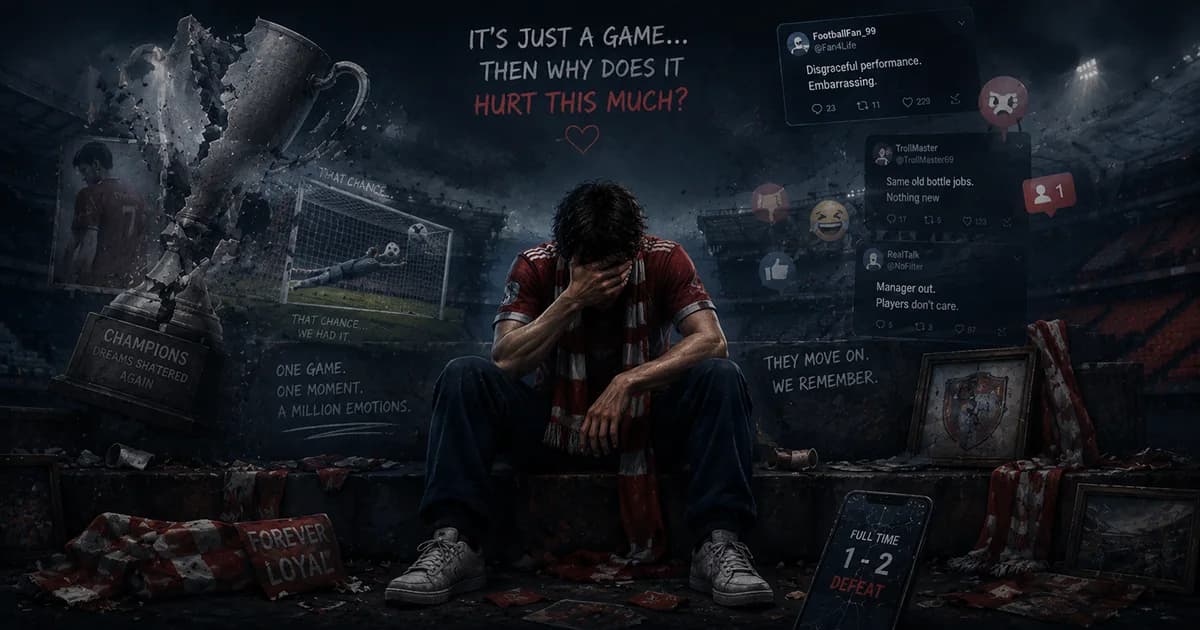
You never faced the bowler or missed the penalty, so why does the defeat feel like yours? An explanation of social identity and why supporters instinctively say "we lost", the expectation gap that turns hope into pain, and the reason a defeat to a rival keeps stinging for weeks afterwards.
Format
Curated Article
Reading Time
8 min read
Published
June 29, 2026
Last Updated
August 4, 2026
Written by
Omik Babariya
Developer · Quiz Editor
Omik Babariya is a full-stack developer and quiz editor at Unihfy Games. He writes most of the quiz questions, works on the sports and entertainment articles, and has built and tested a number of the games on the site.
View Author ProfileMinutes Played By Fans
0
Emotional Damage After Loss
100%
Mood Recovery Time
1-7 Days
Times Fans Say 'We Lost'
Every Match
Personal Investment
Very Real
The Strange Mystery Of Sports Fandom
Every sports fan has experienced it. The final whistle blows. The scoreboard confirms the nightmare. The team loses. Suddenly the entire evening feels ruined. Food tastes less exciting. Social media becomes a dangerous place. Group chats transform into emotional minefields. Rationally, fans understand something important: they were never actually on the field. They did not face a fast bowler. They did not miss an open goal. They did not drop a catch in the deep. Yet somehow the defeat feels deeply personal, almost as if they personally contributed to the disaster.
This phenomenon exists across every major sport. Cricket fans replay collapses in their minds for years. Football supporters remember missed penalties like family history. Basketball fans relive buzzer-beaters that happened a decade ago. Sports create emotional memories that often feel stronger than many everyday experiences. The strange part is that these memories involve events happening to other people wearing jerseys, often in cities fans have never even visited.
The average sports supporter spends countless hours watching matches, discussing tactics, defending players, celebrating victories, and suffering defeats. Over time, the line between 'their team' and 'themselves' becomes surprisingly blurry. Fans stop saying 'the team won.' They say 'we won.' They stop saying 'the club lost.' They say 'we lost.' That tiny change in language reveals something powerful about human psychology.
Sports fandom is one of the few hobbies where people voluntarily sign up for emotional instability. Fans know disappointment is inevitable. Every tournament produces more losers than winners. Every season contains heartbreak. Yet millions return week after week. They invest time, money, energy, hope, and emotion despite knowing that pain is part of the package. In fact, many supporters would argue that the pain is exactly what makes the victories meaningful.
So why does a cricket collapse ruin a perfectly good evening? Why does a football defeat feel like a personal insult? Why do sports fans take losses so personally? The answer involves identity, belonging, psychology, tribal instincts, and one of the most fascinating emotional relationships humans have ever created.
How Different Fans React To Defeat
The Heartbroken Loyalist
Feels every loss like a family tragedy.
The Angry Analyst
Blames tactics immediately.
The Social Media Ghost
Disappears after defeat.
The Overthinker
Replays every moment for days.
The Meme Survivor
Prepares for rival banter.
The Optimist
Already focused on the next match.
The Dramatic Fan
Declares the season over.
The Lifelong Supporter
Hurts deeply but never leaves.
The Emotional Timeline Of A Painful Defeat
Pre-Match Confidence
Victory feels inevitable.
Growing Hope
Everything looks promising.
First Signs Of Trouble
Something feels wrong.
Panic
The collapse begins.
Desperate Belief
Maybe there is still a chance.
The Defining Moment
The dream dies.
Silence
Nobody knows what to say.
Blame
Someone must be responsible.
Reflection
What could have changed?
Loyalty
See you next match.
"The most irrational thing about sports fandom is that complete strangers can ruin your mood for a week without ever meeting you."
— Every Sports Fan Ever
Your Team Slowly Becomes Part Of Your Identity
The biggest reason sports losses feel personal is surprisingly simple. Fans eventually stop supporting a team and start identifying with it. A football club or cricket team becomes part of how they see themselves. The colors become familiar. The traditions become meaningful. The victories become personal achievements. Psychologists call this social identity, and sports provide one of the strongest examples anywhere in the world.
Think about how supporters speak. Nobody says, 'That organization scored a goal.' They say, 'We scored.' Nobody says, 'Those players won the title.' They say, 'We won the title.' Fans instinctively attach themselves to outcomes. Their brains begin treating team success as personal success. The same mechanism works in reverse. When the team loses, the brain processes part of that disappointment as its own failure.
This connection becomes stronger over time. A fan who has supported a club for fifteen years carries thousands of emotional memories. They remember famous victories. Painful defeats. Legendary performances. Rivalry moments. These memories create emotional ownership. Supporting the team becomes part of personal history. Losing feels painful because something emotionally important has suffered.
This explains why casual viewers react differently from lifelong supporters. Casual viewers might feel disappointed. Dedicated fans often feel devastated. The result affects different parts of their identity. One person watched a game. The other watched something connected to their sense of belonging, community, and personal history.
That emotional connection may seem irrational from the outside, but it is actually deeply human. People naturally seek communities and identities. Sports simply provide one of the most emotionally powerful versions of both.
The Pain Of Hope Is What Makes Losses Hurt
Sports defeats rarely hurt because of the score alone. They hurt because of everything fans imagined beforehand. Hope is the hidden ingredient behind every painful loss. Before a World Cup knockout match, supporters imagine celebrations. Before a cup final, they picture lifting trophies. Before a last over chase, they dream about heroic finishes. The brain quietly starts building future memories before the result even arrives.
When defeat happens, fans are not simply losing a match. They are losing the future they expected. Every imagined celebration disappears instantly. Every dream scenario vanishes. The emotional crash comes from the difference between expectation and reality. The greater the hope, the greater the disappointment.
This is why certain defeats remain unforgettable. A routine league loss may sting temporarily. A final lost in extra time becomes emotional history. A penalty shootout defeat can haunt supporters for years. The match carried enormous emotional investment, so the outcome leaves a larger psychological mark.
Cricket fans understand this perfectly. A team needing fifteen runs from the final over creates incredible hope. Every boundary increases belief. Every dot ball increases anxiety. By the time the final delivery arrives, fans are emotionally exhausted. Victory creates euphoria. Defeat creates devastation. The emotional investment has become enormous.
Sports are unique because they allow people to experience hope repeatedly, even after previous heartbreaks. Fans know disappointment is possible. Sometimes they expect it. Yet they keep believing anyway. That willingness to hope is both the source of sports joy and sports pain.
How Deeply Sports Fans Feel Defeats
Casual Viewer
Moves on within minutes.
Interested Supporter
Feels annoyed for a while.
Regular Fan
Discusses the loss all evening.
Dedicated Supporter
Mood changes noticeably.
Matchday Addict
Replays key moments repeatedly.
Rivalry Veteran
Defeats carry social consequences.
Emotionally Invested
Feels genuine heartbreak.
Lifelong Fan
Carries losses for years.
Why Rivalries Make Defeats Feel Even Worse
Losing is painful. Losing to rivals is something entirely different. Rivalries add social consequences to sports outcomes. Suddenly the result is not just about points or trophies. It is about bragging rights. It is about conversations at school, work, family gatherings, and group chats. Rival fans become living reminders of the result.
This social element dramatically increases emotional intensity. A defeat against a rival feels public. Supporters know they will hear jokes, see memes, and encounter reminders for weeks. The anticipation of that experience often hurts almost as much as the actual result. Sports losses become social events rather than private disappointments.
Football derbies provide some of the clearest examples. Entire cities split emotionally. One side celebrates while the other suffers. For supporters, the result influences daily interactions. Cricket rivalries create similar feelings, especially during major tournaments where national pride becomes part of the emotional equation.
Humans care deeply about status within groups. Rivalries exploit this perfectly. Winning creates pride. Losing creates embarrassment. Neither feeling lasts forever, but both feel extremely real in the moment. Sports turn abstract competitions into personal experiences because supporters emotionally participate in the battle.
This is also why victories against rivals feel disproportionately satisfying. The emotional stakes were higher from the beginning. The result carries extra meaning. The same mechanism that creates deeper pain also creates greater joy.
The Most Personally Painful Sports Defeats
Losing A Final
Pain 10/10The dream was so close.
Defeat To A Rival
Pain 10/10Bragging rights disappear.
Penalty Shootout Loss
Pain 10/10Pure emotional torture.
Last Over Cricket Collapse
Pain 10/10Hope vanishes instantly.
Last-Minute Goal Conceded
Pain 9/10Victory stolen away.
Tournament Elimination
Pain 9/10Months of excitement end.
Historic Choke
Pain 10/10The internet never forgets.
Losing After Dominating
Pain 9/10Feels deeply unfair.
Top 10 Reasons Sports Fans Take Losses Personally
Team Identity
The club becomes part of who they are.
Emotional Investment
Years of memories create attachment.
Hope
Expectations amplify disappointment.
Community
Fans experience results together.
Rivalries
Social consequences increase pressure.
Personal Rituals
Supporters feel involved emotionally.
Shared History
Past moments remain meaningful.
Belonging
Teams provide social connection.
Dreams
Fans imagine future success.
Passion
Because they genuinely care.
Sports Psychology Fact
Research consistently shows that strong team identification can influence mood, confidence, stress levels, and emotional responses after wins and losses.
The Universal Fan Experience
If you have ever said 'we lost' despite never stepping onto the field, congratulations. Your brain has officially adopted a sports team as part of your identity.
Final Verdict: Sports Losses Hurt Because They Matter
Sports fans take losses personally because fandom is never really about the scoreboard. It is about identity. It is about belonging. It is about memories collected across years of support. Every match becomes another chapter in a story supporters have emotionally invested in for a long time. When something important to that story suffers, fans feel the pain too.
The irony is that the same psychological connection responsible for heartbreak is also responsible for joy. Fans celebrate victories so passionately because they feel connected. They remember trophies because they feel involved. They cherish legendary moments because those moments feel partly theirs. Without emotional investment, sports would be entertaining. With emotional investment, sports become unforgettable.
Every supporter eventually experiences the strange contradiction of fandom. They know the result should not affect them so much. Yet it does. They know a match should not influence their mood for days. Yet sometimes it will. The emotional reaction feels irrational, but it is actually a natural consequence of caring deeply about something meaningful.
That is why fans continue returning after devastating defeats. They complain. They overanalyze. They promise never to suffer like this again. Then the next match arrives and hope quietly returns. The emotional cycle begins again because the possibility of joy remains stronger than the memory of pain.
In the end, sports losses hurt personally because sports matter personally. The heartbreak is proof of attachment. The disappointment is proof of hope. And the fact that fans keep coming back, no matter how painful the previous result was, might be the strongest evidence of all that sports fandom is one of the most powerful emotional experiences humans willingly choose.
Quick Picks
Games Where The Defeat Really Is Yours
The point above is that supporters blame themselves for things they never did. These are the games where that blame happens to be completely accurate.

Puzzle
BreakLock
A deduction puzzle where a wrong guess is simply a wrong guess. There is no bowler to hold responsible.

Puzzle
Cosmic Merge
Every board that dies did so because of something you chose several minutes earlier.

Puzzle
Block Stacker
The stack only ever collapses in the shape you built it.
Related Articles
Sports
Why Every Cricket Fan Becomes A Coach During The Match
Discover the psychology behind why every cricket fan suddenly becomes a coach during live matches. Explore fan emotions, match-day behavior, superstitions, heartbreaks, tactical opinions, and the fascinating culture of cricket fandom.
Sports
Ranking Cricket Fans By Panic Level: From Chill Spectator To Full-Time Emergency Broadcaster
A hilarious and relatable ranking of cricket fans based on panic levels during matches. Explore fan psychology, emotional reactions, superstitions, heartbreaks, last-over stress, and why every cricket fan slowly transforms into a nervous wreck.
Sports
Most Painful Ways A Cricket Match Can End: A Complete Guide To Sports Heartbreak
Explore the most painful ways a cricket match can end. From last-ball losses and run-outs to dropped catches and heartbreaking collapses, discover the psychology behind sports pain and why fans never truly recover.
Sports
Every Football Fan Has Experienced These 10 Emotions At Least Once
From last-minute winners to penalty shootout heartbreaks, discover the 10 emotions every football fan experiences. A deep dive into football psychology, fandom, rivalries, celebrations, and emotional chaos.
Continue Exploring
Ready For More?
Jump into browser games or challenge yourself in Quiz Arena. There's always something new to discover.