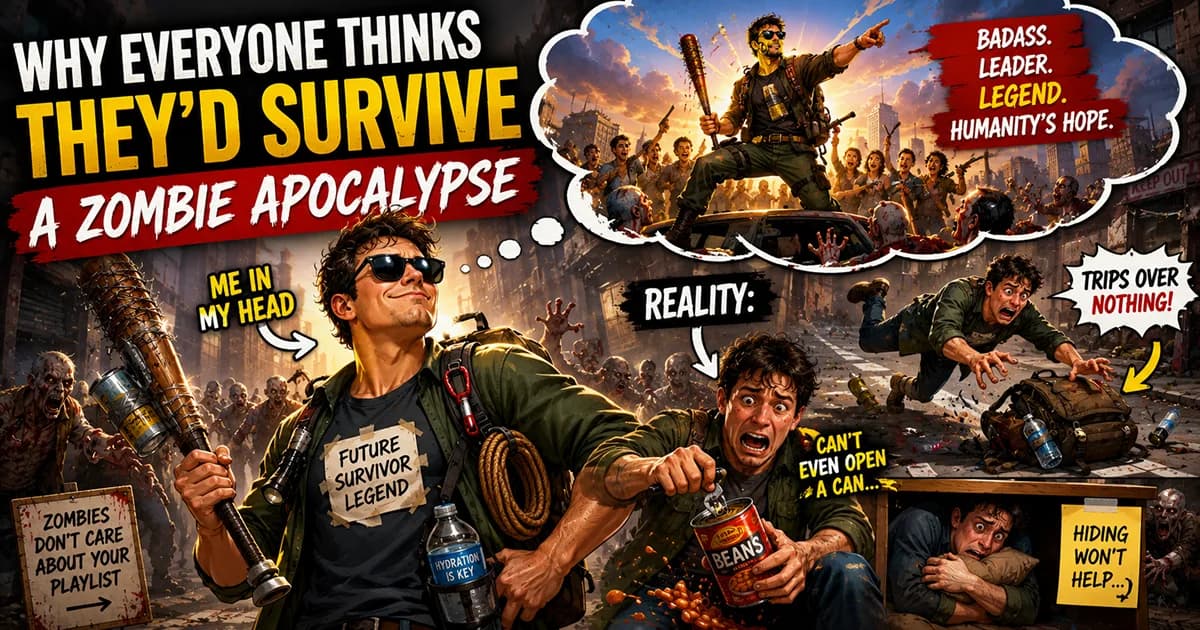
Why Everyone Thinks They'd Survive A Zombie Apocalypse
From overconfidence and movie logic to survival fantasies and everyday delusions, here's why almost everyone believes they'd thrive during a zombie apocalypse.
Format
Curated Article
Reading Time
12 min read
Published
June 28, 2026
Last Updated
August 4, 2026
Written by
Omik Babariya
Developer · Quiz Editor
Omik Babariya is a full-stack developer and quiz editor at Unihfy Games. He writes most of the quiz questions, works on the sports and entertainment articles, and has built and tested a number of the games on the site.
View Author ProfileThe Most Confident People On Earth Have Never Met A Zombie
Ask almost anyone a simple question: 'Would you survive a zombie apocalypse?' The answer arrives suspiciously fast. Most people don't hesitate. They don't request details. They don't ask about zombie speed, infection rates, food shortages, weather conditions, or basic probability. They immediately assume they would be among the survivors. Not just surviving, either. Thriving. Leading groups. Making smart decisions. Becoming legends.
It's one of the most fascinating fantasies in modern entertainment. The zombie apocalypse has become less of a horror scenario and more of a personality test. Everyone has a plan. Everyone has a strategy. Everyone somehow believes they possess hidden survival skills waiting for civilization to collapse before revealing themselves.
What's funny is that many of these same people struggle when the Wi-Fi goes down for twenty minutes. The person who forgets their password every week somehow believes they can navigate a lawless wasteland while managing food supplies, defense systems, medical emergencies, and dangerous threats.
Movies, television shows, games, and books have trained us to imagine ourselves as the exception. We never picture ourselves as the confused background character who makes a bad decision. We picture ourselves as the clever survivor who adapts instantly. It's human nature. We're the heroes of our own stories.
The real question isn't whether zombies would be dangerous. The real question is why nearly everyone believes they'd be one of the last people standing. The answer says far more about human psychology than it does about fictional monsters.
"Everyone thinks they'd be the survivor. Nobody imagines they'd be the person who forgot to pack batteries."
— Zombie Apocalypse Reality
We Secretly Believe We're Smarter Than Average
One of the biggest reasons people think they'd survive is something psychologists have observed for decades. Most people believe they're above average in important areas. Better drivers. Better decision-makers. Better problem-solvers. Better under pressure. Statistically, this obviously can't be true for everyone, but our brains love the illusion.
The zombie apocalypse fantasy takes that bias and gives it a dramatic stage. Suddenly every ordinary decision becomes a heroic choice. We imagine ourselves staying calm while everyone else panics. We picture ourselves recognizing danger before others do. We become the person delivering clever advice while the crowd listens in admiration.
Entertainment amplifies this belief because stories naturally focus on exceptional individuals. We rarely follow average people making average decisions. We follow remarkable characters who beat impossible odds. After years of consuming those stories, it's easy to start imagining ourselves in similar roles.
The result is a fascinating mental shortcut. Instead of asking, 'How would I actually perform?' we ask, 'Which hero would I resemble?' That's a much more flattering question, and our imagination happily provides an optimistic answer.
Unfortunately, real emergencies don't care about self-confidence. They care about preparation, adaptability, luck, and countless factors that don't fit neatly into a movie montage.
The Survivor Bias
Most people naturally imagine themselves as the successful survivor rather than one of the millions facing the same challenge.
The Grocery Store Fantasy
Setup
A person imagines the first day of a zombie outbreak.
What We Thought
They quickly gather supplies, make smart decisions, and stay three steps ahead of everyone else.
What We Realize Now
They spend forty minutes trying to remember where batteries are located and another twenty debating which snacks are essential.
Zombie Stories Are Secretly Power Fantasies
At first glance, zombie stories seem terrifying. Civilization collapses. Resources disappear. Danger lurks everywhere. Yet millions of people absolutely love these stories. Why? Because beneath the horror lies a powerful fantasy.
Modern life is complicated. There are deadlines, emails, traffic, bills, social expectations, endless notifications, and responsibilities that never seem to stop multiplying. A zombie apocalypse strips away almost all of that complexity. Suddenly life becomes simple. Survive. Protect your group. Find food. Keep moving.
That simplicity is strangely appealing. It's not that people want monsters roaming the streets. It's that many people secretly crave a world where priorities become obvious. The fantasy isn't the zombies. The fantasy is clarity.
In these imagined scenarios, hidden talents emerge. Ordinary people become leaders. Quiet individuals become heroes. Everyday routines disappear, replaced by dramatic challenges that feel meaningful and immediate.
When someone says they'd survive a zombie apocalypse, they may actually be expressing something deeper. They're imagining a version of themselves freed from ordinary limitations and finally given a chance to prove what they're capable of.
The Secret Appeal
Most zombie fantasies are less about escaping monsters and more about escaping routine.
Everyone Thinks They'd Stay Calm Under Pressure
One of the most common assumptions in survival fantasies is emotional control. People imagine themselves staying perfectly calm while chaos unfolds around them. They see themselves making logical decisions, organizing resources, and helping others remain focused.
This confidence usually comes from imagination rather than experience. Real emergencies are messy. Stress affects memory, judgment, attention, and decision-making. Even highly trained professionals spend years learning how to function effectively under pressure.
Yet when we imagine ourselves in fictional disasters, we rarely include panic in the script. We skip directly to competence. Our mental movie casts us as the calm strategist rather than the overwhelmed participant.
Part of this comes from hindsight. While watching a movie, viewers have information characters don't. We see mistakes before they happen. We know which decisions are wrong. This creates the illusion that we'd automatically perform better.
In reality, uncertainty changes everything. Making perfect decisions becomes much harder when you don't know which choice leads to safety and which leads to disaster.
The People Everyone Imagines They'd Become
The Strategist
Always has a plan.
Usually created by hindsight and imagination.
The Survivor
Resourceful and fearless.
Assumes stress won't affect decision-making.
The Builder
Creates safe communities.
Has never built a fence without instructions.
The Leader
Commands respect instantly.
Sometimes struggles to choose a restaurant.
"The easiest place to be brave is inside a hypothetical situation."
— Human Nature
Movies Have Trained Us To Judge From The Couch
Zombie stories create a powerful illusion. Viewers watch characters make mistakes and immediately think, 'I would never do that.' The confidence feels justified because the mistake seems obvious from the outside.
The problem is that audiences possess an unfair advantage. We observe events from a comfortable distance. We aren't exhausted, frightened, injured, confused, or missing critical information. We get to analyze every decision with perfect clarity.
This perspective creates unrealistic confidence. The character entering a suspicious building seems foolish because we know something dangerous is waiting. In reality, that character doesn't have access to the soundtrack, camera angles, or audience perspective.
Over time, repeated exposure to these stories convinces viewers they're better prepared than they actually are. Every mistake becomes evidence of what not to do. Every survivor becomes a blueprint for success.
The irony is that many fictional mistakes only look obvious because the story is designed that way. Real life rarely provides such clear warnings.
The Viewer Advantage
Audiences always possess more information than characters, making survival decisions appear easier than they really are.
The Safe Shelter Debate
Setup
A group discovers a seemingly secure location.
What We Thought
Future survivors imagine immediately identifying every weakness and risk.
What We Realize Now
Real people would spend hours disagreeing, second-guessing, and changing plans.
What's More Important In A Zombie Apocalypse?
Survival Skills
- ✓ Practical knowledge matters.
- ✓ Resource management is critical.
- ✓ Preparation increases odds.
Adaptability
- ✕ Conditions constantly change.
- ✕ Rigid plans often fail.
- ✕ Flexibility beats perfection.
Why The Genre Never Dies
Zombie stories survive because they transform ordinary people into extraordinary versions of themselves.
The Logistics Would Be Much Less Exciting
When people imagine surviving an apocalypse, they usually focus on action. They picture dramatic escapes, clever strategies, and heroic victories. They rarely imagine the less glamorous realities.
Where does clean water come from? How do you preserve food? What happens when someone gets sick? How do you handle boredom, exhaustion, weather, and constant uncertainty? These questions aren't exciting, but they're incredibly important.
Real survival often depends on routine rather than heroics. Consistent habits, careful planning, cooperation, and patience matter more than dramatic moments. That's not as cinematic, but it's probably more realistic.
The funny thing is that many people who imagine thriving during a zombie apocalypse are actually imagining the exciting highlights rather than the daily responsibilities. They're picturing the trailer, not the full season.
If fictional survivors had to spend three hours discussing water filtration every episode, the fantasy might lose a little of its glamour.
What Actually Keeps People Alive?
Individual Heroes
- ✓ Strong leadership inspires confidence.
- ✓ Quick decisions save time.
- ✓ Exceptional individuals can protect groups.
Strong Communities
- ✕ Shared skills increase resilience.
- ✕ Cooperation spreads responsibility.
- ✕ Groups solve problems more effectively.
The Real Fantasy Isn't Survival
After years of zombie movies, television shows, books, and games, a surprising truth emerges. Most people aren't actually fascinated by survival. They're fascinated by transformation. They want to know who they would become when everything familiar disappears.
That's why these stories remain popular across generations. They ask a timeless question: What matters when nothing else does? Strip away careers, schedules, social status, and routines. What's left?
The answers are usually friendship, loyalty, courage, community, adaptability, and hope. The monsters create tension, but those human qualities create meaning. Without them, the story wouldn't matter.
People imagine surviving because survival represents something larger. It represents overcoming impossible odds. It represents discovering strength you didn't know existed. It represents becoming the person you hope you could be.
Viewed that way, the zombie apocalypse becomes less about monsters and more about identity. The question isn't whether you'd survive. It's who you'd become while trying.
Zombie Apocalypse Fantasy vs Reality
Fantasy
You instantly become a survival expert.
Reality
Most skills require practice, experience, and teamwork.
Fantasy
You stay calm at all times.
Reality
Stress affects everyone.
Fantasy
Every decision is obvious.
Reality
Real emergencies are full of uncertainty.
Fantasy
You survive alone.
Reality
Communities usually outperform individuals.
Why We Keep Believing We'd Make It
Despite all the evidence, most people will continue believing they'd survive a zombie apocalypse. And honestly, that's probably a good thing. Optimism has always been one of humanity's most powerful traits. People naturally want to believe they can overcome challenges.
These fantasies reveal something hopeful. Deep down, we want to see ourselves as capable, resilient, and adaptable. We want to believe we'd help others instead of giving up. We want to imagine courage rather than fear.
That's why the question remains fun. It's not really about zombies. It's about self-perception. It's about the stories we tell ourselves regarding our own potential. Every answer reveals something about how people view their strengths.
Whether you'd actually survive is impossible to know. But the confidence itself is part of the entertainment. Imagining success is far more enjoyable than imagining failure.
And so the debate continues. Millions of people remain absolutely convinced they'd make it through the apocalypse. The zombies, meanwhile, have yet to offer their side of the argument.
Quick Picks
Go On Then, Test The Plan
Everyone quoted above is confident they would make it through. Here is a low-stakes opportunity to find out.
Shooting
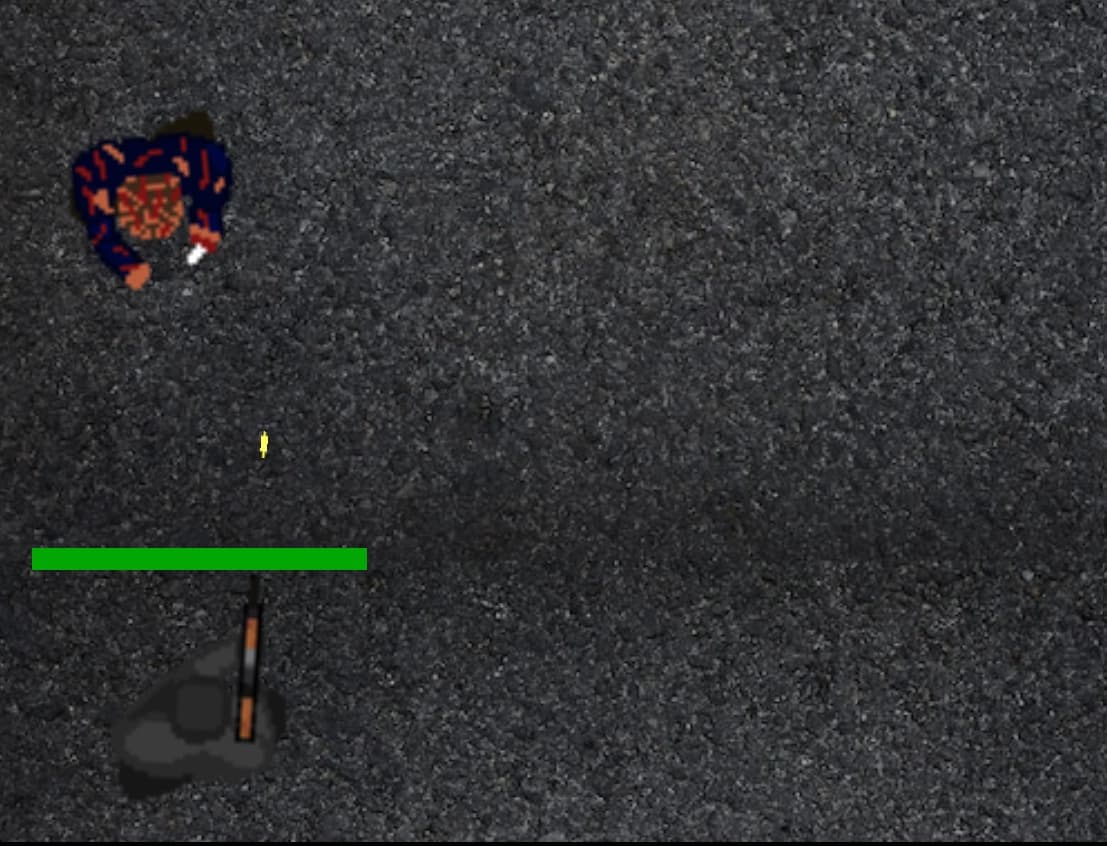
Undead Undone
The straightforward version. They come towards you, and you deal with it.
Shooting
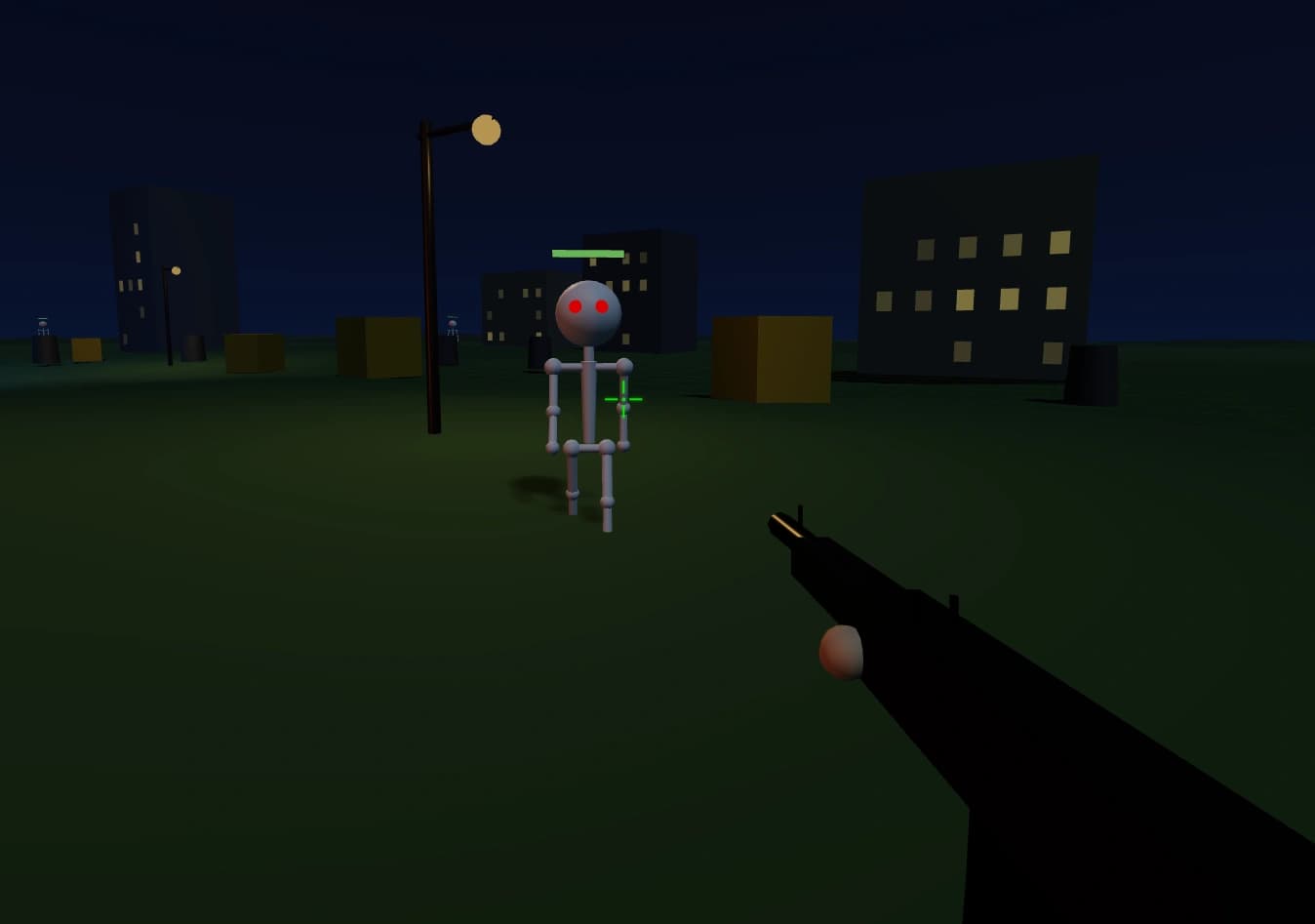
Stickman Shooter 3D Ultimate
3D, quick, and completely unforgiving about any pause to think.
Action
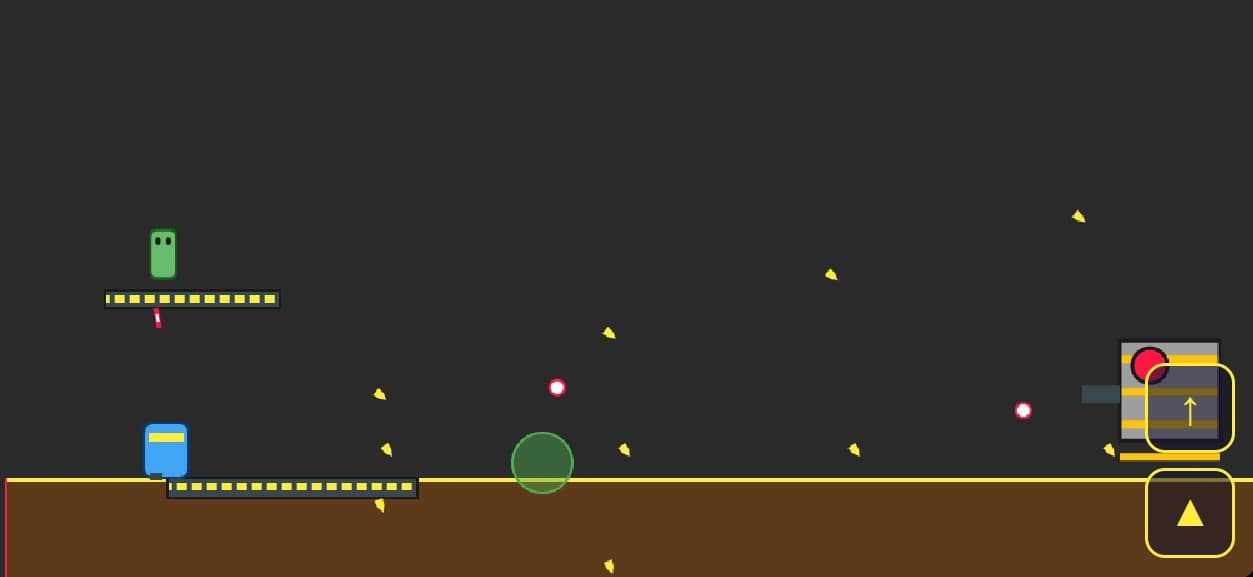
Alloy Assault
Defend a position against growing numbers and see how long your strategy lasts.
Related Articles
Entertainment
How Famous Movies Would Have Ended If Characters Used Common Sense
What if movie heroes, villains, detectives, superheroes, and chosen ones made sensible decisions? Explore the hilarious alternate endings that would have shortened some of entertainment's biggest stories.
Entertainment
If Superheroes Had Normal Jobs
What would happen if superheroes traded world-saving adventures for regular nine-to-five careers? A hilarious deep dive into the workplaces that might be perfect for people with extraordinary abilities.
Entertainment
Childhood Movie Scenes That Hit Different As An Adult
The movie moments that felt fun, exciting, or completely normal as kids suddenly reveal deeper emotions, life lessons, and heartbreaking truths when viewed through adult eyes.
Entertainment
Movie Endings That Still Start Arguments
Some movie endings refuse to stay in the theater. Years later, fans still debate what happened, what it meant, and whether the ending was brilliant or frustrating.
Continue Exploring
Ready For More?
Jump into browser games or challenge yourself in Quiz Arena. There's always something new to discover.