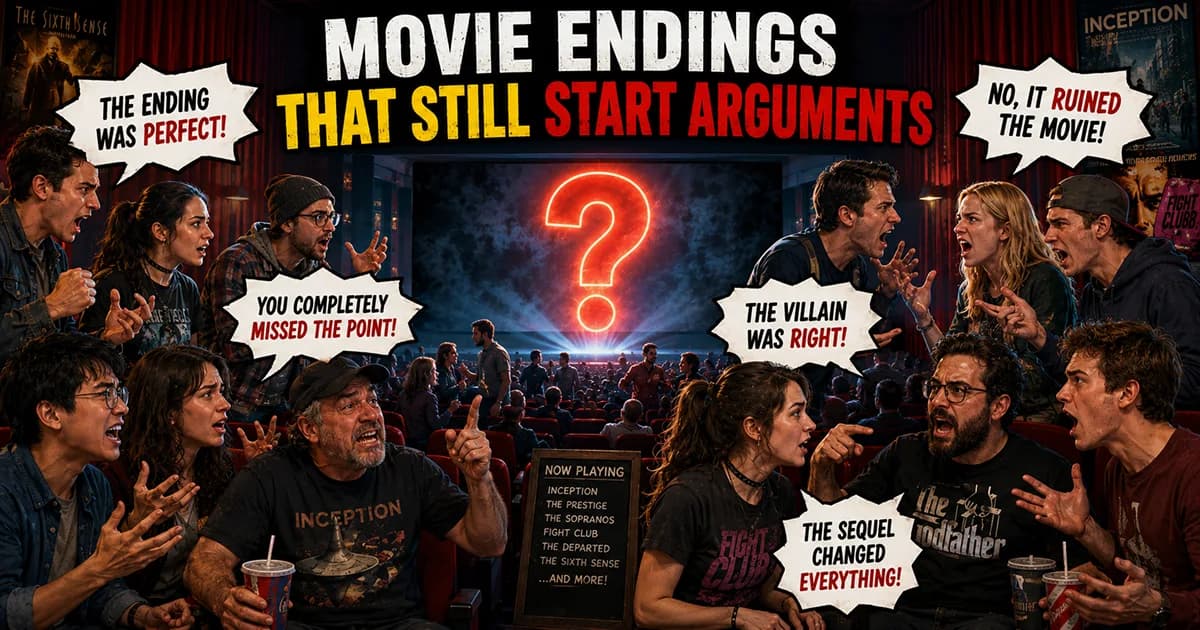
Movie Endings That Still Start Arguments
Some movie endings refuse to stay in the theater. Years later, fans still debate what happened, what it meant, and whether the ending was brilliant or frustrating.
Format
Curated Article
Reading Time
12 min read
Published
June 27, 2026
Last Updated
August 4, 2026
Written by
Omik Babariya
Developer · Quiz Editor
Omik Babariya is a full-stack developer and quiz editor at Unihfy Games. He writes most of the quiz questions, works on the sports and entertainment articles, and has built and tested a number of the games on the site.
View Author ProfileThe Credits Roll, The Argument Begins
Most movies end the same way. The story concludes, the audience understands what happened, and everyone leaves the theater with roughly the same interpretation. Maybe people disagree about whether the movie was good or bad, but the ending itself feels settled. Then there are the other movies. The dangerous ones. The films that seem to wait until the final five minutes before throwing a conversational grenade into the audience and quietly walking away.
These are the endings that survive far longer than the movies themselves. Years pass. New films come and go. Entire franchises rise and fall. Yet people still find themselves debating what happened during those final scenes. Someone casually mentions the movie at a party, and suddenly three different interpretations appear within thirty seconds.
The fascinating thing is that controversial endings aren't always confusing. Sometimes they're perfectly clear. The argument comes from what they mean rather than what happened. Viewers bring different experiences, beliefs, expectations, and emotional reactions into the theater, and those differences create endless discussions.
Some audiences want closure. Others want mystery. Some believe every question deserves an answer. Others think unanswered questions are what make stories memorable. These opposing philosophies often collide when a movie refuses to neatly wrap everything up.
That's why certain endings never die. They stop being scenes and become conversations. Long after the credits disappear, the debate continues, fueled by passionate fans who are absolutely convinced they're correct.
"A truly unforgettable ending doesn't end the conversation. It starts one."
— Film Fans Everywhere
Why We Secretly Love Unfinished Answers
People often claim they want complete explanations, but audience behavior suggests something very different. The endings that dominate discussions are usually the ones that leave a little space for interpretation. They provide enough information to build theories without providing enough certainty to settle them.
There's something strangely addictive about uncertainty. When a movie leaves room for imagination, viewers become active participants instead of passive observers. Suddenly we're not just consuming a story. We're helping complete it.
This transforms movie watching into a social experience. Fans gather online, discuss clues, compare interpretations, and defend their favorite explanations. The story expands beyond the screen because audiences continue engaging with it long after the final scene.
Of course, this only works when the mystery feels intentional. Viewers can usually tell the difference between thoughtful ambiguity and simple confusion. One inspires discussion. The other inspires frustration.
The best debated endings strike an almost impossible balance. They answer enough questions to feel satisfying while leaving enough uncertainty to remain interesting for years.
The Debate Formula
The most discussed endings usually reveal just enough information to support multiple believable interpretations.
The Car Ride Home
Setup
Friends leave the theater after a movie with an ambiguous ending.
What We Thought
Everyone agrees on what happened and discusses favorite scenes.
What We Realize Now
A forty-minute argument begins before the parking lot exit is even visible.
The Battle Between Closure And Curiosity
Every audience member carries invisible expectations into a movie. Some viewers want emotional closure. They want to know where characters end up, what choices matter, and how conflicts are resolved. For them, satisfaction often comes from certainty.
Other viewers are drawn toward mystery. They enjoy endings that linger in the mind. Instead of asking for answers, they ask for possibilities. They don't necessarily want the puzzle solved. They want something worth thinking about.
This creates one of entertainment's oldest debates. Should stories explain everything? Or should they trust audiences to fill in the gaps themselves? There isn't a universally correct answer because different people enjoy stories for different reasons.
A movie ending often becomes controversial when it strongly favors one approach over the other. Audiences seeking closure may feel cheated. Audiences seeking complexity may feel rewarded. Both reactions can exist simultaneously.
The result is a fascinating cultural tug-of-war. The same ending can be called brilliant, frustrating, courageous, and disappointing depending entirely on who's watching.
The Golden Rule Of Movie Debates
The longer people argue about an ending, the more likely the filmmakers achieved exactly what they wanted.
Plot Twists Change Everything After The Fact
Some endings become legendary because they force audiences to rethink everything that came before them. Suddenly scenes that seemed straightforward acquire entirely new meanings. Dialogue changes. Motivations change. Even the tone of the story can shift dramatically.
These endings create a unique experience because the movie effectively transforms after you've already watched it. The second viewing becomes completely different from the first. You're no longer following the original narrative. You're searching for clues hidden in plain sight.
This kind of storytelling is incredibly powerful because it rewards attention. Fans love discovering details they missed the first time. Entire communities form around analyzing tiny moments that suddenly feel important.
However, plot-twist endings also create disagreement. Some viewers admire the cleverness. Others feel manipulated. Some celebrate the surprise. Others argue that emotional storytelling matters more than shocking reveals.
That's why twist endings often remain controversial for decades. They challenge audiences to decide what they value most in storytelling.
"The best twist endings don't change the ending. They change the beginning."
— Cinema Discussion Club
The Four Types Of Ending Debaters
The Detective
Analyzes every clue.
Has screenshots saved from multiple rewatches.
The Emotional Viewer
Focuses on character journeys.
Cares more about feelings than theories.
The Analyst
Studies themes and symbolism.
Can turn one scene into a thirty-minute explanation.
The Casual Fan
Just wants answers.
Gets trapped in debates anyway.
Open Endings Are The Internet's Favorite Playground
Few things fuel discussion like an open ending. The moment a movie refuses to confirm exactly what happens next, audiences immediately begin constructing possibilities. Entire forums, videos, articles, and podcasts emerge from a single unanswered question.
What's remarkable is how quickly viewers become storytellers themselves. They connect clues, identify patterns, and build interpretations that sometimes become more elaborate than the original plot. The movie becomes a collaborative exercise between creators and audiences.
This phenomenon existed long before the internet, but online communities transformed it into something much larger. Fans from different countries, generations, and backgrounds can now compare theories instantly.
Every interpretation reveals something about the person presenting it. Optimistic viewers often imagine hopeful outcomes. Cynical viewers see darker possibilities. Realists search for practical explanations. Dreamers focus on symbolism.
The ending becomes a mirror. Instead of revealing only the story, it reveals how different people think about stories.
The Mystery Advantage
An unanswered question can keep audiences discussing a movie far longer than a fully explained conclusion.
The Group Chat Explosion
Setup
Someone watches a famous ambiguous movie for the first time.
What We Thought
A quick reaction message gets posted in the group chat.
What We Realize Now
The conversation somehow continues for three days and produces multiple competing theories.
What Makes A Great Ending?
Clear Answers
- ✓ Provides emotional closure.
- ✓ Rewards audience investment.
- ✓ Eliminates unnecessary confusion.
Meaningful Ambiguity
- ✕ Encourages discussion.
- ✕ Invites interpretation.
- ✕ Keeps the story alive.
Sometimes The Real Argument Isn't About The Ending
Many famous movie-ending debates aren't actually about the ending itself. They're about expectations. Audiences enter movies carrying assumptions about genre, tone, and storytelling conventions. When a film deliberately challenges those expectations, reactions become intense.
Imagine spending two hours expecting one type of conclusion and receiving something entirely different. Some viewers celebrate the surprise. Others feel betrayed. The emotional response often depends on what people hoped the movie would become.
This explains why certain endings divide audiences so dramatically. The disagreement isn't always rooted in quality. It's rooted in perspective. Different viewers wanted different things from the same story.
That tension creates some of cinema's most fascinating conversations. People aren't merely debating events. They're debating storytelling philosophy. They're discussing what movies should do, not just what they did.
In many cases, the argument becomes bigger than the film itself. The ending transforms into a symbol for broader discussions about art, entertainment, and audience expectations.
The Secret Behind Most Movie Fights
Fans often argue about endings when they're actually arguing about expectations.
"A controversial ending is basically a sequel written by the audience."
— Film Discussion Podcast
Should Filmmakers Explain Their Endings?
Yes
- ✓ Clarifies the intended meaning.
- ✓ Prevents confusion.
- ✓ Provides definitive answers.
No
- ✕ Protects audience interpretation.
- ✕ Maintains mystery.
- ✕ Allows personal connections.
The Endings We Never Stop Talking About
The most memorable movie endings share a surprising quality. They refuse to stay contained within the movie itself. Instead of ending the experience, they extend it. The audience becomes part of the storytelling process.
These endings linger because they create questions worth asking. Not necessarily questions with correct answers, but questions that reveal something interesting about storytelling and human nature.
A truly debated ending doesn't demand agreement. It invites interpretation. It understands that different viewers bring different perspectives and uses that diversity as part of the experience.
That's why certain films remain culturally relevant for years. Their endings generate enough curiosity to outlast trends, release dates, and changing tastes. The discussion becomes part of the legacy.
In an entertainment landscape overflowing with content, creating something people still argue about years later is an extraordinary achievement.
Why Movie Ending Debates Never End
Fantasy
There is one correct interpretation.
Reality
Many endings are designed to support multiple viewpoints.
Fantasy
Everyone watches movies the same way.
Reality
Different experiences create different readings.
Fantasy
Ambiguity is always confusing.
Reality
Sometimes ambiguity is the point.
Fantasy
Arguments mean the ending failed.
Reality
Arguments often mean the ending succeeded.
Maybe The Best Ending Is The One Nobody Agrees On
It's easy to assume a perfect ending would satisfy everyone. Yet history suggests otherwise. The endings people remember most aren't always the ones that generated universal approval. They're the ones that inspired conversation.
Agreement is comfortable, but disagreement is memorable. When audiences leave a movie with different interpretations, they carry the story into everyday life. They debate it during dinner, discuss it online, and revisit it years later.
That's a remarkable accomplishment. Most entertainment fades quickly. Controversial endings resist fading because they're never truly finished. Each new discussion adds another layer to the experience.
Of course, not every ambiguous ending works. Not every controversial conclusion is brilliant. But when filmmakers successfully balance mystery, emotion, and meaning, they create something rare: an ending that keeps evolving.
And perhaps that's why movie endings that still start arguments remain so fascinating. Long after the credits roll, the story continues. Not on the screen, but in the conversations that follow.
Quick Picks
Endings People Are Still Arguing About
If you enjoy a story that flatly refuses to explain itself, these do exactly the same thing.
Adventure
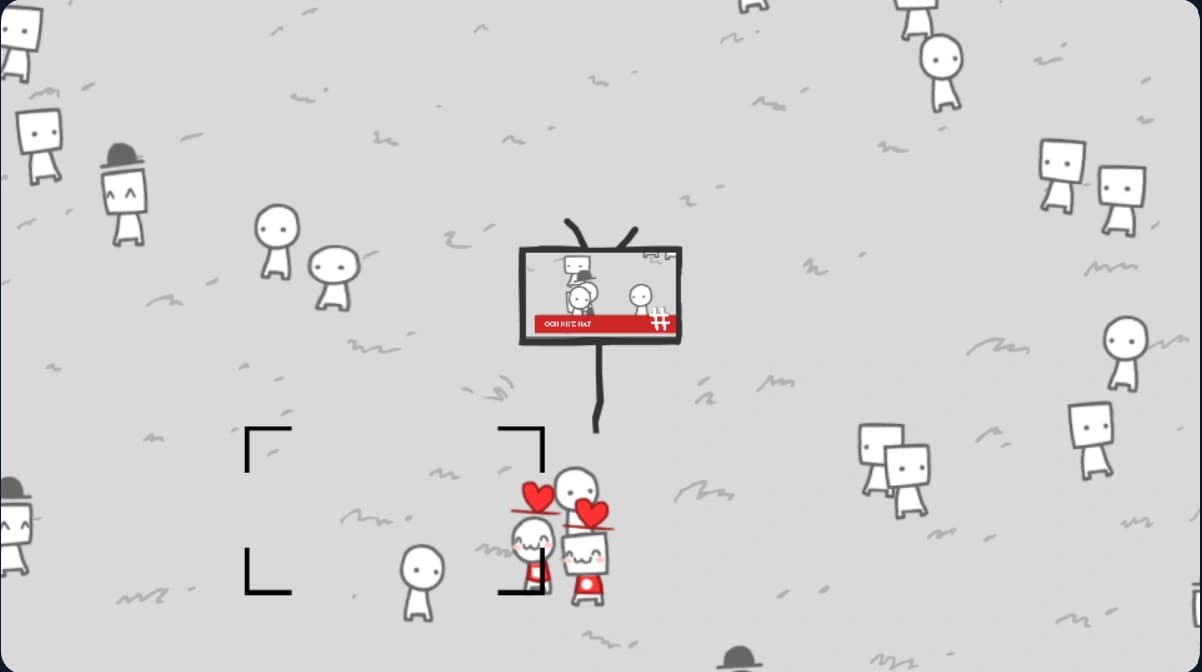
We Become What We Behold
A five-minute game about news cycles that people have argued over ever since it was released. Free, and made by Nicky Case.

Adventure
Astray 3D Maze
No narration and no ending text. Just a maze and whatever you decide it meant.

Puzzle
BreakLock
Shows you the solution only once you have run out of chances to do anything with it.
Related Articles
Entertainment
How Famous Movies Would Have Ended If Characters Used Common Sense
What if movie heroes, villains, detectives, superheroes, and chosen ones made sensible decisions? Explore the hilarious alternate endings that would have shortened some of entertainment's biggest stories.
Entertainment
If Superheroes Had Normal Jobs
What would happen if superheroes traded world-saving adventures for regular nine-to-five careers? A hilarious deep dive into the workplaces that might be perfect for people with extraordinary abilities.
Entertainment
Childhood Movie Scenes That Hit Different As An Adult
The movie moments that felt fun, exciting, or completely normal as kids suddenly reveal deeper emotions, life lessons, and heartbreaking truths when viewed through adult eyes.
Entertainment
Why Everyone Thinks They'd Survive A Zombie Apocalypse
From overconfidence and movie logic to survival fantasies and everyday delusions, here's why almost everyone believes they'd thrive during a zombie apocalypse.
Continue Exploring
Ready For More?
Jump into browser games or challenge yourself in Quiz Arena. There's always something new to discover.