01
The time system is the reason to care
Quests move the clock, exploration does not. That single rule turns every quest selection into a choice, and it is the most interesting idea in any RPG releasing this year.
No games found
Unihfy Games
Loading identity...
Quick Access
Rebel Wolves turns picking your next quest into a decision with real consequences. A close look at the time system, the day and night split, the divisive combat, and what four hours of hands-on impressions actually tell us.
Preview — Not A Final Review
This game has not released yet. Everything here is based on official material and reported impressions rather than our own hands-on play.
Developer
Rebel Wolves
Genre
Open World Action RPG
Platforms
PC · PS5 · Xbox Series
Release
3 September 2026
Written by
Developer · Game Reviewer
Kaushik Hirpara is a full-stack developer and game reviewer at Unihfy Games. He does most of the work of bringing games to the site — adapting them to run properly in a browser, getting them working on phones, playing them, and writing up what players need to know.
There is a small optional quest in The Blood of Dawnwalker that tells you more about the game than any trailer has. Coen, the man you play as, finds drag marks and blood leading off a road into the trees. He follows them to an abandoned camp. The bedding is clean and untouched. The embers are still warm. Whoever was here did not leave because they wanted to.
Further into the forest he finds the bodies, and crouched among them, a creature calmly pulling out their teeth. It is entirely unbothered at being caught. It explains that it did not kill these men, though it would happily have helped. There are bandits nearby who dump bodies in this part of the wood, and it leaves them gold in exchange for what it takes from the corpses. The bandits get paid, it gets teeth, and as it puts it, everyone is happy.
You can go and deal with the bandits. When you come back and tell the creature its suppliers are finished, it does not panic or apologise. It simply looks at you and asks whether you might like the job instead. When Coen points out that this would mean killing innocent people, the answer arrives without a flicker of hesitation: innocent, guilty, it could not possibly care less. Bring it nice teeth and it will give you something in return.
That is a side quest. It is not the main story and you can walk straight past it. But it sets the temperature for everything else, and it is a useful thing to hold onto while reading the rest of this, because the most interesting idea in this game is not the vampires. It is what the game does with your time.
The Basics
Rebel Wolves is a new studio founded by former CD Projekt Red developers, several of whom worked on The Witcher 3. That fact has done most of the marketing for this game, and it is worth being careful with it. Lineage is a reason to pay attention. It has never once been a guarantee, and treating it as one is how people end up disappointed.
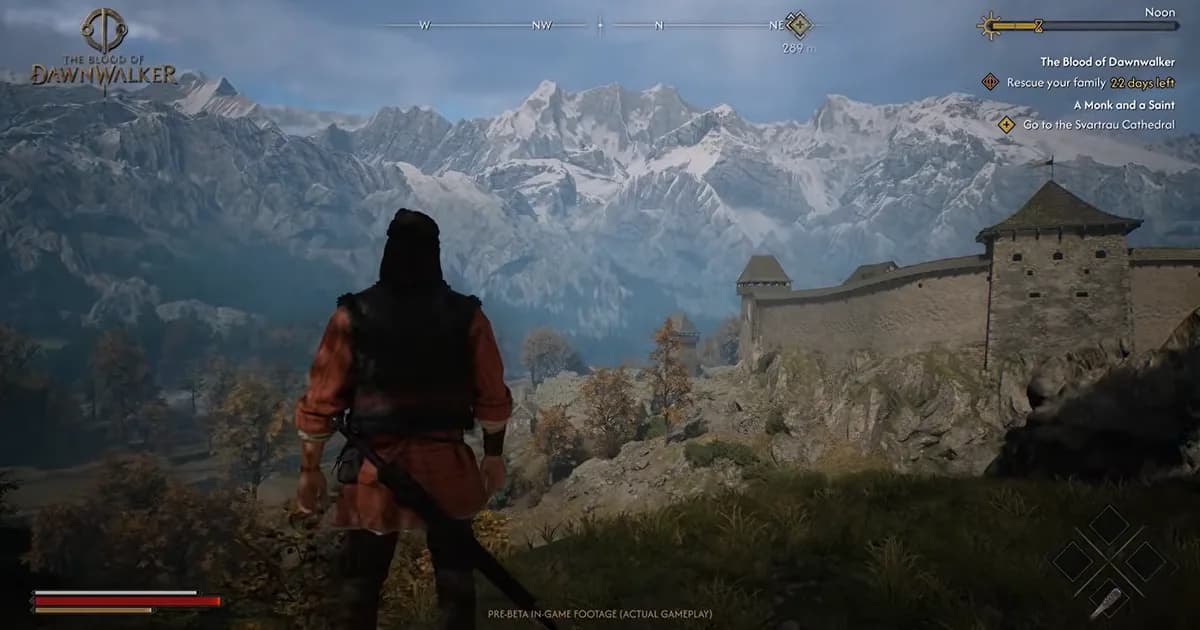
What it does honestly tell us is where the team's instincts lie. This is being described as the first chapter of a larger saga rather than a self-contained one-off, which is a confident thing to announce before anyone has played it. It is a single-player open world dark fantasy RPG built in Unreal Engine 5, set in southeastern Europe in 1347, and it is not trying to be anything other than what it looks like.
You play as Coen, a young man caught between two states. He is human during the day, with everything that implies, and a vampire at night, with everything that implies. The game calls this being a Dawnwalker. His sister needs help, his family is in serious trouble, and the thing that has arrived in his valley describes itself as life, death, and everything in between. The reveal material is notably free of anyone who is straightforwardly good, which appears to be deliberate.
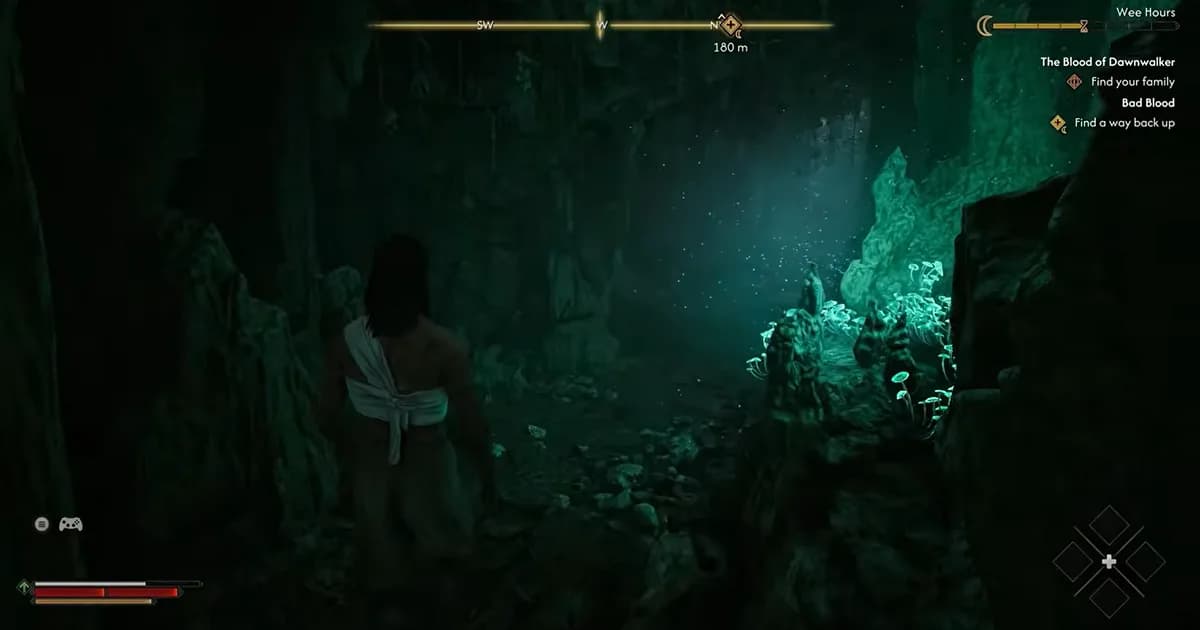
Here is the mechanic everything else hangs on. In The Blood of Dawnwalker, time does not tick past on its own. It moves when you engage with quests. A conversation might cost you an hour. Infiltrating a castle might cost you four, five, or six.
Crucially, exploring does not move the clock at all. You can wander the open world, hunt, shop, craft and poke around for as long as you like and the sun will not move. The moment you commit to a quest, time starts spending itself. That distinction is what stops the system feeling like a punishment for playing the game.
What this creates is a genuine decision every time you pick something to do. Say you have a castle to break into. You can go now, at noon, as a human, and talk your way through it. Or you can deliberately burn a few hours on side activities first so that you arrive after dark, and climb the walls instead. Both routes are built out properly. Most quests are designed to be completed either way.
It also means the clock is a resource you are always spending on something. Choosing one quest is choosing not to do another one yet, and the game is fully aware of that. This is the part that impressed the people who have played it most, and it is the part that would have been easiest to get wrong.
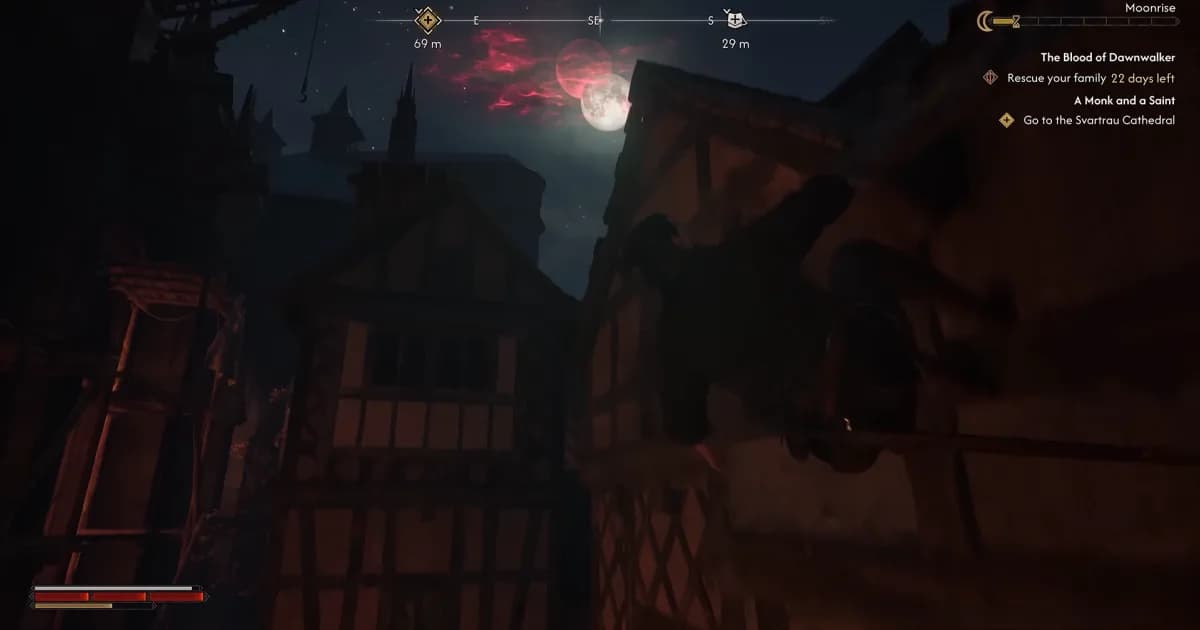
Conversation, charisma and dialogue options do the work. Doors open because someone lets you in. Combat is straightforward swordplay. It is the slower, more social route, and some open world activities can only be reached while the sun is up.
Climbing walls, flight, teleportation and stealth replace the front door entirely. Later abilities reportedly bring claws and blood drains into combat. Other activities are locked to night only, so neither state is simply the better one.
The most revealing detail to come out of the preview event concerns the opening area. After a tutorial sequence, the game opens into a contained starting region, in the tradition of Breath of the Wild's Great Plateau or the first stretch of Kingdom Come: Deliverance. You are given a list of things to do around your village before an event called the blood mass takes place that evening.
The developers have confirmed they placed more tasks there than you have time to complete. That is not a mistake or a scheduling accident. Someone in that village needs help, and if you spend your hours elsewhere, they die, and you find out about it at the blood mass. There is no way to save everyone, and the game wants you to learn that before it opens up properly.
This is a well-judged piece of design, because it teaches the lesson at the point where it costs the player least. Anyone who has played a large RPG knows the strange rhythm where a character insists something is desperately urgent and then waits patiently for thirty in-game days while you clear a map of question marks. This game appears to have taken that problem seriously.
Early on, Coen's family is taken, and you have roughly thirty days to get them back. The interesting part is what reportedly happens if you do not manage it. The game does not end and you are not sent back to a save. Your family dies, and you keep playing in a world where that has happened. There is also said to be more than one hidden ending, including at least one reachable within the first hour by a player skilled enough to win a fight they are not supposed to win yet, at which point the credits simply roll.
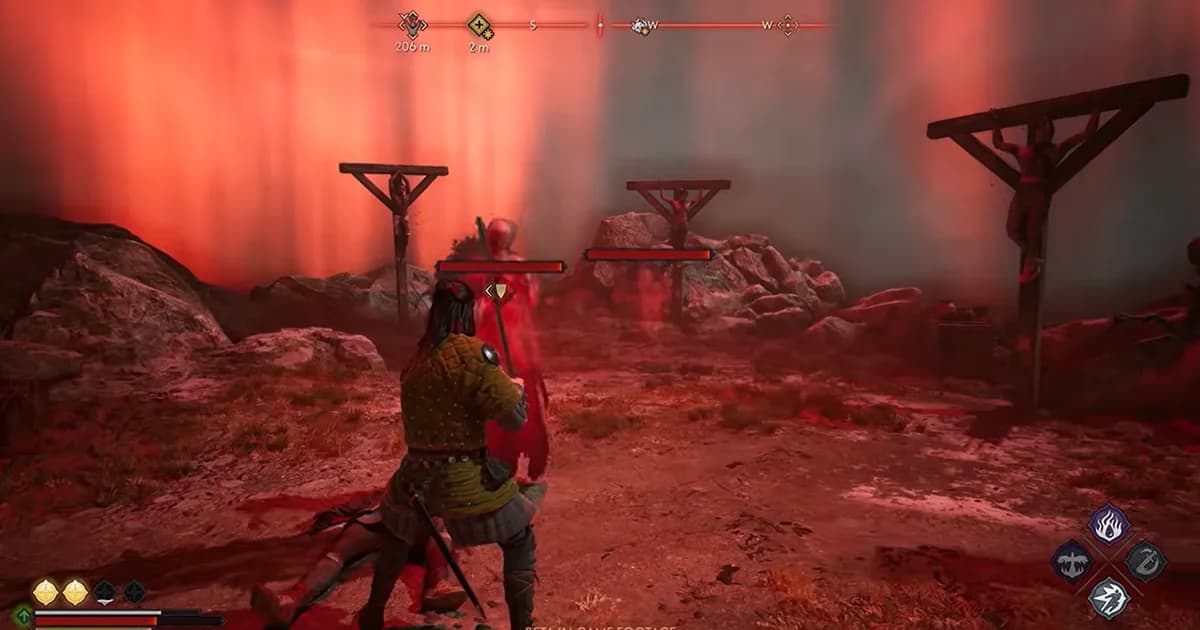
This is the part to pay attention to if you are deciding whether to buy at launch. There are two combat systems in the game. The main one is directional, built around reading which angle an attack is coming from and parrying it, closer to Kingdom Come: Deliverance than to The Witcher. The second is a more conventional third-person action mode of the kind you would expect from a modern open world RPG.
The reason there are two is the important bit. Rebel Wolves built the directional system first, are proud of it, and actively steer players towards it. The conventional mode was added afterwards, because enough people in early testing did not get on with the directional one. A studio does not build a second combat system for fun. That tells you plainly that they expect a portion of players to bounce off the main one.
Reported impressions of the directional combat are positive but qualified. It takes a while to click, and once it does it feels responsive and precise. It is built around positioning, distance and timing rather than spectacle. Fighting several enemies at once is awkward, which is true of essentially every directional system ever made, from Kingdom Come to For Honor. These systems want you to pick one opponent and use footwork to manage the rest.
Worth noting that hands-on time so far covers only the opening hours, with a low-level character and almost no upgrades. The vampiric abilities that arrive later look considerably more dramatic, so early impressions of combat are impressions of its plainest possible version.
This is a $70 game from a first-time studio, and it is worth being straight about what that means. The writing is reported as the standout: serious, weighty, and completely free of the quippy back-and-forth that has crept into a lot of big-budget games. Voice acting is described as strong. Nobody who has played it has suggested the script is where this game falls down.
Presentation is a different conversation. Facial animation and lip sync in conversations are said to sit roughly where a good late-PS4 or early-PS5 RPG sat, which is to say fine rather than remarkable, and nowhere near something like Baldur's Gate 3. Inventory management has also been singled out as cluttered and irritating, which is an unfortunate trait to have inherited from The Witcher 3 of all things.
Our honest read is that this is a game with clear priorities rather than a game with a budget problem it is hiding. The effort has gone into writing, consequence and systems, and it has come out of animation polish and interface. Whether that trade is acceptable depends entirely on what you personally notice while playing.
It is made by The Witcher 3 team, so it will feel like The Witcher 4.
Some of the people are the same. The studio, the budget and the infrastructure are not. Expect Witcher-quality writing wrapped in a noticeably smaller production.
A thirty-day limit means constant stress and a timer in the corner.
There is no visible clock and free exploration costs nothing. Time only moves when you choose to advance a quest.
Being a vampire at night is the strong option and daytime is the handicap.
Both states have content locked to them. Some activities are daylight only, and the human route through a quest is built out just as deliberately as the vampire one.
$70 means AAA presentation across the board.
The writing and systems appear to justify the price. The animation polish and interface almost certainly will not, and that gap is where most of the arguments about this game will happen.
Preview — Based on Pre-Release Material
A first game with genuinely original ideas about how an RPG should spend your time, wrapped in a production that is honest about being a first game.
This game has not released yet. Everything here is based on official material and reported impressions rather than our own hands-on play.
What Works
What Concerns Us
Who It's For
Players who care more about writing, consequence and systems than about polish, and who have wanted an RPG where deciding what to do next actually costs something. If Kingdom Come: Deliverance clicked with you, this is aimed squarely at you.
Who Should Wait
Anyone whose enjoyment depends on top-tier animation and presentation, and anyone who bounces off deliberate, timing-based combat. If a stiff conversation scene pulls you out of a game, this will do it, and no amount of good writing will fix that for you.
Quick Overview
Quests move the clock, exploration does not. That single rule turns every quest selection into a choice, and it is the most interesting idea in any RPG releasing this year.
It is what the game was built around and reports say it clicks eventually. But the alternative mode exists for a reason, and there is no reason to suffer if it is not working for you.
Excellent writing, mid-tier animation. Going in knowing that is the difference between a pleasant surprise and an annoying one.
It releases on 3 September and full reviews should land in the days before. Everything known so far covers the opening hours only.
How We Researched This Article
This game has not released and we have not played it. This article is a preview, not a review. It draws on Rebel Wolves' own announcements and developer commentary, published gameplay footage including a full walkthrough of an optional side quest, and hands-on impressions from a preview event in Los Angeles where a limited number of outlets were given four hours with an early build. Where a judgement belongs to someone who has played the game rather than to us, we have said so in the text rather than absorbing it into our own voice. Details described from that early build may change before release, and we will update this article once the finished game is available. All images on this page are gameplay screenshots taken from publicly released preview footage supplied by Rebel Wolves. They are shown to illustrate mechanics and locations discussed in this preview and are not our own captures.
Official
Rebel Wolves announcements and developer commentary
Reviewer
Published gameplay footage and quest walkthroughs
Reviewer
Hands-on impressions from the Los Angeles preview event
Store
Storefront listings and platform release information
Opinions reported by other reviewers and players are attributed as theirs. Read our review process for how we handle games we cannot test ourselves.
Game Reviews
Every major game still to release in 2026, month by month, and the reason so many of them are crowded into September and October. Includes release dates, platforms, and what each game is actually trying to do.
Game Reviews
Remedy's follow-up to Control leaves the Oldest House for Manhattan, swaps the Service Weapon for melee, and changes protagonist. A look at what the name change reveals, plus a plain-English guide to the jargon.
Game Reviews
Capcom's demo is public, so you can check this one yourself. A breakdown of the combat systems, why hands-on accounts contradict each other on difficulty, and the rough edges ranked by how much they actually matter.
Game Reviews
Rockstar has revealed an enormous amount about Grand Theft Auto 6 — price, map, cast, features — almost all of it through shop listings rather than gameplay. Here is what is confirmed, what is retailer copy, and what is still a guess.
Continue Exploring
Browse more game coverage, jump into browser games, or test yourself in Quiz Arena.