01
Step 01
Warm up on Flick Range
One relaxed run. Do not chase a score; just let your eyes and hand get in step.
No games found
Unihfy Games
Loading identity...
Quick Access
Most easy misses are not about slow hands. The six kinds of miss, crosshair placement, why your eyes should move first, the death grip, sensitivity in cm/360, the first bullet and how to practise, with a 15-minute routine to improve your aim in FPS games.
Format
Curated Article
Reading Time
12 min read
Published
October 26, 2026
Written by
Developer · Game Reviewer
Kaushik Hirpara is a full-stack developer and game reviewer at Unihfy Games. He designs and builds every game on the site, gets them playing well on phones, and writes up what players need to know.
View Author ProfileYou know the one. An enemy steps out exactly where you expected, you are already looking there, your crosshair is a hair away from their head, and you click. And you miss. Not by much, but by just enough. A second later you are back at the spawn wondering how a shot that easy got away.
Hard shots do not haunt anyone. Nobody lies awake over the long flick across the screen they nearly hit. It is the easy misses that sting, because they feel like they should not be possible. You have hit that shot a hundred times. So what went wrong this time?
The honest answer is that 'missing' is not one problem. It is several different mistakes that all end the same way, and each has its own cause and its own fix. Most players practise aim as one big skill and wonder why they stop improving. Better players learn to tell their misses apart.
Your crosshair flew past the target and you clicked on the way through, or had to come back. Usually too much speed: a tense hand, a sensitivity faster than your control, or a flick you started before you had really looked.
You stopped short and fired at the edge of them, or at the air beside them. Often it is hesitation: you slowed down too early because part of you did not trust the flick.
Your aim was fine, but the other player fired first. This one is rarely about your hands. Your crosshair was simply too far from where they appeared.
You hit the body when the head was right there, so the fight took twice as long. Your crosshair was resting at chest or floor height, and every shot needed a correction upwards.
The first shot landed and the rest climbed over their head or slid off to one side. That is recoil you did not pull against, or a moving target you stopped following.
Close range, a sudden fight, finger held down and aim all over the place. It is less a mechanics problem than a pressure problem: your plan vanished the moment the fight began.
After your next session, think back over the last ten times a missed shot cost you a fight and label each one with a miss type. Most players find that one or two types fill most of the list. That list is your training plan.
In 1954 the psychologist Paul Fitts described a rule that still turns up in everything from button design to surgery: the time it takes to hit a target grows the further away it is and shrinks the bigger it is. A far, small target is slow to hit. A near, big one is fast. It sounds obvious, but it explains most of aim.
In a shooter you cannot make heads bigger. You can, however, change how far you have to travel to reach one. If your crosshair is already resting at head height, on the corner an enemy is most likely to come round, the 'flick' shrinks to a tiny adjustment. The fastest aimers in a lobby are often not the ones with the fastest hands. They are the ones who rarely need to move their hands far at all.
This is called crosshair placement, and it is why the late shot and the wrong height are really the same miss. When your crosshair waits on the floor, or on a wall in the middle of nowhere, every fight starts with a long, rushed movement. When it waits in the right place, the fight is half won before the other player knows you are there.
A simple habit builds it: as you move through a map, keep asking yourself 'if someone appeared right now, where would their head be?' and leave your crosshair there. It feels slow at first. Then it becomes automatic.
Watch a good player's eyes instead of their crosshair and you would notice something: their eyes reach the target before their hand does. Research on eye-hand coordination keeps finding the same pattern in everyday tasks like reaching for a cup. The eyes jump to the goal first, and the hand follows the information they send back.
That matters because many misses begin with a flick launched before you had really looked. Your hand was guessing. Overshoots in particular often come from moving at a blurry shape at the edge of your vision rather than at a target your eyes had already landed on.
The fix sounds too simple to work, but it often does: look, then move. Let your eyes settle on the head for a fraction of a moment before the mouse goes. It feels slower for a few days, then it feels faster, because you stop having to correct.
Aim is really two skills. Flicking is a quick jump from one point to another that ends in a click. Tracking is keeping your crosshair stuck to something that moves. They use your hand differently: a flick is one committed movement with a small correction at the end, while tracking is a stream of tiny, continuous adjustments.
Most players practise one and assume the other comes for free. It does not. Someone with a great flick can still lose every close fight against an opponent strafing side to side, and a smooth tracker can freeze when a target pops out at the edge of the screen.
In both, the best aim looks calm. Big, fast movements feel impressive, but they leave the most room for error. Good players set themselves up so that most of their shots only need small ones.
Here is a strange one. You probably aim better in an empty practice range than in a tight match, with the same hands, the same mouse and the same settings. What changed is you.
Under pressure, people squeeze. Your grip tightens, your shoulders rise and your wrist stiffens. Tense muscles pull against each other, and fine control is the first thing to go, which is why a clutch round can feel like aiming with a brick.
Pressure also changes what you pay attention to. Research on choking under pressure, including work by the psychologist Sian Beilock, suggests that skilled performers often do worse when they start consciously watching each step of a movement they normally do on autopilot. A well-practised flick works best when you let it happen. It gets worse the moment you try to steer it.
The fixes are boring but real. Notice your grip between fights and loosen it. Breathe out before a peek you know is coming. And in practice, train under a little pressure, with a timer, a score to beat or a target that shoots back, so that a real match feels less new.
If I can hit it in practice, I can hit it in a match.
Practice is calm, while matches add surprise and stakes. Aim carries over best when some of your practice has pressure in it too.
Missing means I need faster hands.
Most late shots come from where your crosshair was waiting, not from how fast you moved it.
Tensing up helps me focus.
A tight grip makes small corrections harder. A relaxed hand moves more precisely.
When aim goes wrong, sensitivity is the first suspect. Players change it after one bad match, copy a streamer's number, then change it again a week later. Each time, their hand has to relearn how far to move, and the muscle memory they had built starts working against them.
The clearest way to describe sensitivity is centimetres per 360°: how far your mouse travels across the desk for your view to turn one full circle. It folds your mouse's DPI and your in-game setting into one physical distance, so it means the same thing in any game that measures it the same way. A small number is a high sensitivity and a large number is a low one. You will also see eDPI, which is your DPI multiplied by your in-game sensitivity. It is handy for comparing players in the same game, but it cannot be compared across games that scale sensitivity differently.
There is no single correct value. Lower sensitivities usually make fine aim easier and big turns harder, and higher ones do the reverse. Your miss diary gives you two clues: if most of your misses are overshoots, try a little lower; if you keep undershooting or cannot turn fast enough, try a little higher. Change it in small steps, then leave it alone for a couple of weeks. A setting you know beats a perfect setting you keep changing.
In many shooters, the first shot after a pause is the most accurate one you will fire. Spread has not built up, recoil has not kicked in, and the shot goes where your crosshair is. It is also, for a lot of players, the one they rush.
That is the hidden reason behind 'shots I know I should hit'. They are usually first shots. Someone appears, you are already close, and instead of placing one clean shot you start firing while the crosshair is still moving. A calm first bullet often ends the fight before recoil matters at all.
When a fight does go on, recoil in many games is not random: a gun kicks in a pattern that repeats every time. You pull down and against the sideways drift to keep your shots together. It is learnable in the same way a song on a guitar is learnable, through repetition, one gun at a time.
Plenty of players put in hours and see nothing for it. Usually that is because they are repeating rather than practising. Playing match after match trains a little of everything, but it rarely puts the same weakness in front of you often enough to fix it.
K. Anders Ericsson, the psychologist who spent his career studying how experts train, called the useful kind deliberate practice: short, focused work on one specific weakness, with clear feedback on whether you are getting better. For aim, that means picking one miss type from your diary, training it on purpose, and watching a number that tells you whether it improved.
Two smaller things matter too. Short sessions done often tend to beat one long one, because focus fades quickly. And it is worth sleeping on it: studies of motor learning have found that practised movements can improve after a night's sleep, with no extra practice at all. If a drill feels stuck in the evening, it may click tomorrow.
Warming up and training are also different things. A warm-up gets your hands ready for today. Training is what makes you better next month. Both help, but only one of them raises your ceiling.
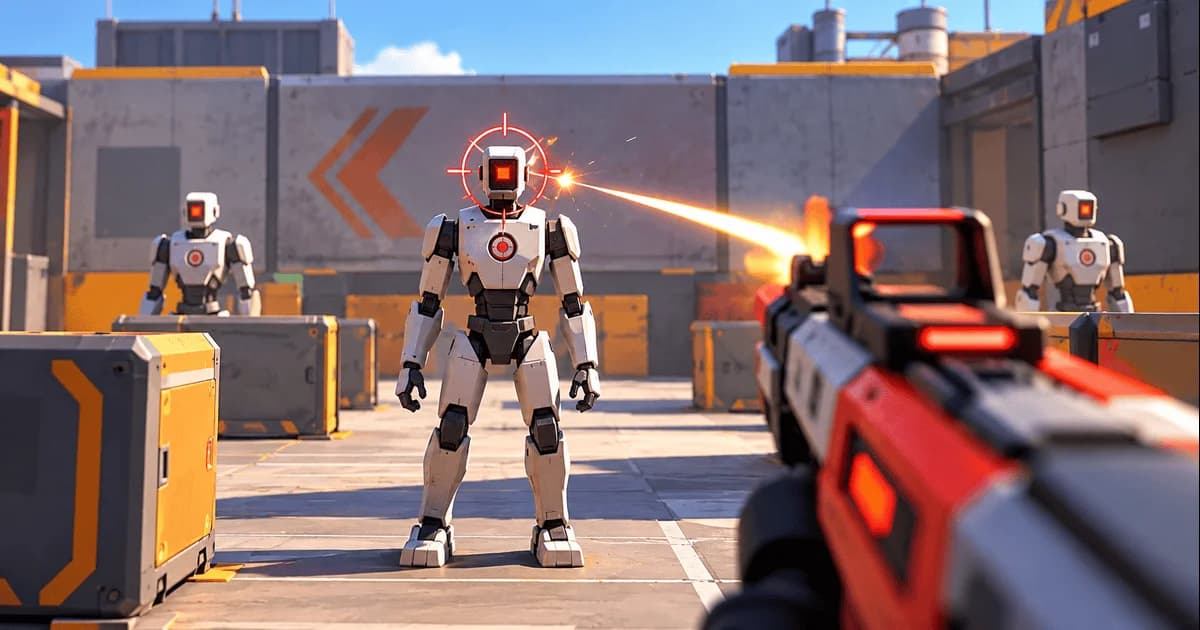
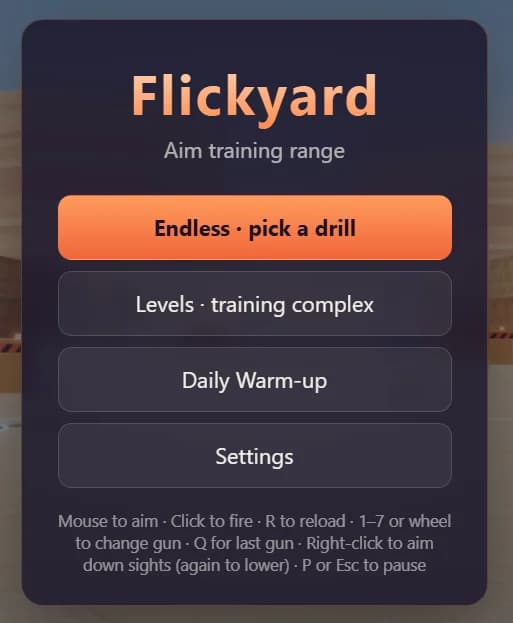
We built Flickyard, a free 3D aim trainer that runs in the browser, around these same ideas. You shoot training robots, never people, on themed ranges, and each drill isolates one part of aim, so you can work on a single miss type instead of everything at once.
Its sensitivity is set in centimetres per 360°, with your mouse DPI entered alongside it, so you can bring over the feel of a game you already play instead of learning a new one. Field of view and the crosshair's style, colour and size are separate settings.
The stats are chosen to answer the questions in this article. First-bullet accuracy looks only at shots fired after a pause, which is exactly the 'shot you should hit'. Time-to-kill shows whether your fights are getting shorter. Accuracy and headshot percentage are tracked for every gun you used, and the Duel drill measures your reaction time, from the moment a robot appears to your first hit on it.
Robots slide out from behind cover and back again. Leave your crosshair where the head will appear and every shot becomes a tiny adjustment.
One robot at a time pops up and drops again, asking for a fast, committed flick. Look first, then move.
A single robot moves steadily from side to side. The goal is to stay on it, not to keep catching up with it.
A ghost line on a target board shows where your chosen gun's recoil will carry your shots, so you can learn to pull against it.
Locked to the Wasp pistol, it asks for a headshot on a steady beat, which trains one calm, clean shot at a time.
A robot raises its own weapon and fires back after a fair delay. It is the closest a drill gets to the stakes of a real fight.
How It Flows
An Endless run in Flickyard lasts two minutes and keeps getting harder the whole way, so a full routine fits into one short sitting. Use the same gun throughout so the numbers can be compared from day to day.
One relaxed run. Do not chase a score; just let your eyes and hand get in step.
One run where you think about nothing except where your crosshair waits between robots.
One run. If you fall behind the robot, catch up gently instead of flicking.
One run with the gun you use most, following its ghost line until the pattern starts to feel familiar.
One run against a robot that shoots back. Loosen your grip before each one appears.
Note your first-bullet accuracy and your most common miss. Next time, start with the drill for that miss.
On days with only a few minutes, Flickyard's Daily Warm-up gives everyone the same three short stages, picked from the date, and keeps a streak of how many days in a row you have finished it. It is a warm-up rather than training, but the streak is a gentle reason to keep the habit going.
Endless also has an Infinite ammo switch for practising without reloads. Those runs do not count towards your bests, which makes them good for learning a recoil pattern but not for measuring it. And the 48 levels across six ranges lock you to one gun per level, which is a useful way to get to know each gun properly.
Myth vs Reality
The Myth
01Good aim is a talent you either have or you do not.
The Reality
Reaction speed does vary between people, but crosshair placement, recoil control and calm first shots are habits, and habits can be trained.
The Myth
02Pros use a low sensitivity, so I should too.
The Reality
Many do, but the best setting is the one that suits your hand, your desk and your game, and that you actually stick with.
The Myth
03Aim trainers do not help in real games.
The Reality
They train the mechanical side of aim, especially when your sensitivity and field of view match your main game. Game sense, positioning and teamwork still come from playing matches.
The Myth
04More hours always means better aim.
The Reality
Short, focused sessions on one weakness usually do more than long stretches of unfocused play.
The Myth
05A better mouse will fix my aim.
The Reality
A comfortable, reliable mouse helps, but no mouse puts your crosshair in the right place before a fight.
Quick Reference
A fast, single movement from one point to a target, ending in a shot.
Keeping your crosshair on a moving target with small, continuous adjustments.
Keeping your crosshair at head height, where an enemy is most likely to appear, so that shots need only small corrections.
Aiming at a spot before an enemy is visible there, such as the edge of a doorway you are about to clear.
How far your mouse travels, in centimetres, to turn your view one full circle. It combines DPI and in-game sensitivity into one distance.
Mouse DPI multiplied by in-game sensitivity. Useful for comparing players within the same game, but not across games.
The repeating path a gun kicks your aim along while you keep firing. In many games it can be learned and countered.
How often the first shot after a pause hits. It is usually a gun's most accurate shot, and the one players most often rush.
Quick Picks
Our shooting games were made in-house at Unihfy Games, and each one leans on a different part of aim. All of them run in the browser with nothing to install.
Shooting
A 3D aim trainer with six drills, seven guns and stats like first-bullet accuracy and time-to-kill.
Shooting
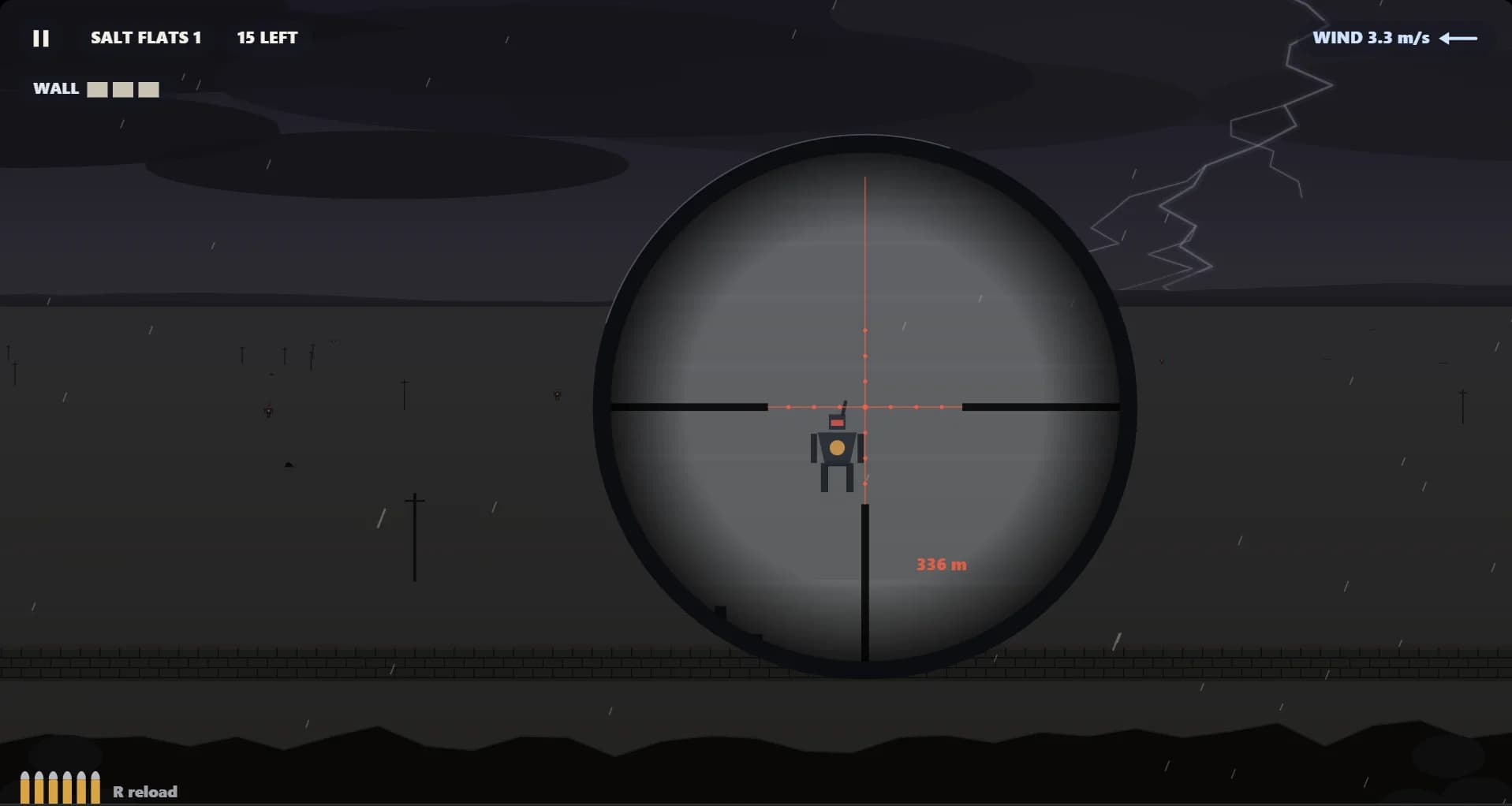
A storm-night sniper game where you only see the robots in lightning flashes and every shot takes time to arrive.
Shooting
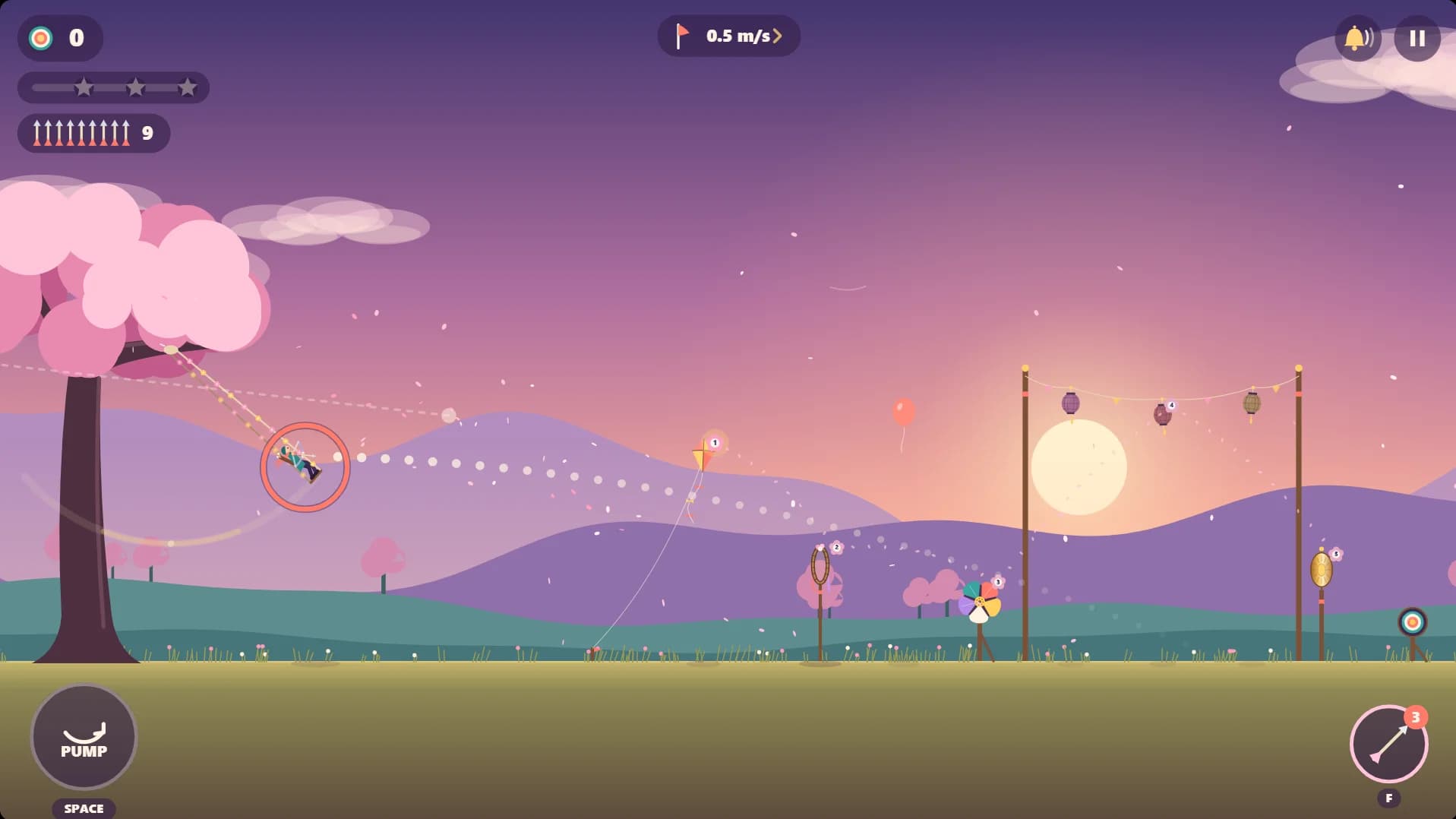
Archery from a rope swing, where the swing's speed carries into the arrow, so the moment you let go matters most.
Shooting
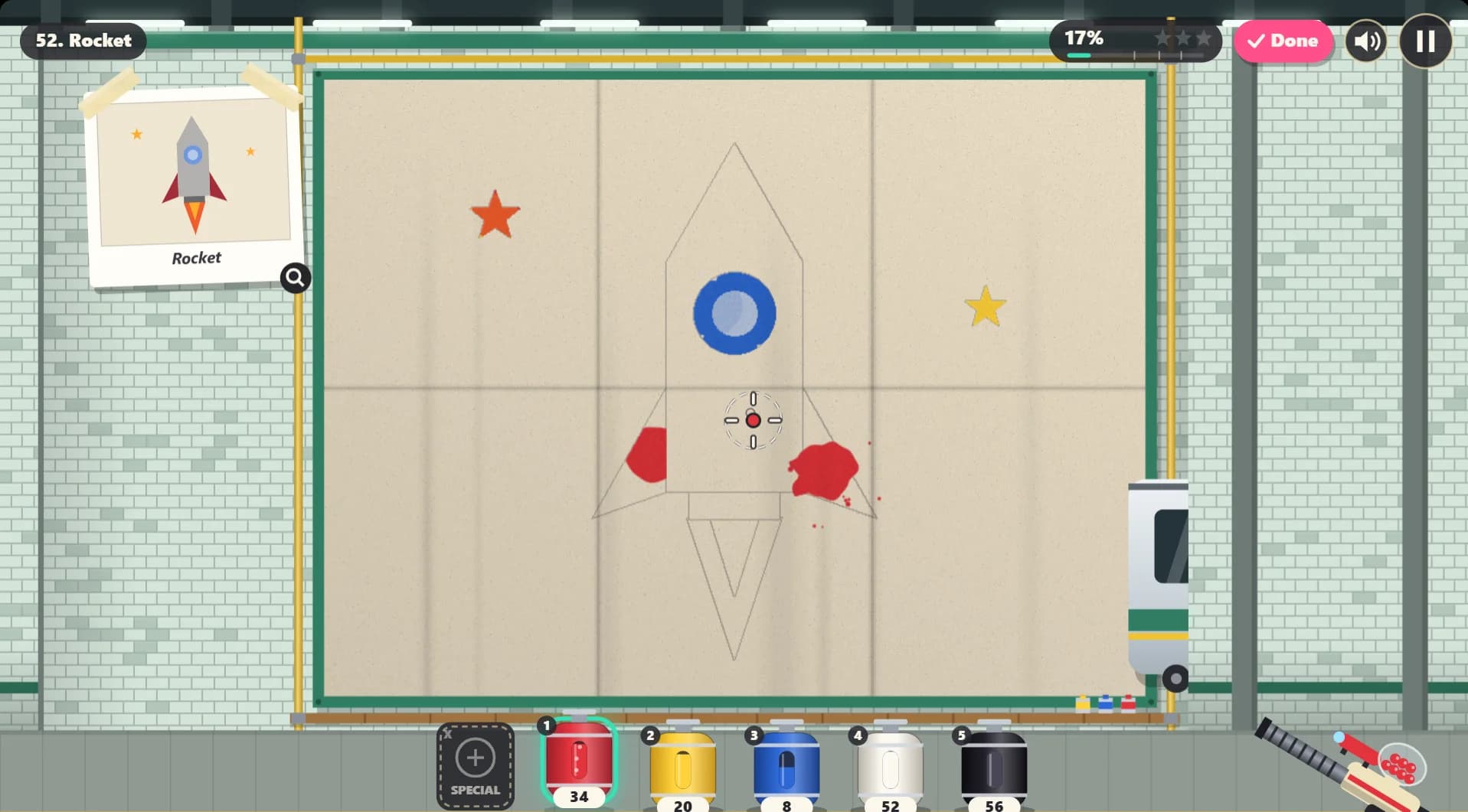
A paintball game where you copy a mural onto a wall, so every shot has to land exactly where you meant it to.
Most easy misses are not about slow hands. They come from a crosshair waiting in the wrong place, a flick launched before your eyes arrived, a tight grip under pressure or a rushed first shot. Learn to tell your misses apart, train one at a time, keep your settings steady, and the shots you know you should hit start landing.
Gaming
Why do racing games feel so good, and why do we keep pressing restart? A look at the psychology of speed, risk, personal bests and fairness, and what that means for the racers you can play straight from a browser.
Gaming
Arcade games were built to be learned in seconds and to end on purpose. A look at the design ideas behind them, from a single control and a readable screen to rising pressure and risky rewards, and what to look for in a free arcade game online.
Gaming
A relaxing game is not one where nothing happens. A look at why gentle focus rests a tired mind better than doing nothing, how pace, sound, light and predictability shape a calm game, and what to look for when you want to switch off after a long day.
Gaming
A game is not good for children because it looks friendly. A look at the design ideas that matter: teaching without text, challenge that fits, mistakes that cost little, visible cause and effect, tension without harm, and the habits that pull the other way.
Continue Exploring
Jump into browser games or challenge yourself in Quiz Arena. There's always something new to discover.