Unihfy Games

Editor's Picks
Gaming

What Makes a Great Arcade Game, and Why It Still Works Online

Arcade games were built to be learned in seconds and to end on purpose. A look at the design ideas behind them, from a single control and a readable screen to rising pressure and risky rewards, and what to look for in a free arcade game online.

Best free arcade games you can play online

Format

Curated Article

Reading Time

9 min read

Published

July 3, 2026

Last Updated

October 20, 2026

Written by

Kaushik Hirpara

Developer · Game Reviewer

Kaushik Hirpara is a full-stack developer and game reviewer at Unihfy Games. He designs and builds every game on the site, gets them playing well on phones, and writes up what players need to know.

View Author Profile

Arcade Is a Way of Designing, Not Just a Genre

When people say 'arcade game' they rarely mean a single genre. A runner, a shooter, a climber and a quick puzzle can all feel 'arcade'. What links them is not their theme but a set of design habits: you understand the game within seconds, a run is short, failure comes quickly, and the restart is immediate.

Those habits came from the cabinets. A coin-operated machine had to explain itself to someone walking past, give them a good few minutes and then end, so the next coin would go in. The business has changed, but the habits turned out to suit people's attention so well that they have outlived the cabinets by decades.

The browser is a natural home for them. Nothing to install, a game that opens in a tab and a run that fits into a spare few minutes: the arcade promise of 'play now' is exactly what a browser does best. The question is what separates an arcade game you play once from one you keep coming back to.

One Control, Many Decisions

Many of the most memorable arcade games are built around a single action: jump, turn, shoot, flip. That can sound limiting, but it puts all of the depth into when you act rather than how. A single button removes the question 'what should I press?' and leaves only the far more interesting question 'is it now?'

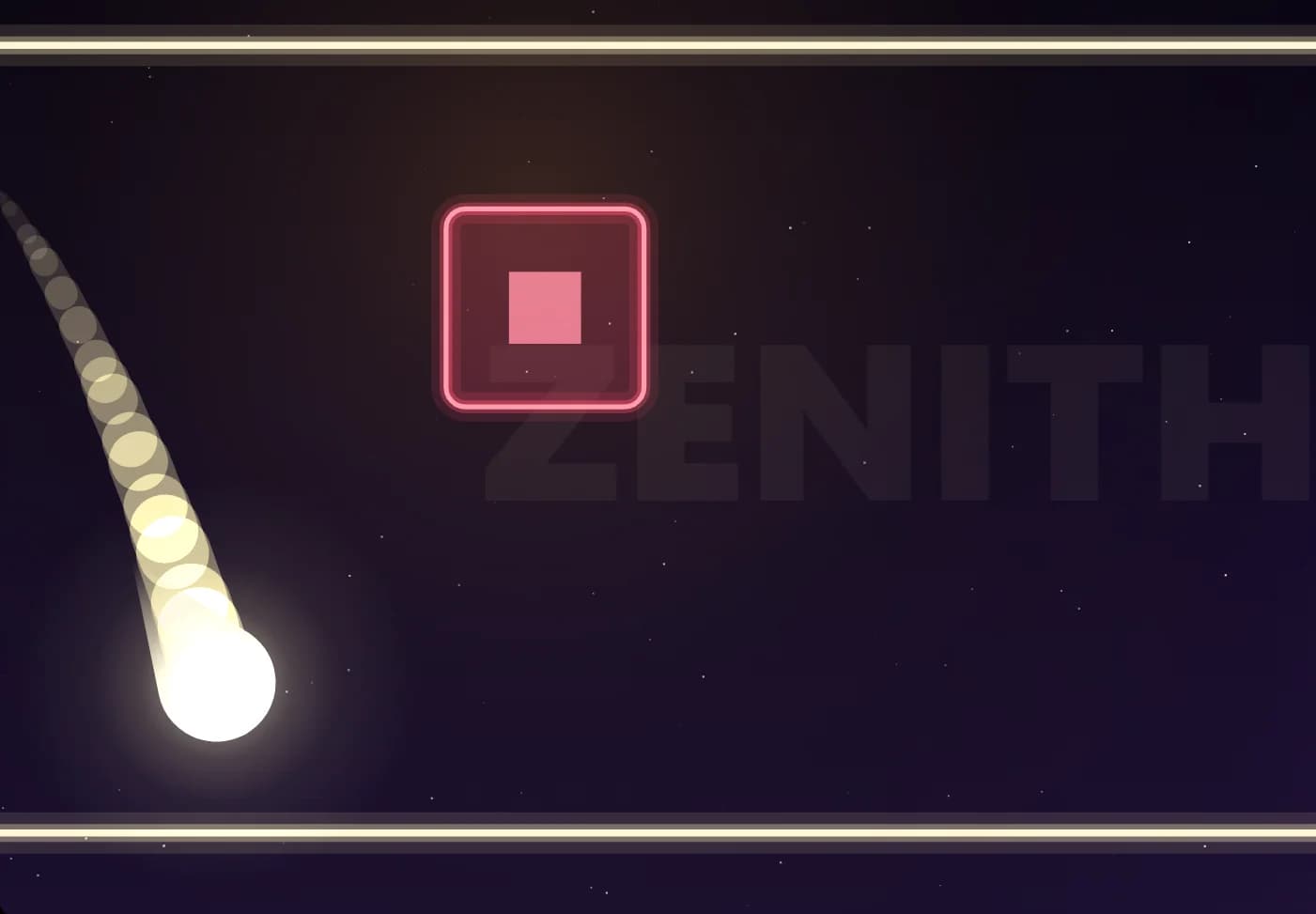
Our runner Zenith Flip is a good example of the idea: the only thing you control is which of two rails gravity pulls your probe towards. Everything else, the timing, the reading ahead, the nerve to wait for the last moment, comes from the player.

One control also lowers the barrier to starting. Someone who has never played a game before can understand a single action immediately, and that is exactly why the same game can hold a beginner and an expert at once.

Depth From Timing

When there is only one thing to press, every decision becomes a decision about time. That is why a one-button game can still take hundreds of runs to master.

The Score Tells the Story of the Run

In most modern games, progress means unlocking the next chapter. In an arcade game, progress is usually a number. That number does a surprising amount of work: it tells you how well you did, compares this run with your last, and gives you a target for the next one without the game having to say anything at all.

The best scores are easy to understand. Distance is a common choice because everyone grasps 'I got further this time'. Many runners add pickups on top, so the score measures both how far you went and how much you dared to grab on the way.

A score also changes how a run ends. Losing is not just failure; it is the moment the number is fixed. That is why the end of a good run often feels less like defeat and more like a result you want to beat.

You Should See It Before It Kills You

Arcade games are fast, and fast games live or die by readability. If a player cannot tell what an obstacle is, which way it will move or whether it is safe to touch, every loss feels like bad luck rather than a mistake. And nobody wants to retry a game of luck.

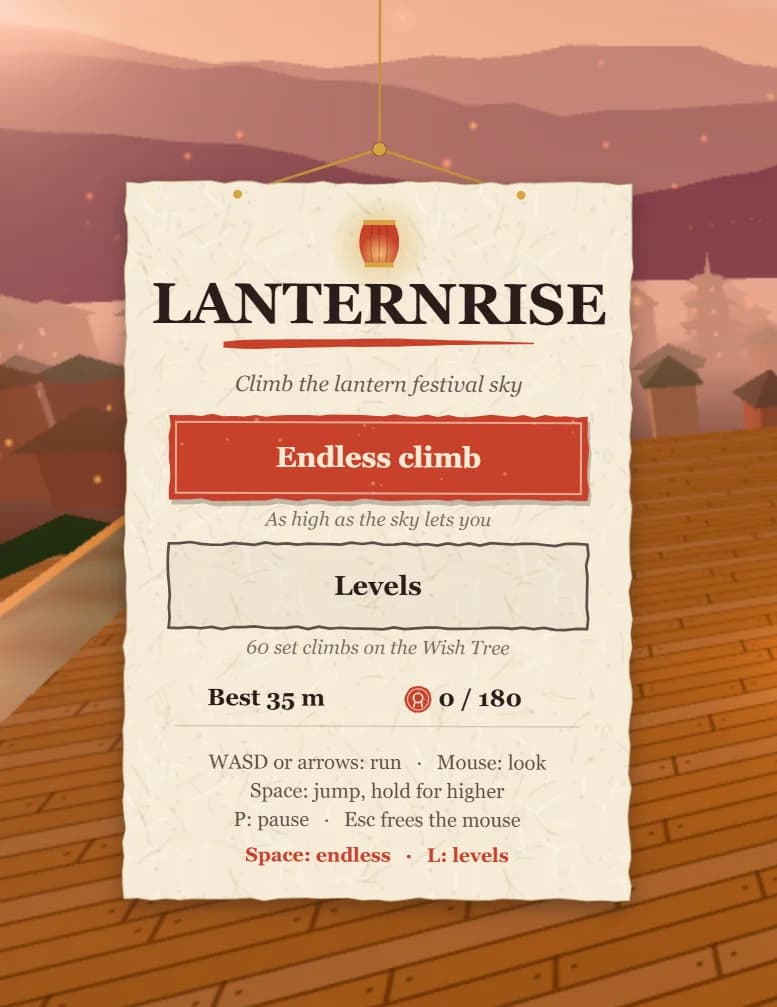
That is why so much arcade design is about clarity: hazards that look dangerous, safe ground that looks safe, and warnings that arrive before the danger does. In our 3D climber Lanternrise, for instance, wind gusts, drifting embers and lightning strikes are always warned before they hit.

Good readability lets the game become very hard without becoming unfair. The challenge moves from 'what was that?' to 'I saw it coming and still got it wrong', which is the kind of loss that makes you press restart.

What Makes an Arcade Game Feel Fair

Fantasy

A hard game has to surprise you.

Reality

Surprise is fun once. Hazards you can read but still struggle to handle stay fun for hundreds of runs.

Fantasy

Simple graphics mean a simple game.

Reality

Clean, readable art is often a deliberate choice, because it lets you react to what matters at high speed.

Fantasy

Dying quickly is a bad experience.

Reality

A quick death followed by an instant restart can be more motivating than a long run that ends in a way you did not understand.

Pressure That Only Goes Up

Most arcade games are designed so that every run ends. The pace climbs, the gaps narrow and new hazards arrive until, sooner or later, you make a mistake. That rising pressure is what gives a run its shape: a calm start, a tense middle and an ending you can feel coming.

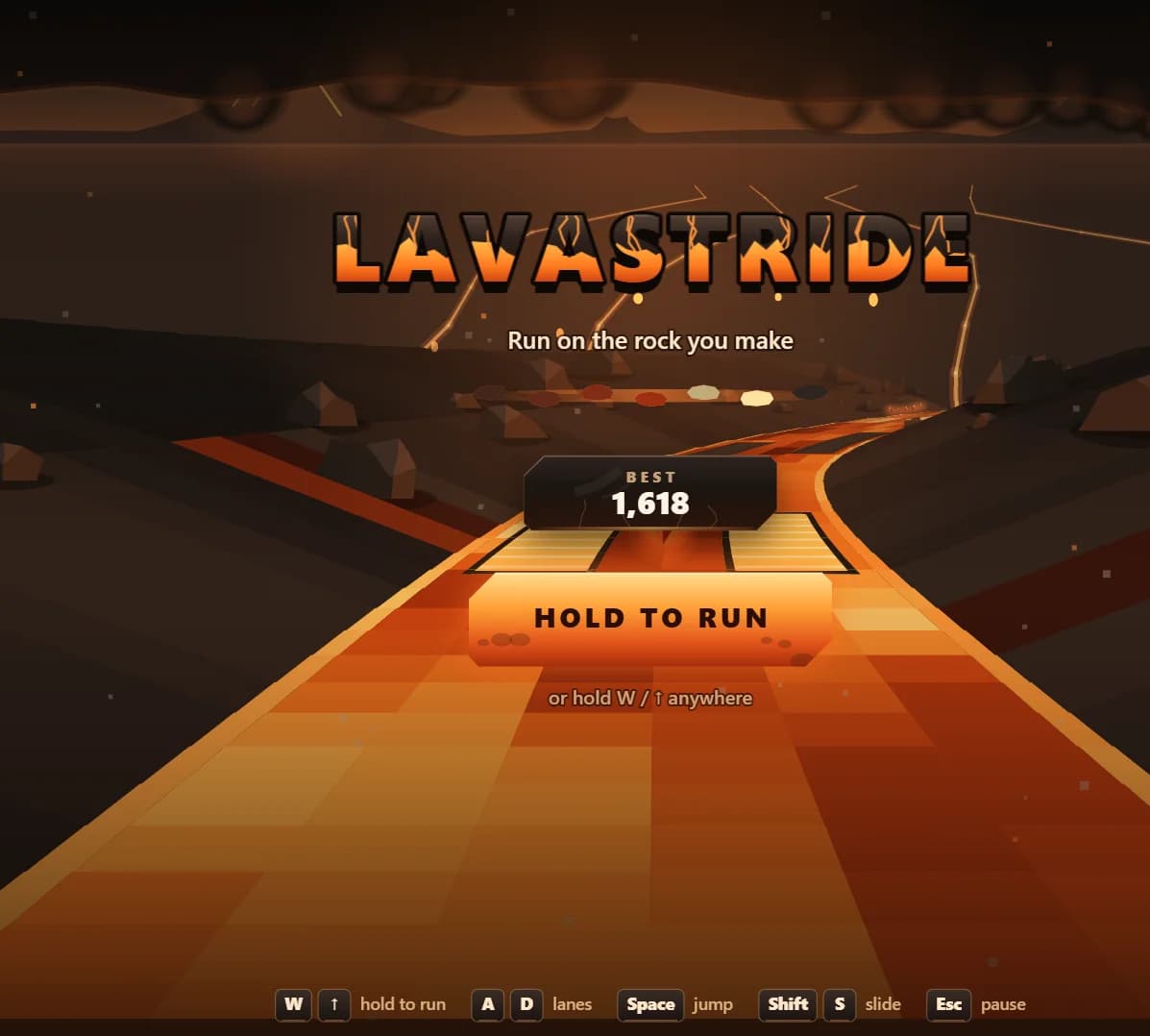
Some games build pressure into the ground itself. In Lavastride, every footstep cools the lava under you into a plate of rock for a moment, so slowing down is never really safe. The game does not need a timer to push you forward; the floor does it.

The best pressure is steady rather than sudden. When difficulty rises smoothly, players can feel themselves being stretched a little further each run, which is a far more satisfying feeling than hitting a wall.

Putting the Reward in the Way

A lot of arcade design comes down to one simple trick: put the thing the player wants somewhere slightly dangerous. A pickup on a safe path is collected without thinking. The same pickup next to a hazard is a decision, and decisions are what make a run interesting.

Spotlight Sprint turns that idea around in a nice way. Its searchlights fill an alarm while you are in their beams, so the shadows are where you want to be, but the shadows are also where the rooftop clutter is, while the brightly lit rows are clear. Safety and danger swap places.

When every reward costs a little risk, the player is constantly making small bets. Each one is tiny, but together they turn a run into a string of choices the player owns.

Not Every Arcade Game Is About Reflexes

It is easy to think of arcade games as pure reaction tests, but the same habits work for thinking games too. Take a puzzle, add a clock or a burning fuse, keep the rules to one idea and make the restart instant, and you have an arcade puzzle: something that asks you to plan quickly rather than slowly.

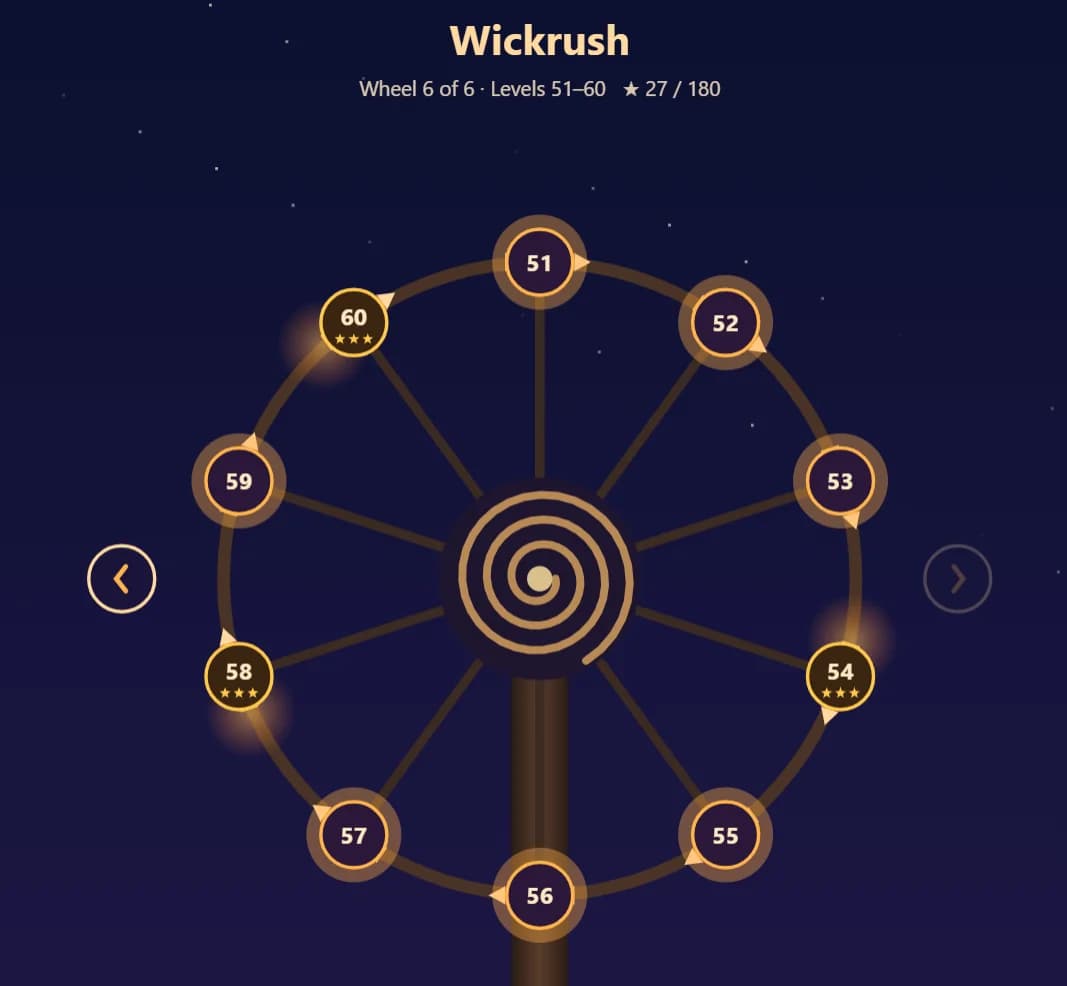
Wickrush, our fuse game, works this way: you switch junctions so a burning fuse lights every lantern on the board before it burns out. The thinking is the challenge, but the fuse keeps it feeling like an arcade game.

Choose Your Arcade Style

Which Arcade Style Fits You Best?

Arcade games can test very different skills. Some reward chasing a score, some are built around reactions, and some ask you to think fast rather than move fast.

01

Score Chasers

One more run, one better score

What defines it

  • Simple rules that become more demanding as the run continues
  • Personal-best chasing that gives every retry a clear purpose
  • Steady improvement through better decisions and cleaner movement

Best for

Players who measure progress by going further or scoring higher than last time.
02

Reflex Tests

React quickly or lose the run

What defines it

  • Fast decisions with little time to recover from mistakes
  • Short attempts that make restarting feel immediate
  • Growing tension as speed, obstacles or pressure increase

Best for

Players who want quick sessions built around concentration and reaction speed.

03

Thinking Under Pressure

Plan quickly, then commit

What defines it

  • Puzzles with one clear rule and a clock or fuse running
  • Mistakes you can understand and fix on the next try
  • A strong sense of progress as boards that once looked impossible fall

Best for

Players who enjoy working something out, but still want the tension of an arcade game.

How It Flows

Five Questions to Help You Choose

Answering these simple questions can quickly narrow down the type of arcade game you'll enjoy most.

01
Step 01

How much time do you have?

If you only have a few minutes, choose games with instant restarts and short runs. Longer sessions suit games with levels to work through.

02
Step 02

Do you enjoy planning or reacting?

Players who like thinking ahead often prefer arcade puzzles, while those who like testing reflexes usually have more fun with fast runners.

03
Step 03

How comfortable are you with repeated failure?

Most arcade games expect you to fail many times before you get good. If that sounds motivating rather than frustrating, you are in the right genre.

04
Step 04

Would you rather improve a score or finish levels?

Endless games are about personal bests, while level-based games reward clearing stages that get harder one by one.

05
Step 05

What keeps you coming back?

Some players enjoy beating yesterday's score, others enjoy finally clearing something that once felt impossible. Knowing which one motivates you makes choosing much easier.

Quick Picks

Arcade Games Built Around These Ideas

Our arcade games were made in-house at Unihfy Games, and each one leans on an idea from this article. All of them run in the browser with nothing to install.

Key Takeaway

Great arcade games share a few habits: one clear action, a score that tells the story of the run, hazards you can read, pressure that keeps rising and rewards placed in the way. The best one for you is simply the one whose kind of challenge you want to face again.

Related Articles