01
Understand the goal first
Knowing exactly what counts as success is more valuable than making quick moves.
No games found
Unihfy Games
Loading identity...
Quick Access
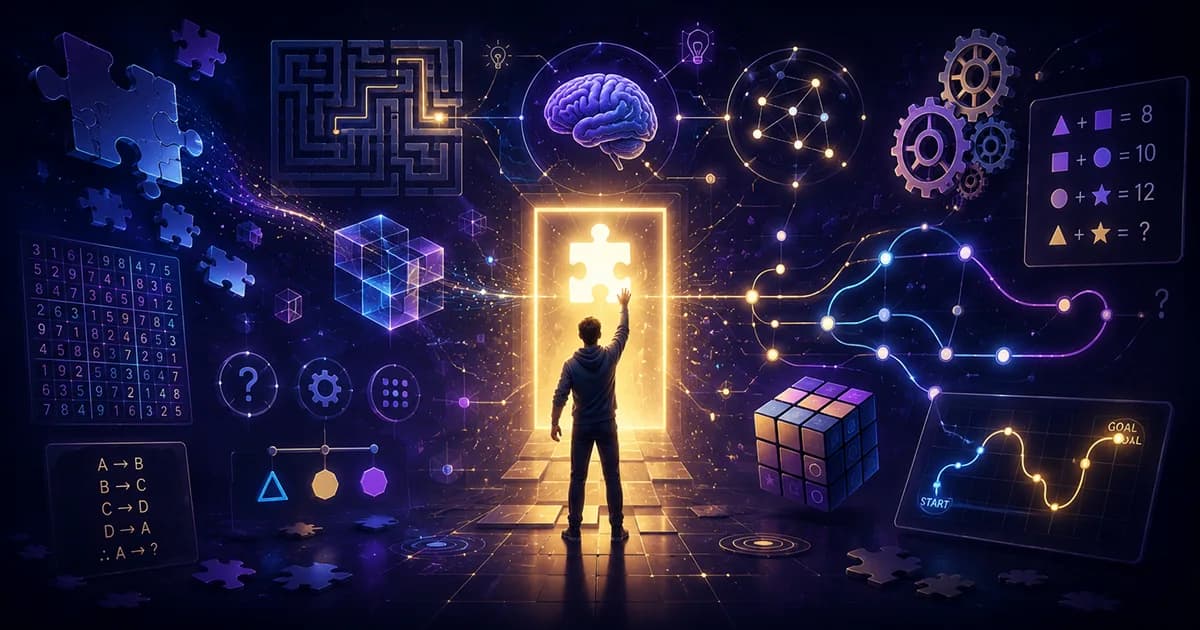
Learn the fundamentals of puzzle games with this beginner-friendly guide. Discover the main puzzle types, practical solving strategies, common mistakes to avoid, and simple habits that help you improve over time.
Format
In-Depth Guide
Reading Time
10 min read
Published
July 1, 2026
Written by
Developer · Game Reviewer
Kaushik Hirpara is a full-stack developer and game reviewer at Unihfy Games. He does most of the work of bringing games to the site — adapting them to run properly in a browser, getting them working on phones, playing them, and writing up what players need to know.
View Author ProfileBeginner Guide
Puzzle games are built around solving problems rather than reacting quickly. Some ask you to recognize patterns, others test logical deduction, spatial reasoning, careful planning, or creative experimentation. Because every puzzle works differently, many beginners feel lost when they jump into a new challenge without understanding its goal or rules. The good news is that successful puzzle solving is a skill that improves with practice and observation. This guide introduces the major types of puzzle games, explains a reliable way to approach unfamiliar puzzles, and shares practical habits that make solving more enjoyable without turning every challenge into hard work.
What makes a game a puzzle game and why different puzzles require different ways of thinking.
How to approach an unfamiliar puzzle before making your first move.
How observation, patterns, and logical elimination lead to better decisions.
Simple habits that help you improve steadily without relying on walkthroughs.
Quick Overview
Knowing exactly what counts as success is more valuable than making quick moves.
Logic, observation, planning, and spatial thinking are useful in different situations.
Careful observation and elimination usually produce better results than random experimentation.
Choosing suitable challenges and reviewing your decisions builds stronger puzzle-solving skills over time.
Chapter 01
Puzzle games place the player in front of a problem that must be solved using the information and actions available. Unlike games that mainly reward speed or precise timing, puzzle games encourage careful thinking before acting. Every puzzle establishes a clear objective, defines what actions are allowed, limits what can be done, and provides clues that gradually lead toward a solution. Some puzzles have only one ideal answer, while others allow several successful approaches. Understanding these building blocks makes it much easier to approach any new puzzle with confidence instead of relying on trial and error from the very beginning.
The Big Picture
Although puzzle games come in many forms, most successful puzzles combine the same core ingredients. Learning to identify them gives you a reliable starting point whenever you face a new challenge.
Every puzzle asks you to achieve a specific result, whether that means reaching an exit, arranging pieces, completing a pattern, or finding the correct answer.
Rules explain what actions are allowed and how the puzzle behaves. Understanding them prevents unnecessary mistakes before solving even begins.
Limits such as blocked paths, restricted moves, available numbers, or fixed pieces create the challenge by preventing every solution from being equally possible.
Every clue matters. Shapes, numbers, colors, symbols, layouts, and previous moves often reveal information that helps narrow the search for a solution.
The puzzle becomes interactive because you can make choices. Good puzzle solving comes from selecting actions that reveal useful information instead of changing things at random.
Chapter 02
Not every puzzle game asks you to think in the same way. One puzzle may reward careful deduction, while another depends on recognizing shapes or planning movement several steps ahead. Understanding the broad family a puzzle belongs to helps you decide which solving strategy to use. Instead of trying random ideas, you can focus on the type of information that matters most for that particular challenge.
The Big Picture
Most beginner-friendly puzzle games fit into one of these broad categories. Recognizing the family gives you clues about how the puzzle is meant to be approached.
These puzzles ask you to draw conclusions from available clues. Begin by identifying facts that are definitely true before considering possibilities.
These challenges focus on grouping, arranging, or connecting similar objects. Look for obvious combinations that create space or reveal new opportunities.
Movement, rotation, positioning, and efficient use of space are the main challenges. Before making a move, picture how pieces will fit together afterward.
Patterns between letters, words, or numbers guide the solution. Pay close attention to relationships instead of treating each clue independently.
Objects often interact through momentum, gravity, timing, or chain reactions. Observe how one action affects the entire environment before making another move.
Chapter 03
Many beginners become stuck because they start interacting with a puzzle immediately instead of taking a moment to understand it. A few seconds spent studying the goal, available information, and possible actions often prevents many unnecessary mistakes. Whether the puzzle involves numbers, words, blocks, or moving objects, following a consistent method helps you make decisions based on evidence rather than instinct alone.
How It Flows
This simple process works across many different puzzle genres because it focuses on understanding the challenge before searching for the solution.
Before making any move, determine exactly what the completed puzzle should look like or what condition must be true to succeed.
Learn which actions are allowed and what limitations the puzzle places on you. Rules often explain why certain ideas cannot work.
Look for fixed clues, repeated patterns, empty spaces, or obvious opportunities before changing anything in the puzzle.
Choose an action that is supported by the available information instead of making a random guess. Even a small confirmed step can reveal valuable new clues.
Notice exactly what changed after your move. Every successful action provides additional information that helps guide the next decision.
Continue building on confirmed facts until the puzzle becomes easier to solve. Many difficult puzzles become manageable when broken into a series of smaller decisions.
Chapter 04
Strong puzzle players rarely rely on luck. Instead, they develop a collection of practical skills that help them understand new challenges more quickly. These skills apply across many puzzle genres, although each game emphasizes them differently. As you practice, you'll begin noticing useful clues earlier, planning more effectively, and avoiding unnecessary mistakes before they happen.
The Big Picture
Improving at puzzle games is less about memorizing answers and more about strengthening habits that can be applied to unfamiliar situations.
Carefully examine every clue before acting. Small details such as repeated symbols, unusual spaces, or fixed pieces often reveal where to begin.
Repeated shapes, sequences, relationships, or arrangements can suggest how the puzzle is organized. Not every puzzle depends on patterns, but recognizing them can greatly reduce unnecessary work.
Instead of searching only for what is correct, identify what cannot possibly work. Removing impossible options often makes the correct choice much easier to see.
Think about the consequences of a move before making it. Looking one or two steps ahead can prevent situations that become difficult or impossible to recover from.
If one approach stops producing progress, try viewing the puzzle from a different angle instead of repeating the same unsuccessful idea.
Checkpoint
At this stage, you know how to identify the type of puzzle you're facing, understand its objective, study its rules, and apply useful solving habits before making important moves. These skills provide a foundation that works across many different puzzle games.
Identify the puzzle's goal before making your first move.
Use clues, rules, and constraints to narrow your choices.
Look for patterns and eliminate impossible options whenever possible.
Think ahead and change your approach if progress stops.
Build solutions step by step instead of searching for one perfect move.
Continue the journey
Chapter 05
Getting stuck is a normal part of puzzle solving, even for experienced players. The difference is that experienced solvers usually stop, reassess the situation, and search for new information instead of repeating the same action. Many beginner frustrations come from a few common misunderstandings that are easy to correct once you recognize them.
Myth vs Reality
The Myth
I should solve puzzles as quickly as possible.
The Reality
Speed becomes useful after you understand the puzzle. Careful observation at the beginning often saves far more time than rushing into random moves.
The Myth
If I'm stuck, I should start guessing.
The Reality
Controlled experimentation can reveal new information, but random guessing usually creates confusion instead of progress.
The Myth
The first solution I notice must be the best one.
The Reality
A workable idea is not always the strongest one. Looking at a few alternatives can reveal simpler or more reliable solutions.
The Myth
Using undo or reset means I failed.
The Reality
Undo and reset features are valuable learning tools. They allow you to explore ideas, compare outcomes, and understand why certain moves work better than others.
The Myth
Good puzzle players never get stuck.
The Reality
Even skilled players reach difficult moments. The difference is that they pause, gather more information, and adjust their strategy instead of becoming frustrated.
Chapter 06
Every puzzle player eventually reaches a point where no obvious solution appears. That doesn't necessarily mean the puzzle is unfair or that you're missing something complicated. Often, it means you've become focused on one unsuccessful idea. The best response is not to make random moves but to step back, collect more information, and approach the problem from a fresh perspective. Productive experimentation teaches you something new, while uncontrolled guessing usually hides the clues you already have.
How It Flows
When progress stops, use this process to rebuild your understanding instead of repeating the same unsuccessful strategy.
If your current approach is producing the same result every time, pause instead of expecting a different outcome from identical actions.
Read the objective again and remind yourself exactly what the puzzle expects. Sometimes the goal is simpler than the path you've been chasing.
Look for unused information, hidden relationships, or parts of the puzzle you have ignored while focusing elsewhere.
Write off moves that clearly cannot succeed. Reducing the number of possibilities often reveals a stronger direction.
If the puzzle allows it, undo recent moves or imagine the completed solution and reason backward toward the current position.
Returning with fresh attention often helps you notice clues that were easy to overlook after staring at the puzzle for too long.
Chapter 07
Improving at puzzle games doesn't require solving the hardest challenges immediately. Progress usually comes from developing reliable habits and gradually tackling more difficult problems as your confidence grows. Finishing easier puzzles thoughtfully teaches skills that continue to be useful when you encounter larger and more complex challenges later.
The Big Picture
Long-term improvement comes from consistently practicing good habits rather than searching for shortcuts or memorizing solutions.
Start with puzzles that challenge you without becoming frustrating. A suitable difficulty encourages learning while keeping the experience enjoyable.
After solving a puzzle, spend a moment understanding why the solution worked instead of immediately moving to the next challenge.
Many puzzle games reuse ideas in different forms. Recognizing familiar structures helps you solve future puzzles more efficiently.
Move to harder puzzles once your current level feels comfortable. Building confidence step by step is usually more effective than skipping ahead.
Puzzle solving is about discovering solutions, not racing to the finish. Curiosity and patience make learning more rewarding over time.
Guide Complete
Puzzle games reward careful observation, logical thinking, and a willingness to learn from each attempt. By understanding the type of puzzle you're facing, identifying its goal, respecting its rules, and making decisions based on evidence rather than guesswork, you'll approach new challenges with much greater confidence. Getting stuck is part of the experience, and every solved puzzle helps strengthen habits that make future challenges feel more approachable.
Identify the goal, rules, and constraints before making your first move.
Use observation, elimination, and careful experimentation to gather useful information instead of relying on random choices.
Pause, review the puzzle, and adjust your strategy instead of repeating unsuccessful actions.
Choose suitable challenges, reflect on completed puzzles, and gradually increase the difficulty as your skills develop.
Guides
Discover what happens behind the scenes when an HTML5 browser game loads and runs. Learn how the browser downloads files, renders graphics, processes player input, plays audio, saves progress, and communicates with online services in this beginner-friendly guide.
Guides
Explore the complete history of browser games, from the earliest web experiments and Java applets through the Flash era, online game portals, HTML5, WebGL, WebAssembly, mobile browsers, and the technologies shaping modern browser gaming.
Guides
Discover why browser games can run without traditional downloads or installation. Learn what the browser actually loads, how game resources are delivered, how browser caching works, and how browser games differ from installed software.
Guides
Learn how Unihfy Games tests browser games by checking first launch, controls, gameplay, objectives, progression, browser behavior, and the accuracy of player-facing information before publishing guides and reviews.
Continue Exploring
Jump into browser games or challenge yourself in Quiz Arena. There's always something new to discover.