01
9th century
Gunpowder in China
Chinese alchemists first wrote about gunpowder. Early fireworks glowed only orange and gold, from burning charcoal and iron.
No games found
Unihfy Games
Loading identity...
Quick Access
Why are fireworks red, green, blue or gold? The two ways a firework makes light, which metal gives which colour, why blue is the hardest colour to make, what green crackers really are, and how our fuse puzzle game Wickrush turns a burning fuse into a route to plan.
Format
Curated Article
Reading Time
9 min read
Published
November 3, 2026
Written by
Developer · Game Reviewer
Kaushik Hirpara is a full-stack developer and game reviewer at Unihfy Games. He designs and builds every game on the site, gets them playing well on phones, and writes up what players need to know.
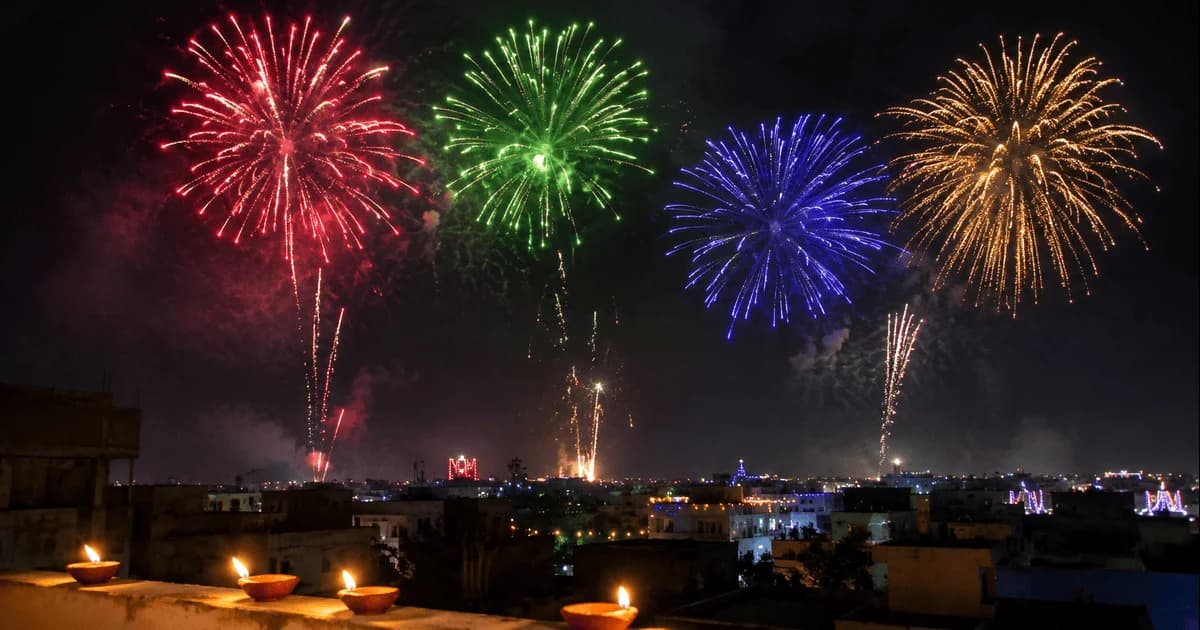
View Author ProfileOn Diwali night a red burst opens over one roof, a green one answers from the next street, and a gold shower drifts down slowly enough to follow every spark. We have watched this every year since we were small, yet few of us ask the obvious question: where does the colour come from?
It is not paint and it is not dye. Every colour in a firework is either a heat colour or a fingerprint colour. Once you know the difference, you can stand on a balcony and name the metal behind almost every burst.
Ways a firework makes light
2
Wavelength of sodium's yellow
589 nm
Year an element was first found by its colour
1860
Particulate cut green crackers aim for
~30%
You already know the first kind from a kitchen. An electric stove coil glows dull red, then orange, as it heats up. A blacksmith reads iron the same way: red is hot, yellow is hotter, white is hotter still. Anything hot enough gives off light, and its colour depends on temperature, not on what it is made of. Scientists call this incandescence.
Fireworks use heat colours for their sparks. The soft gold trails that hang in the air come from tiny bits of charcoal or iron burning as they fall. Sharp white and silver flashes come from metals such as aluminium, magnesium or titanium, which burn far hotter. But heat colours only run from red through orange and yellow to white. Heat alone can never give a clean green, blue or purple.
Every atom has electrons sitting at fixed energy levels, like a staircase where you can stand on a step but never between two. Heat kicks some electrons up to a higher step. They drop back almost at once, and as they fall they give off the extra energy as a tiny flash of light.
Because the steps are fixed, the size of each drop is fixed, and the size of the drop decides the colour. Each element has its own staircase, so each one glows its own colours, as reliably as a fingerprint. Sodium always gives a yellow close to 589 nanometres. Strontium always gives red.
A firework's colour comes from small pellets called stars, each carrying a chosen metal compound. When a star burns, the heat excites the metal's atoms, or the small molecules they form, and they shine out their fingerprint colour. Pick the metal and you have picked the colour.
The classic deep firework red. Lithium gives a slightly pinker red.
A warm orange, often used to deepen other colours.
Bright, strong and easy to get. Strong enough to tint other colours by accident.
The long-standing source of firework green, and a focus of cleaner-cracker research.
Blue only appears within a narrow band of temperature, which makes it the hardest colour to get right.
No metal glows purple. It is red and blue in the same burst.
Burning charcoal or iron for gold, hotter metals for silver and white.
Watch closely next Diwali and you will notice that good blues are rare. Reds and greens look rich, while many blues come out pale or almost white. That is not your eyes. Blue really is the hardest firework colour.
The blue glow comes from a small copper compound that forms in the flame, and that compound is fragile. The firework must be hot enough to excite it, but if it gets too hot, the compound breaks apart before it can shine and the blue washes out to white. Most other colours work the other way: a hotter flame makes a red or green brighter. So blue lives in a narrow window, and a deep, bright blue is still seen as the mark of a well-made shell. Purple has the same problem, because it needs that blue.
Sodium has the opposite problem. Its yellow is so strong that a small trace mixed in by accident can drown out other colours, turning a green lime-yellow or a blue greyish. You can see this at home: when salty water boils over onto a gas flame, the blue flame flares yellow-orange where it lands. That yellow is the salt, the same colour that old sodium street lamps once gave whole cities at night. It is why firework makers care so much about pure ingredients.
If you have done a flame test in a school lab, you have used firework science. Dip a wire in a salt, hold it in a Bunsen burner flame, and the flame turns yellow for sodium, lilac for potassium, orange-red for calcium or blue-green for copper.
The burner is named after the German chemist Robert Bunsen. With the physicist Gustav Kirchhoff, he built an early spectroscope, which splits a flame's light so each element's fingerprint shows as sharp lines. In 1860, studying mineral water, they found two blue lines that matched no known element and named it caesium, from the Latin for sky blue. In 1861 red lines led them to rubidium, from the Latin for deep red. Two elements were discovered by the same glow you see when a firework bursts.
Through Time
9th century
Chinese alchemists first wrote about gunpowder. Early fireworks glowed only orange and gold, from burning charcoal and iron.
1800s
New compounds made fireworks burn much hotter, hot enough to excite metal atoms, and reds, greens and blues joined the gold.
The start of colour
2019
India's CSIR labs introduced crackers designed to cut emissions, sold with a green logo and a QR code.
Myth vs Reality
The Myth
01Fireworks are coloured with dyes.
The Reality
There is no dye. Colour comes from heated metal atoms giving off light, or from hot sparks glowing.
The Myth
02A green cracker gives off green light.
The Reality
The 'green' means lower pollution. A green cracker can burst red, gold or any other colour.
The Myth
03You see and hear a burst at the same moment.
The Reality
Light arrives almost instantly, but sound travels about 343 metres a second, so a burst a kilometre away is heard about three seconds later.
Diwali smoke adds to air that is already heavy in many Indian cities at that time of year. CSIR-NEERI, a national research lab, developed 'green crackers' to make less smoke and dust, with a stated aim of around 30% less particulate pollution than regular crackers. Much of that work went into using less barium, the classic source of firework green.
Genuine green crackers carry a green CSIR-NEERI logo and a QR code on the box, and scanning it should show the maker and approval details. They are a smaller footprint, not a zero one, which is why many families now share one display between several homes or let the diyas carry more of the evening.
Watch from a good distance, keep children with an adult, and follow your city's rules and permitted timings for Diwali. Keep a bucket of water nearby, wear cotton rather than loose synthetic clothes, and keep pets indoors in a quiet room.
Every firework show is also a show of timing, with each burst planned to light in a set order. A flame travelling along a planned route is the idea behind Wickrush, a free browser puzzle game we built in-house. There is no real fire involved, just a glowing line to steer and a fireworks finale to earn.
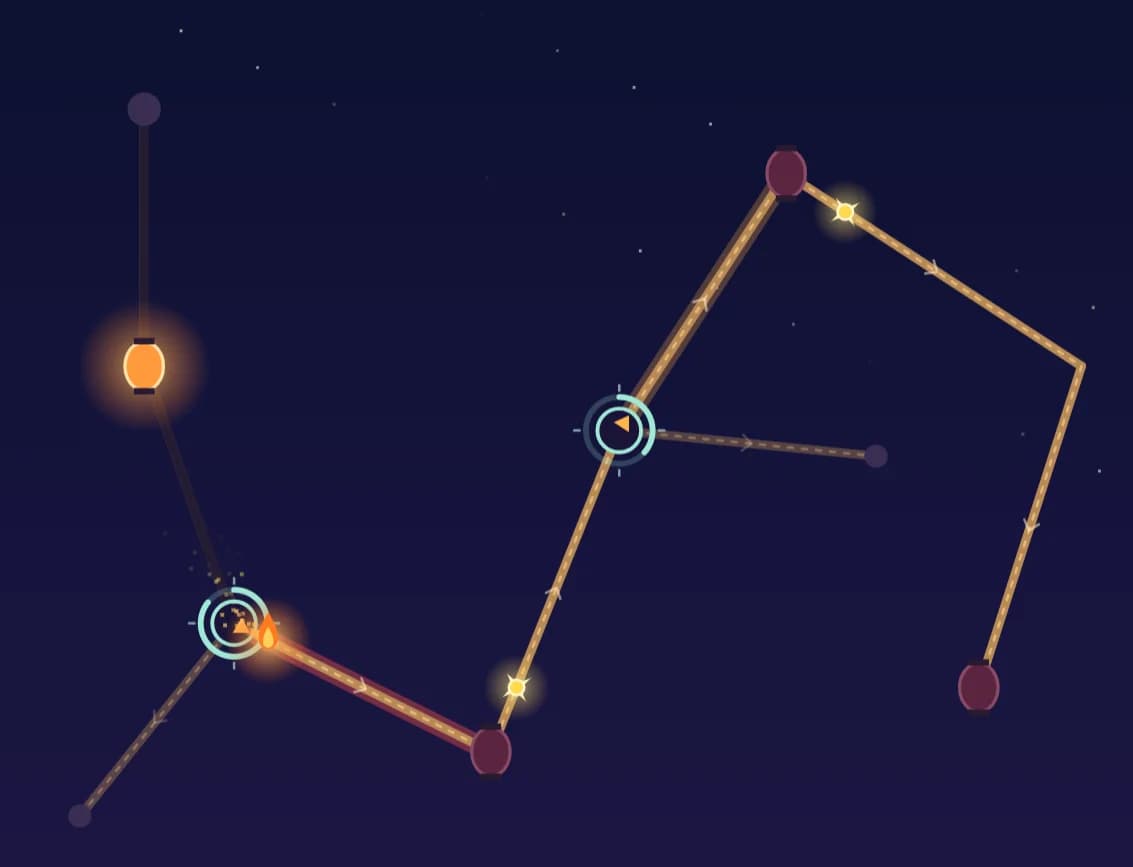
Each board is a web of rope strung between junctions on a dark indigo night, with lanterns waiting along it. A flame starts at one point and crawls along the rope. You never move it directly. You tap the junctions, where the rope splits, to choose which branch it takes next, and you can still switch one right up until the flame arrives.
The fuse is a budget. A bar at the top drains steadily while the flame burns, and rope that has burnt cannot burn again, so a careless route can trap the flame with lanterns still dark.
How It Flows
Wickrush plays with touch, mouse or keyboard, on phones and computers, in either orientation.
Trace the rope from the start to every lantern. Most boards have more than one way through, so look for the one that wastes the least rope.
Tap or click a junction to switch which rope the flame takes there. The rope it points at glows.
Tap away from any junction, or press Space or Enter, to light the flame. Switching a junction just before the flame reaches it is often safer than deciding early.
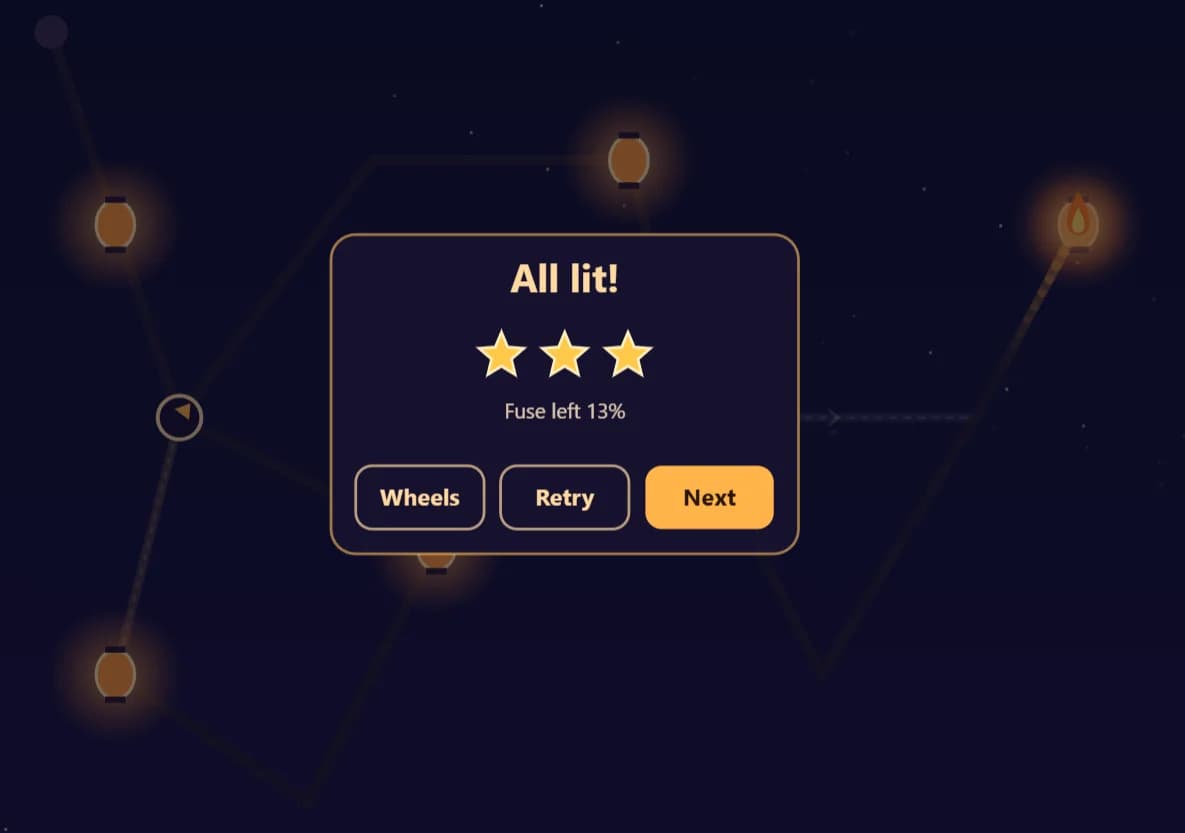
When the last lantern lights, fireworks go up over the board. Stars depend on how much fuse is left, so the tightest route earns all three.
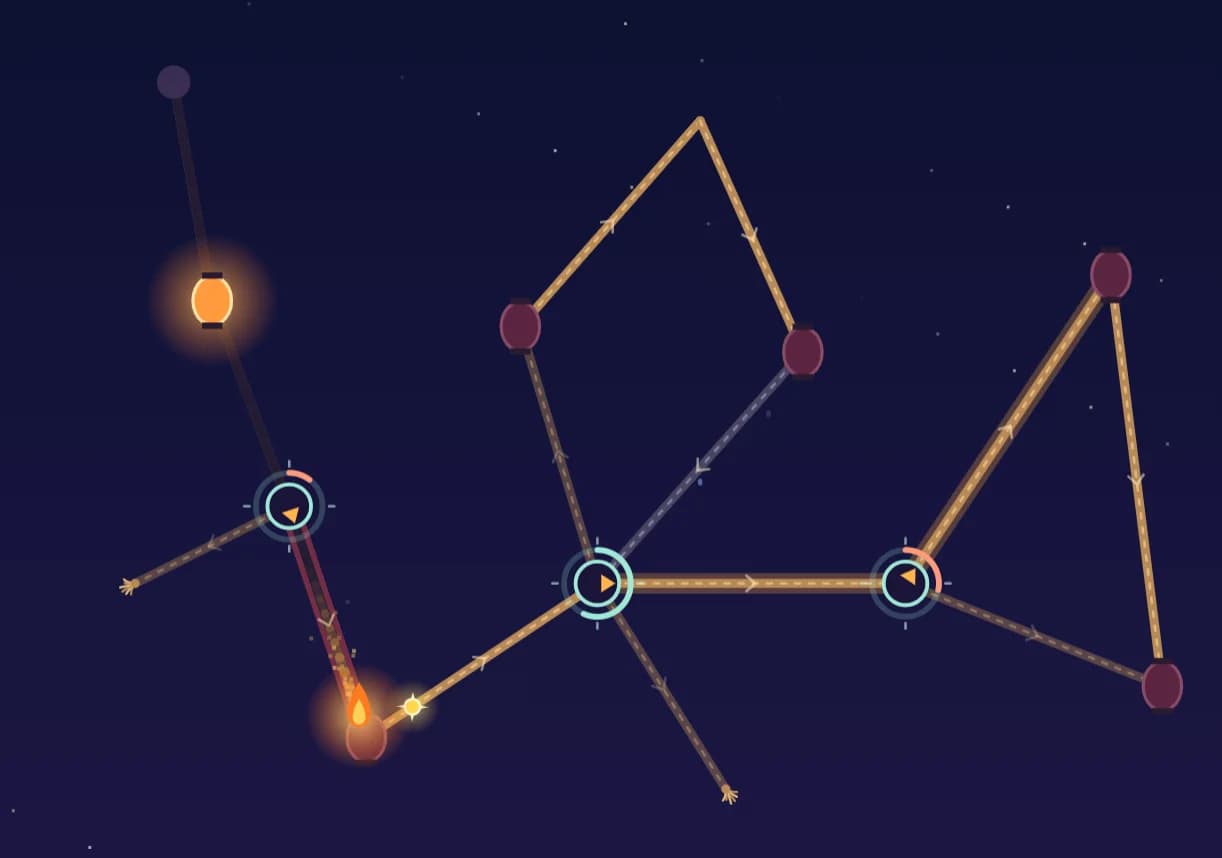
Across 60 boards, new kinds of rope arrive one at a time, each shown first on a short card with a small demo. Wet rope is drawn dark and dripping and burns slowly, so it eats more fuse. A spark pad is a glowing disc that makes the flame race through the rest of its rope at a fraction of the cost. A dud branch ends in a frayed tip: the flame fizzles there, wasting fuse, then relights at the junction it came from. On the last boards, some junctions flip themselves on a ticking timer.
Light every lantern without hitting a dud and the finale grows bigger, with an "Unbroken chain!" line on the results card. Your stars are saved in your browser, so any board can be replayed for a better score.
Quick Picks
All of these were made in-house at Unihfy Games and run in the browser with nothing to install.
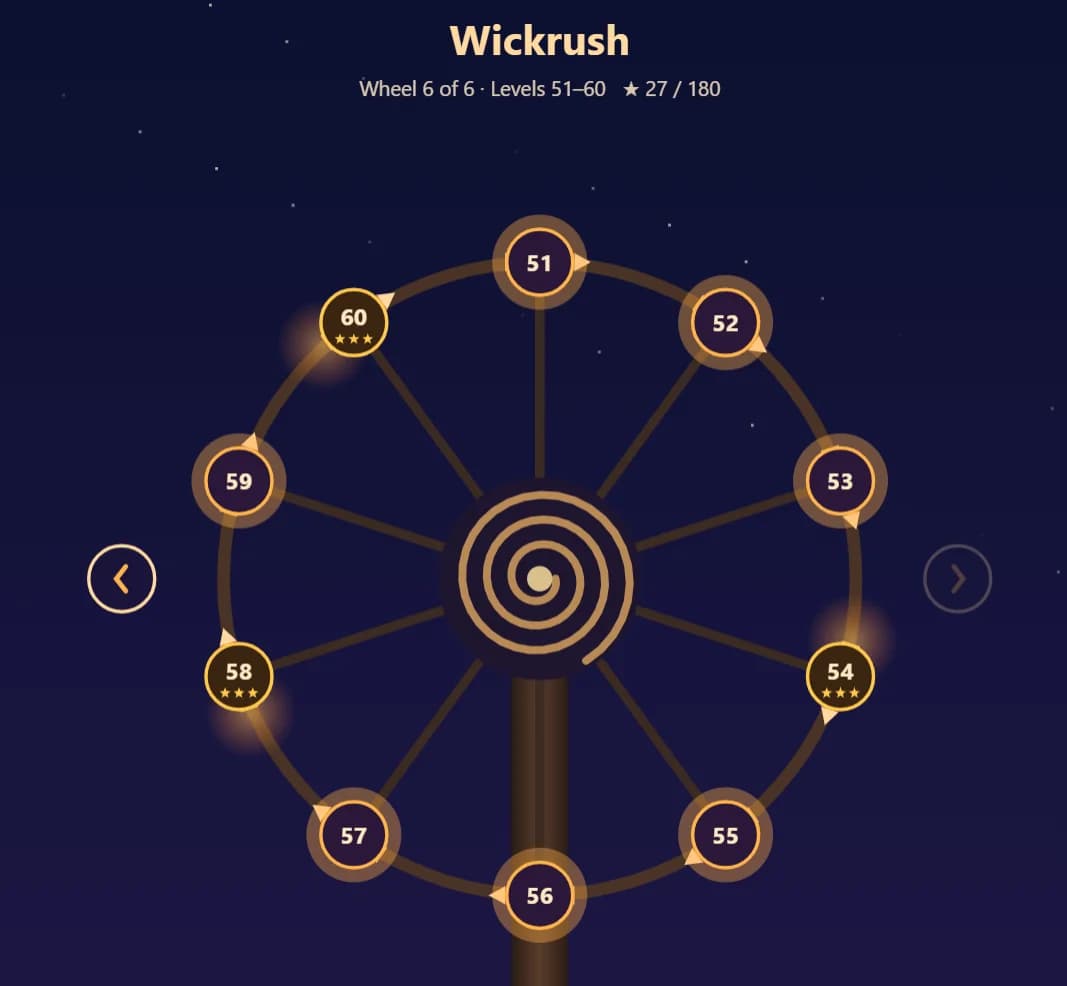
Arcade
Steer a burning fuse to every lantern and earn a fireworks finale. Gentle enough for younger players.
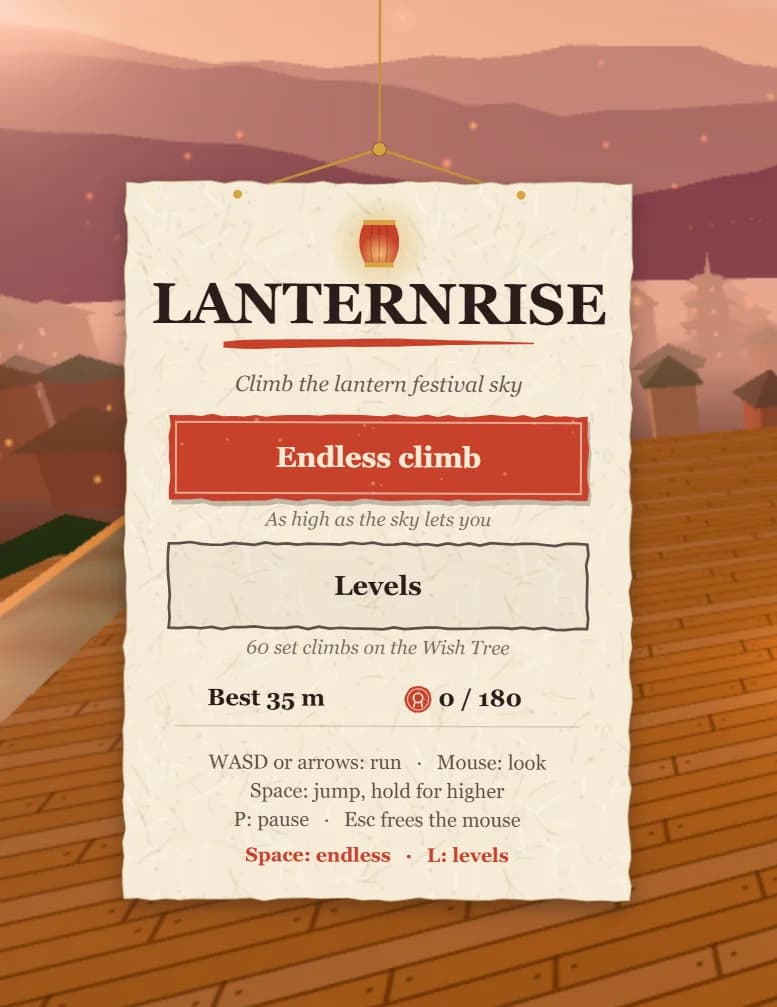
Arcade
Carry a lantern up a tall 3D climb, jumping from platform to platform as the night opens up below.
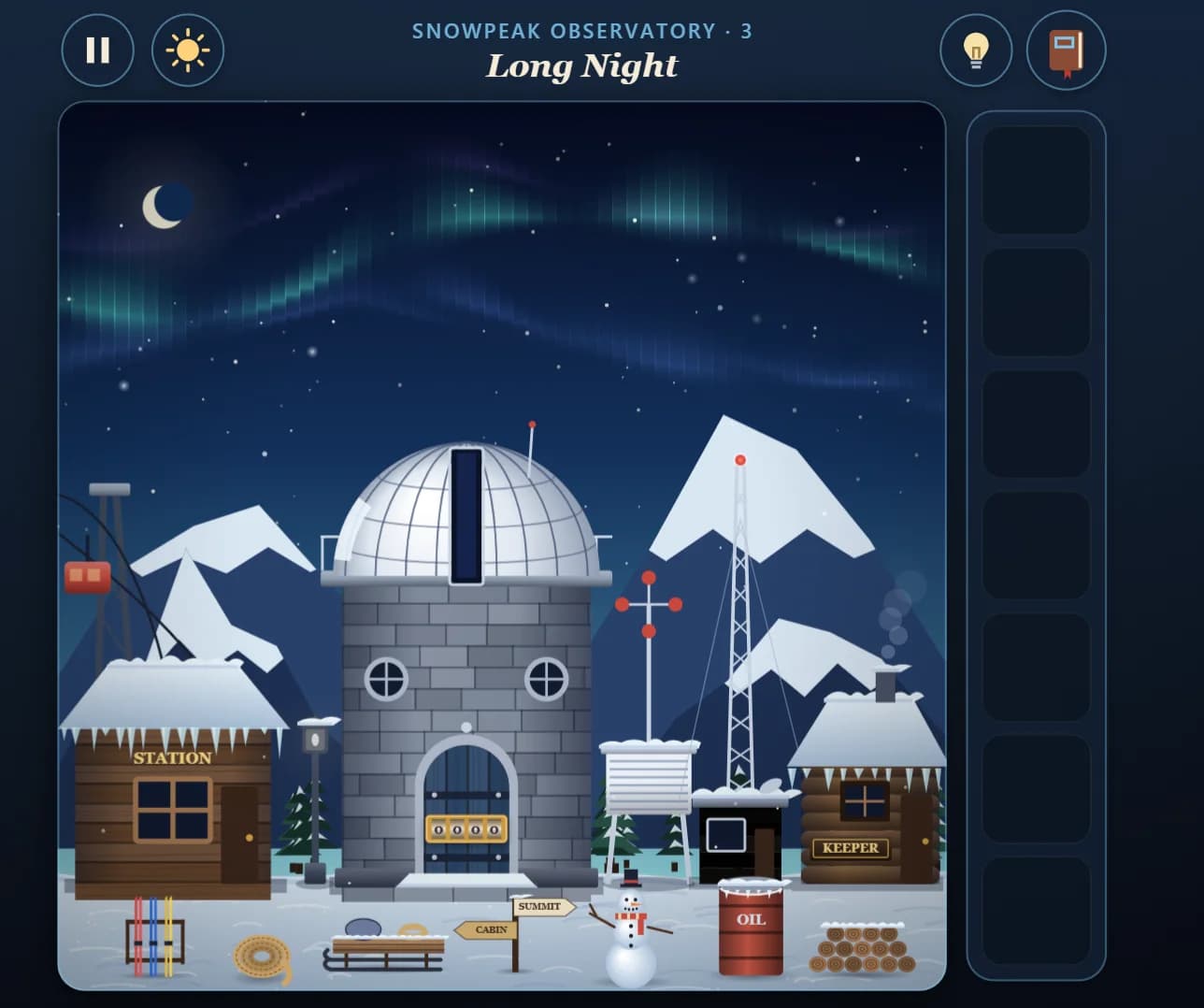
Puzzle
Search hand-drawn scenes for clues and bring broken machines back to light, from a lighthouse lamp to a Ferris wheel.
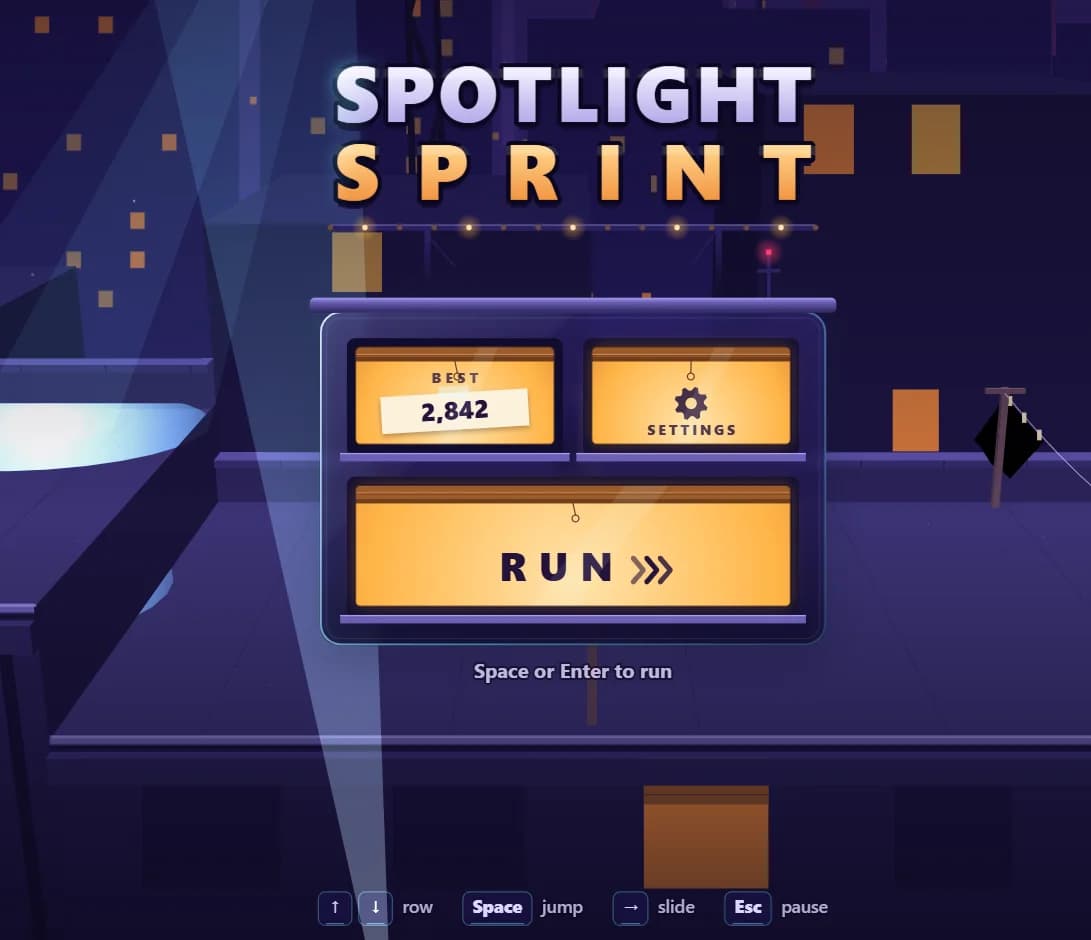
Arcade
A rooftop run at night where the searchlights are the danger.
Gold, silver and white are heat colours from glowing sparks. Red, yellow, green and blue are fingerprint colours from metal atoms: strontium, sodium, barium and copper. Blue is hardest because its glow breaks apart in too much heat, and the 'green' in green crackers means less pollution, not a green burst.
Gaming
Discover the finest puzzle browser games meticulously engineered to elevate your cognitive skills, sharpen memory, and optimize your mental agility right from your web browser.
Gaming
Hot air balloons have no steering wheel or rudder, so how do pilots choose where they go? How wind layers work, how pilots read them, why balloons react so slowly, how balloon competitions are won, and how the same idea plays out in our balloon racing game, Loftwind.
Gaming
A relaxing game is not one where nothing happens. A look at why gentle focus rests a tired mind better than doing nothing, how pace, sound, light and predictability shape a calm game, and what to look for when you want to switch off after a long day.
Gaming
Browser games have come a long way since Flash. A look at why they fit the way we play now, what separates a great one from a forgettable one, what each genre does well in a tab, and what is true and false about browser game safety.
Continue Exploring
Jump into browser games or challenge yourself in Quiz Arena. There's always something new to discover.