01
Check the gauge before you move
The gauge on the left edge shows the direction and speed of every band. Choose your band first, then climb or sink to it.
No games found
Unihfy Games
Loading identity...
Quick Access
Hot air balloons have no steering wheel or rudder, so how do pilots choose where they go? How wind layers work, how pilots read them, why balloons react so slowly, how balloon competitions are won, and how the same idea plays out in our balloon racing game, Loftwind.

Format
Curated Article
Reading Time
8 min read
Published
October 31, 2026
Written by
Developer · Game Reviewer
Kaushik Hirpara is a full-stack developer and game reviewer at Unihfy Games. He designs and builds every game on the site, gets them playing well on phones, and writes up what players need to know.
View Author ProfileLook inside the basket of a hot air balloon and you will notice what is missing. There is no steering wheel, no rudder, no engine pushing it forwards and no wings to bank. A pilot has a burner to go up and a vent to go down, and that is about it. Yet balloon pilots regularly land in a chosen field, follow a route over a valley, and even win competitions by dropping a marker close to a target.
So can you steer a hot air balloon? Directly, no. Indirectly, yes, and the method is one of the cleverest ideas in flying. The pilot does not change the balloon's direction at all. They change which wind is carrying it.
Steering wheel
None
What the pilot controls
Height
What sets the direction
The wind
First crewed flight
1783
A hot air balloon flies for the same reason a bubble rises in a pan of water. Hot air is lighter than the same amount of cooler air around it, so a big bag of hot air floats upwards and lifts the basket with it. The idea is old: on 21 November 1783, Jean-François Pilâtre de Rozier and the Marquis d'Arlandes crossed Paris in a Montgolfier balloon, the first free flight with people on board. It lasted 20 to 25 minutes and covered roughly 9 km.
Modern balloons run on propane. Firing the burner heats the air in the envelope, which is the name for the fabric balloon, and the balloon climbs. Stop burning and the air slowly cools, so the balloon starts to sink. To come down faster, the pilot pulls a line that opens a vent at the top of the envelope and lets hot air escape.
Staying level takes constant small corrections. The FAA's Balloon Flying Handbook says an average balloon needs a burn of about four seconds every 25 to 40 seconds just to hold its height, and the rhythm changes with the load and the air temperature.
From the ground, it is easy to think of the wind as one thing. In reality, the air above you is often stacked in layers, and each can move at its own speed and in its own direction. Friction with the ground slows the lowest air, and higher up the wind usually gets stronger and turns. In the Northern Hemisphere it tends to shift to the right as you climb. Hills, valleys and the sun warming the land add their own twists.
Here is a simple way to picture it. Imagine a tall building where every floor has a moving walkway, and each walkway runs in a different direction. You cannot step off and walk. All you can do is ride the lift. If you want to go east, you take the lift to the floor whose walkway runs east, and you stay on until you need to change.
That is balloon steering. The burner and the vent are the lift, and the wind layers are the walkways. Sometimes a change of just a few hundred feet is enough to put the balloon on a completely different course.
A balloon moves along with the wind, so the people in the basket feel very little breeze, even when they are travelling quickly over the ground. It also means a pilot cannot simply feel the wind direction. They work it out by watching how the balloon moves over the land below.
The hard part is that wind cannot be seen. Before launch, pilots check the forecast for winds at different heights, then test it for themselves. A common method is to release a small balloon, known as a pibal, short for pilot balloon, and watch which way it goes as it climbs.
Once they are flying, pilots look for clues everywhere. Other balloons are the best one, because each is a giant wind marker showing what is happening at its height. Smoke from a chimney, flags, and moving trees all help near the ground.
Even so, the layers do not always offer the direction a pilot wants. If no wind is blowing towards the planned landing field, no amount of skill will get the balloon there. That is why most balloon flights have a chase crew following by road, ready to meet the balloon wherever it comes down.
The best example of all this is in New Mexico. On many autumn mornings in Albuquerque, the valley develops a pattern called the Albuquerque Box. Cool air drains down from the surrounding mountains overnight, and the low wind can end up blowing one way while the wind a few hundred feet above it blows the opposite way.
For pilots, that is close to a gift. They can launch, drift along in the low layer, climb into the upper layer to travel back, then sink again, sometimes finishing near where they started. It is a big part of why the city's International Balloon Fiesta has become so famous.
It is not guaranteed, though. Once the sun warms the ground, the pattern breaks up, and one study cited by forecasters found it appears only about 30 percent of the time in early October. Pilots still have to read each morning as it comes.
If reading the wind is the first skill, patience is the second. A balloon responds slowly. The burner sits well below the top of a very large envelope, and that air takes time to heat. By some pilots' accounts, it can be 15 to 30 seconds before the balloon responds to a burn. The EAA makes the same point about clearing obstacles: firing the burner does not give you height straight away.
The delay works in both directions. A balloon that is climbing will keep climbing for a while after the burner goes quiet, and one that is sinking will keep sinking after the burn starts. A pilot aiming for a certain layer has to begin slowing the climb well before reaching it, or the balloon will sail straight through.
One balloon, the hare, takes off first and lands or marks a spot. The rest, the hounds, chase it and try to drop their markers as close to that spot as possible. Nobody knows the target until the hare has chosen it.
Officials name a target and every pilot launches from a set area, then tries to drop a small marker on it. The shortest distance from the target wins, so the whole task is about choosing the right layers.
The target stays fixed, but each pilot picks their own launch site. The contest starts on the ground, reading the winds and deciding how far away to start so that they carry the balloon in.
The Gordon Bennett Cup began in Paris in 1906 and is still flown today. It uses gas balloons, and the crew that lands furthest away wins. The first winners, Frank Lahm and Henry Hersey, flew about 640 km and came down in Yorkshire, England.
We built Loftwind, a free balloon racing game that runs in the browser, around this one idea. There is no steering at all. You hold to fire the burner and rise, and let go so that the air cools and you sink. Every band of sky has its own wind, some blowing forwards and some backwards, so you move by climbing or sinking into the one you need.
The delay is there too. Your balloon keeps rising for a little while after you let go, and keeps sinking for a little while after you start burning again. Starting early is the main skill in the game, just as it is in a real basket.
You race three to five rival balloons through numbered ring gates, over 30 courses in five chapters. Miss a ring and nothing is lost but time: you find a band blowing backwards, drift back and try again. Your best run on each course also flies beside you as a ghost, so you can see where you gained or lost time.
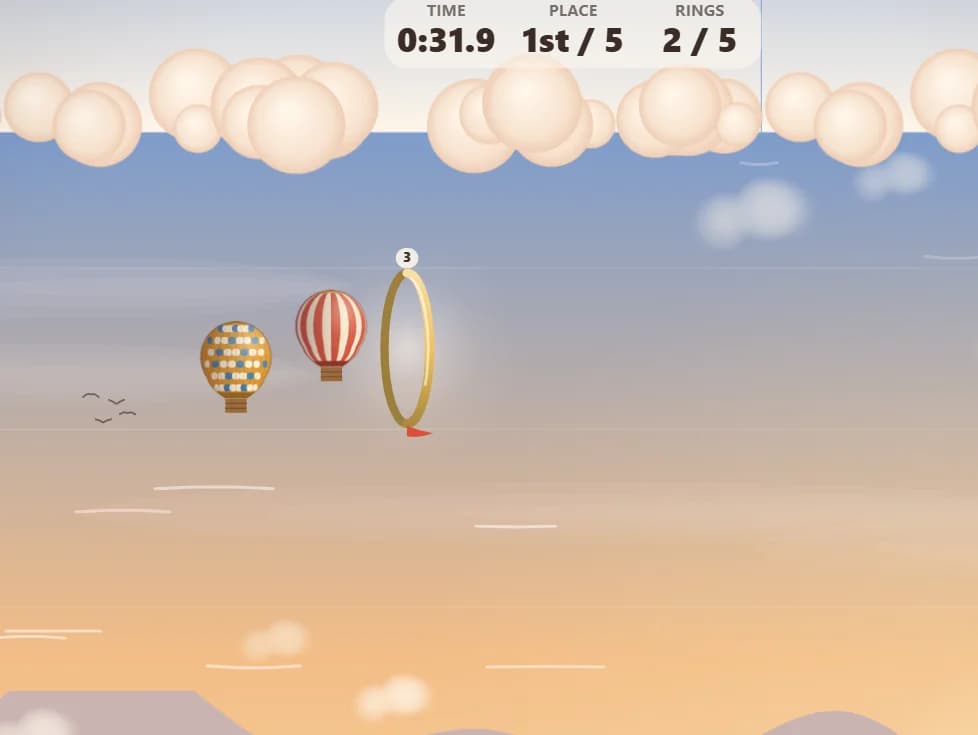
Quick Overview
The gauge on the left edge shows the direction and speed of every band. Choose your band first, then climb or sink to it.
Release the burner just before you reach the height you want. If you wait until you get there, you will float straight past it.
If you are sinking towards a ring, start burning early. The balloon needs a moment to stop falling before it can rise.
Bands blowing backwards have a warm tint. They slow you down on the way forward, but they are the way back to a ring you missed.
Quick Picks
Our games are made in-house at Unihfy Games and run in the browser with nothing to install. In these ones, you can't simply steer where you want to go.
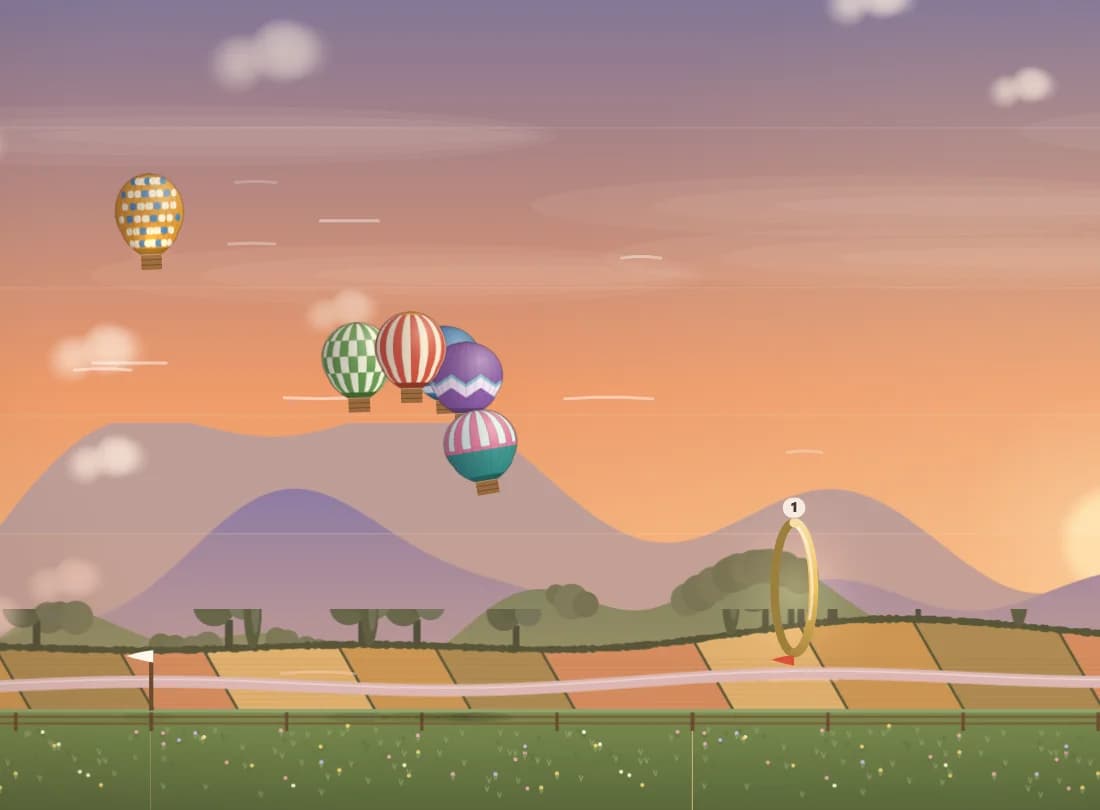
Racing
A calm balloon race with no steering, where you climb and sink between bands of wind to reach each ring.
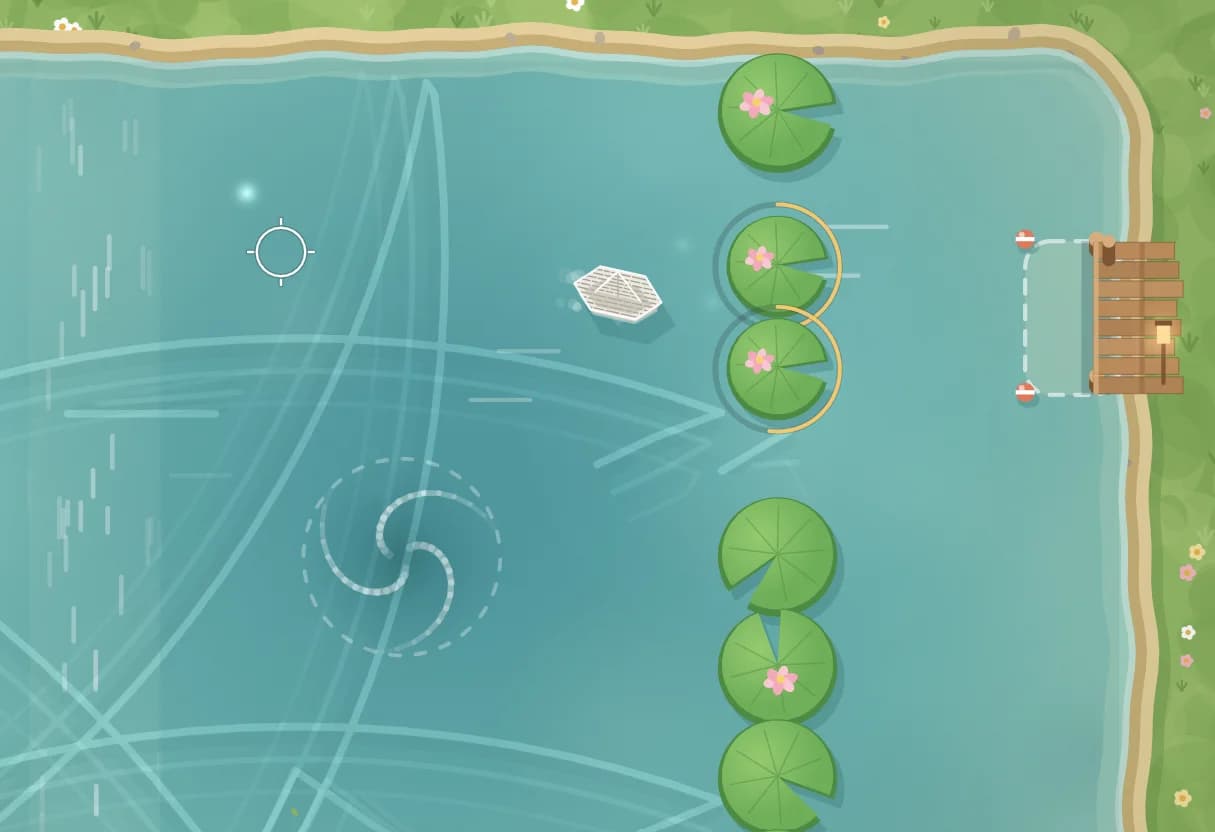
Puzzle
You never touch the paper boat. Tap the pond to make ripples, and let them push it towards the dock.
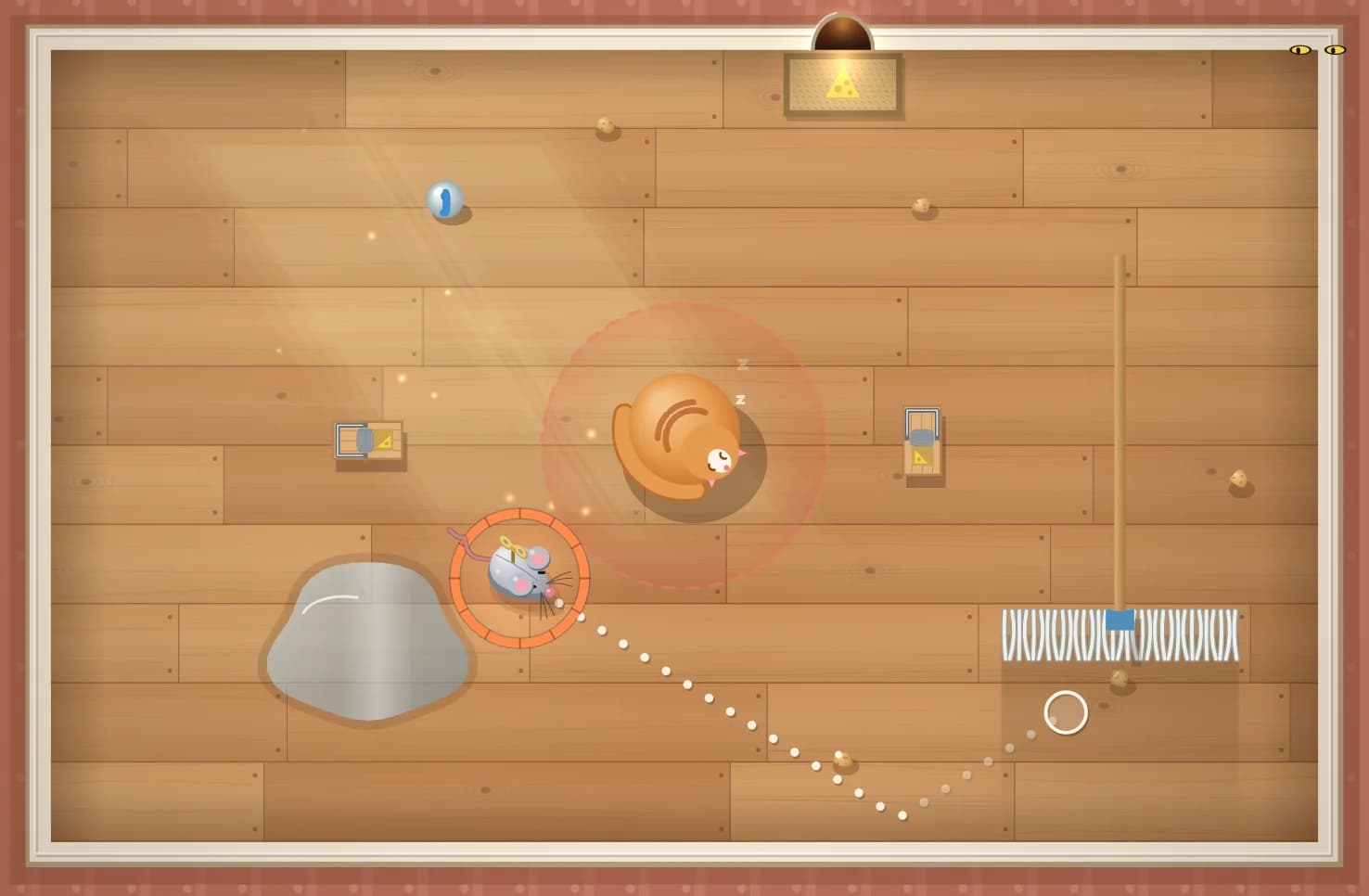
Action
A wind-up toy mouse runs in a straight line until its spring runs down, so every dash has to be planned before you let go.
Action
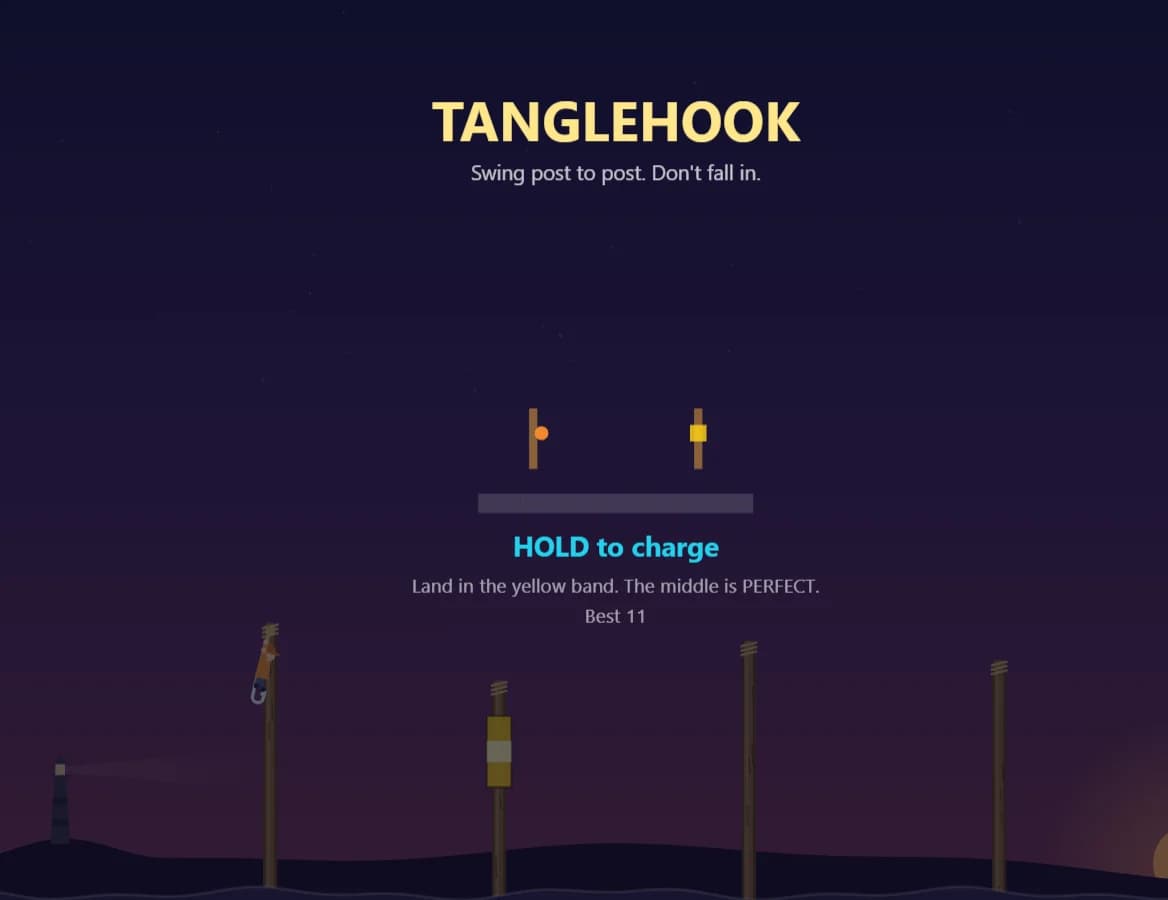
Later swings bring headwinds and tailwinds, and you have to judge your power to match them before you charge.
Hot air balloons cannot be steered directly. The burner and vent only move them up and down, but the wind often blows differently at different heights, so pilots steer by moving into the layer going their way. A balloon responds slowly, so they have to plan well ahead, and even the best pilot goes only where the sky allows.
Gaming
Why do racing games feel so good, and why do we keep pressing restart? A look at the psychology of speed, risk, personal bests and fairness, and what that means for the racers you can play straight from a browser.
Gaming
Why are fireworks red, green, blue or gold? The two ways a firework makes light, which metal gives which colour, why blue is the hardest colour to make, what green crackers really are, and how our fuse puzzle game Wickrush turns a burning fuse into a route to plan.
Gaming
Browser games have come a long way since Flash. A look at why they fit the way we play now, what separates a great one from a forgettable one, what each genre does well in a tab, and what is true and false about browser game safety.
Gaming
Discover the finest puzzle browser games meticulously engineered to elevate your cognitive skills, sharpen memory, and optimize your mental agility right from your web browser.
Continue Exploring
Jump into browser games or challenge yourself in Quiz Arena. There's always something new to discover.