01
Step 01
Read the defenders' hands
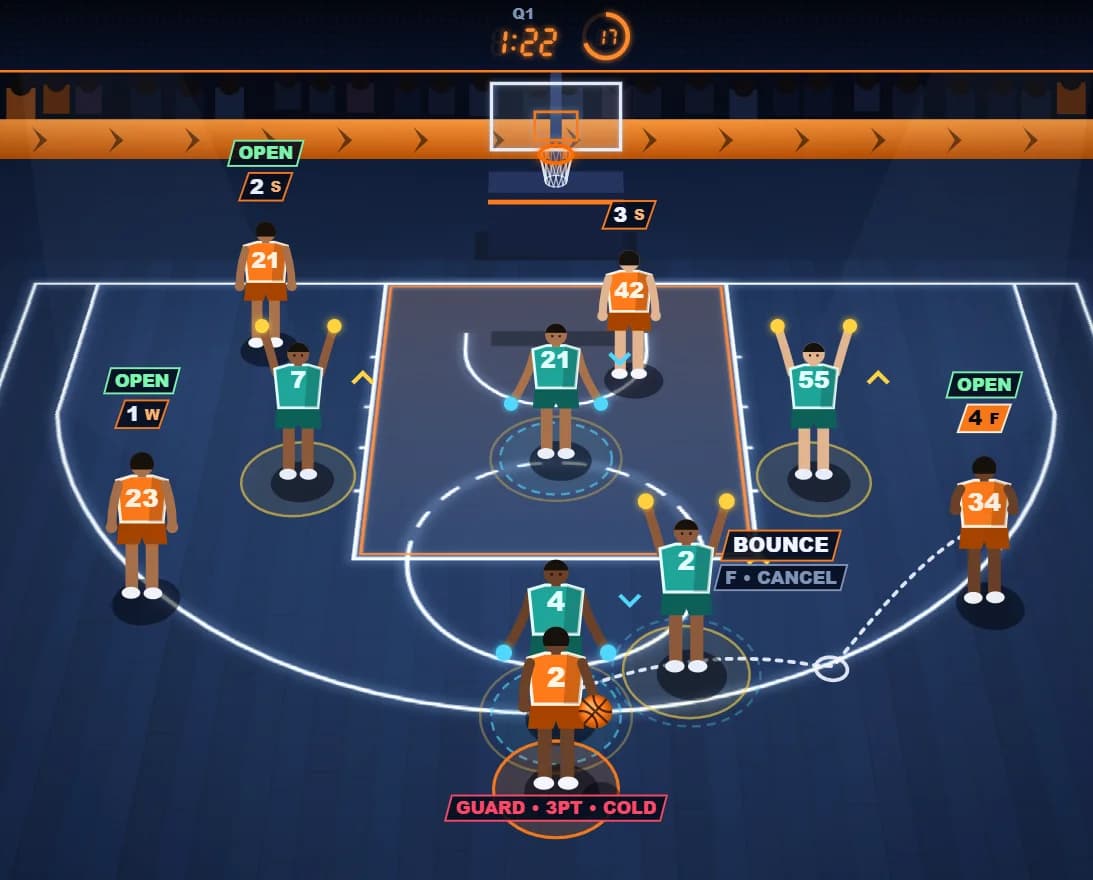
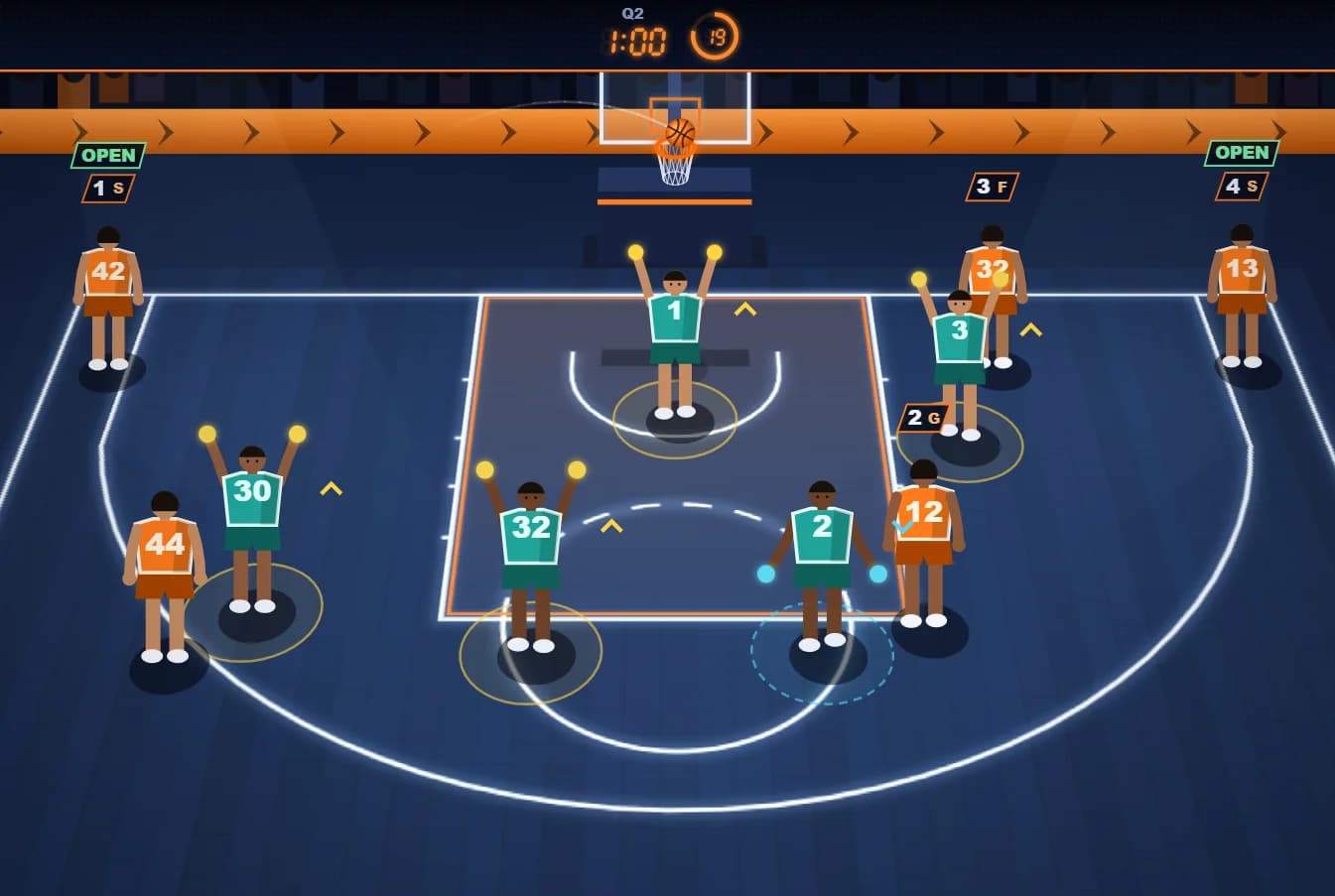
Raised yellow hands block a chest pass. Low blue hands steal a bounce pass. Hands switch on a beat, and a defender's arms and glow start to change just before they do, so pass for the hands that are coming.
No games found
Unihfy Games
Loading identity...
Quick Access
Basketball rules explained simply: how many steps count as traveling, what a double dribble really is, how the 24-second shot clock works and why it exists, how NBA and international rules differ, and how to play Unihfy Basketball Season, our free passing game.
Format
Curated Article
Reading Time
7 min read
Published
November 2, 2026
Written by
Developer · Game Reviewer
Kaushik Hirpara is a full-stack developer and game reviewer at Unihfy Games. He designs and builds every game on the site, gets them playing well on phones, and writes up what players need to know.
View Author ProfileWatch basketball for the first time and the whistle seems random. A player takes off towards the basket, everyone cheers, and then the referee rolls their arms and the ball goes to the other team. Nobody was touched. What happened?
The rules feel much smaller once you sort them into three limits. Your feet are limited by traveling. Your hands are limited by the double dribble. Your team is limited by the shot clock. Most whistles a beginner finds confusing come from one of these three, and each has a simple question behind it.
Players per team on court
5
Height of the hoop
3.05 m
Steps after you gather the ball
2
Shot clock in the NBA and FIBA
24 s
Two teams of five try to put the ball through the hoop they are attacking. A normal basket scores 2, a shot from beyond the three-point line scores 3, and a free throw scores 1. The team with more points at the end wins, and a tie goes to overtime.
Breaking the rules comes in two kinds. A violation is a mistake with the ball, such as traveling, and it simply hands the ball to the other team. A foul is illegal contact with a player, and it can send someone to the free-throw line. Too many fouls and a player has to leave the game.
Traveling answers one question: what can your feet do while you are holding the ball? The short answer is two steps. Under the NBA rulebook, a player who gathers the ball while moving may take two steps to stop, pass or shoot.
The word that causes the arguments is 'gather'. It is the moment you have enough control of the ball to hold it, pass it or shoot it, and the count begins after that moment. This is why a player can look as if they took three steps on the way to a layup and still be legal: the foot that was already on the floor as they gathered does not count.
If you catch the ball while standing still, you get a pivot instead. One foot stays planted and the other can step in any direction. Lift the planted foot before the ball has left your hand to start a dribble, and it is a travel.
The double dribble answers a different question: what can your hands do? It has two forms. The first is bouncing the ball with both hands at the same time. The second, and the one beginners actually commit, is stopping your dribble, holding the ball, and then starting to dribble again.
The NBA's wording is plain: a player may not dribble a second time after voluntarily ending the first one. So a dribble is a one-time resource. Once you pick the ball up, you must pass or shoot. The word 'voluntarily' matters, because if an opponent knocks the ball away from you, you can gather it and dribble again.
The shot clock limits the whole team. In the NBA and in international play under FIBA, you have 24 seconds to attempt a shot. To count, the shot must leave the shooter's hand before the clock expires and then touch the rim. If it does not, the other team gets the ball. US men's college basketball gives you 30 seconds.
A miss that hits the rim and is rebounded by the attacking team resets the clock, but only to 14 seconds. An air ball resets nothing, so the clock keeps running.
The rule exists because early professional basketball had a boring problem. A team in front could simply hold the ball and wait. On 22 November 1950, the Fort Wayne Pistons beat the Minneapolis Lakers 19-18, still remembered as the lowest-scoring game in NBA history.
Danny Biasone, owner of the Syracuse Nationals, worked on the fix with his general manager, Leo Ferris. The number came from simple maths: a 48-minute game is 2,880 seconds, the games Biasone enjoyed had about 120 shots, and 2,880 divided by 120 is 24. The clock arrived for the 1954-55 season, and its first game finished Rochester 98, Boston 95.
An attacking player cannot stay in the painted area near the basket for more than three seconds at a stretch. Otherwise the tallest player would just park under the hoop.
A team has eight seconds to bring the ball over the centre line. Sending it back across and touching it first is a backcourt violation.
Under FIBA rules, a closely guarded player cannot hold the ball for more than five seconds. The NBA's five-second rule is about dribbling with your back or side to the basket.
Land on both feet together when you stop, because that usually lets you choose either foot as your pivot. Push the ball out in front of you before your feet move when you start a dribble. And keep your dribble alive until you know where the ball is going next, because once you pick it up, your only choices are to pass or shoot.
When James Naismith wrote his 13 rules for the first game in December 1891, one of them said a player could not run with the ball. The goals were two peach baskets and passing was the way to move the ball. Dribbling only grew into the game later, as players found a way of passing to themselves.
That history is the idea behind our own game. Traveling and the double dribble limit what one player can do alone, which pushes the ball between teammates. Unihfy Basketball Season goes straight to that part of basketball.
Unihfy Basketball Season is a free browser game we built in-house, set on a night court. You never steer a player. Your teammates run their own cuts and screens, and you decide who gets the ball, what kind of pass it is, and when somebody shoots. That means the game never calls traveling, double dribbles or fouls, because the footwork is not yours to get wrong. Other things carry over directly.
Each match has four quarters, shortened to 90 seconds each, with overtime if the score is level. Your possessions run on a real 24-second shot clock, and shots from beyond the arc or from either corner score 3. Let the clock run out and the rival gets the ball, as in the real game, though here they punish it with a fast break for a sure 2.
How It Flows
It plays with a mouse and keyboard or on a phone, and your first possession is coached.
Raised yellow hands block a chest pass. Low blue hands steal a bounce pass. Hands switch on a beat, and a defender's arms and glow start to change just before they do, so pass for the hands that are coming.
Tap or click a teammate for a chest pass. Press and flick down for a bounce pass, or up for a lob. On a keyboard, 1 to 4 pick the teammate, with Down or S for a bounce and Up or W for a lob.
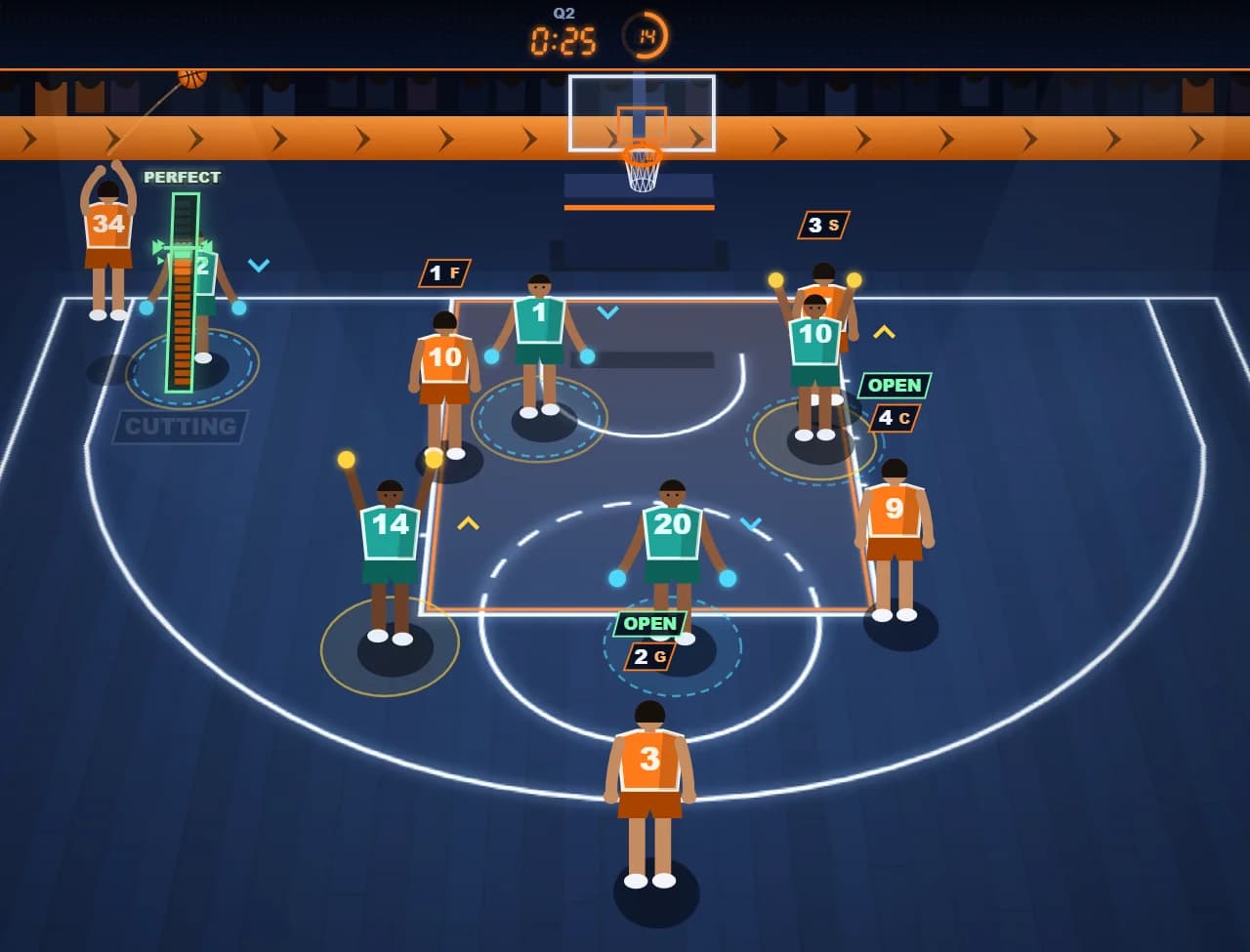
A shot with no pass before it gets a small green window. Each completed pass widens it, and so does shooting within a second of a catch. A nearby defender shrinks it.
Press and hold the ball handler, or hold Space, and let go while the meter's cursor is in the green. The white core is a swish.
Lob to a teammate close to the rim, then tap or press Space late in the ball's flight, when the TAP tag shows, for a slam.
When a rival rises to shoot, a BLOCK bar appears. Press E, or tap on a phone, while its moving line is in the green. You get one press per shot.
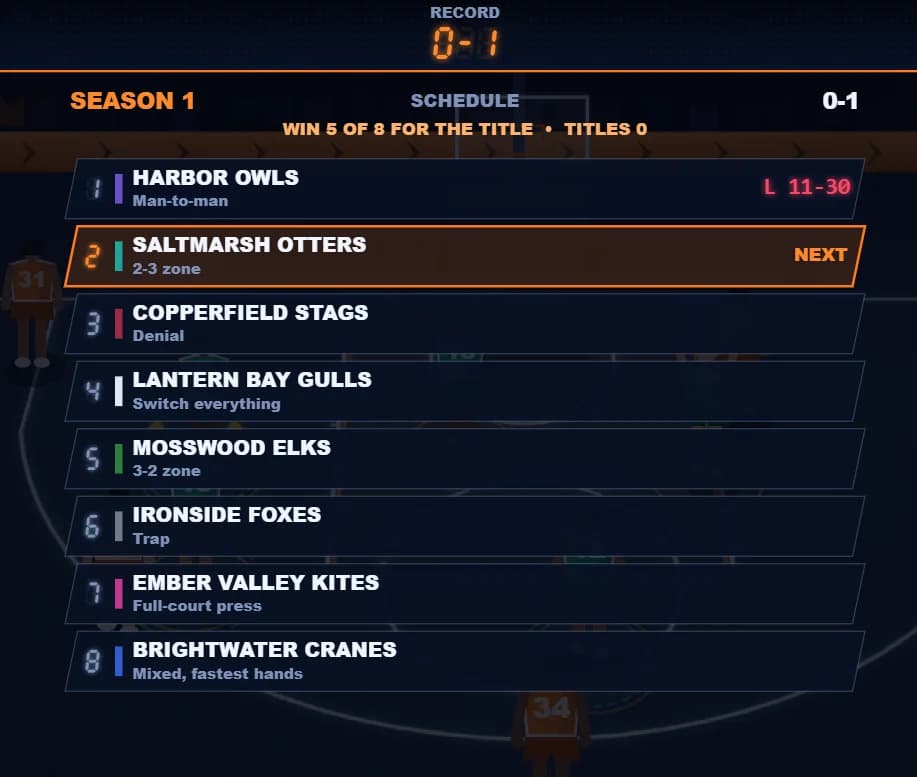
A season is eight matches, and five wins take the title. The rivals are invented, but their defences are real ones. In man-to-man, each defender follows one attacker. The 2-3 and 3-2 zones guard areas instead, leaving gaps in different places. A trap sends two defenders at the ball and leaves somebody open, and a full-court press gives you only 20 seconds on the shot clock.
Finish a season and a new one begins, with hands that switch faster and rivals that are harder to block.
Quick Picks
All of these were made in-house at Unihfy Games and run in the browser with nothing to install.
Sports
Read the defenders' hands and pass your way to a better shot across a season of eight rivals.
Sports
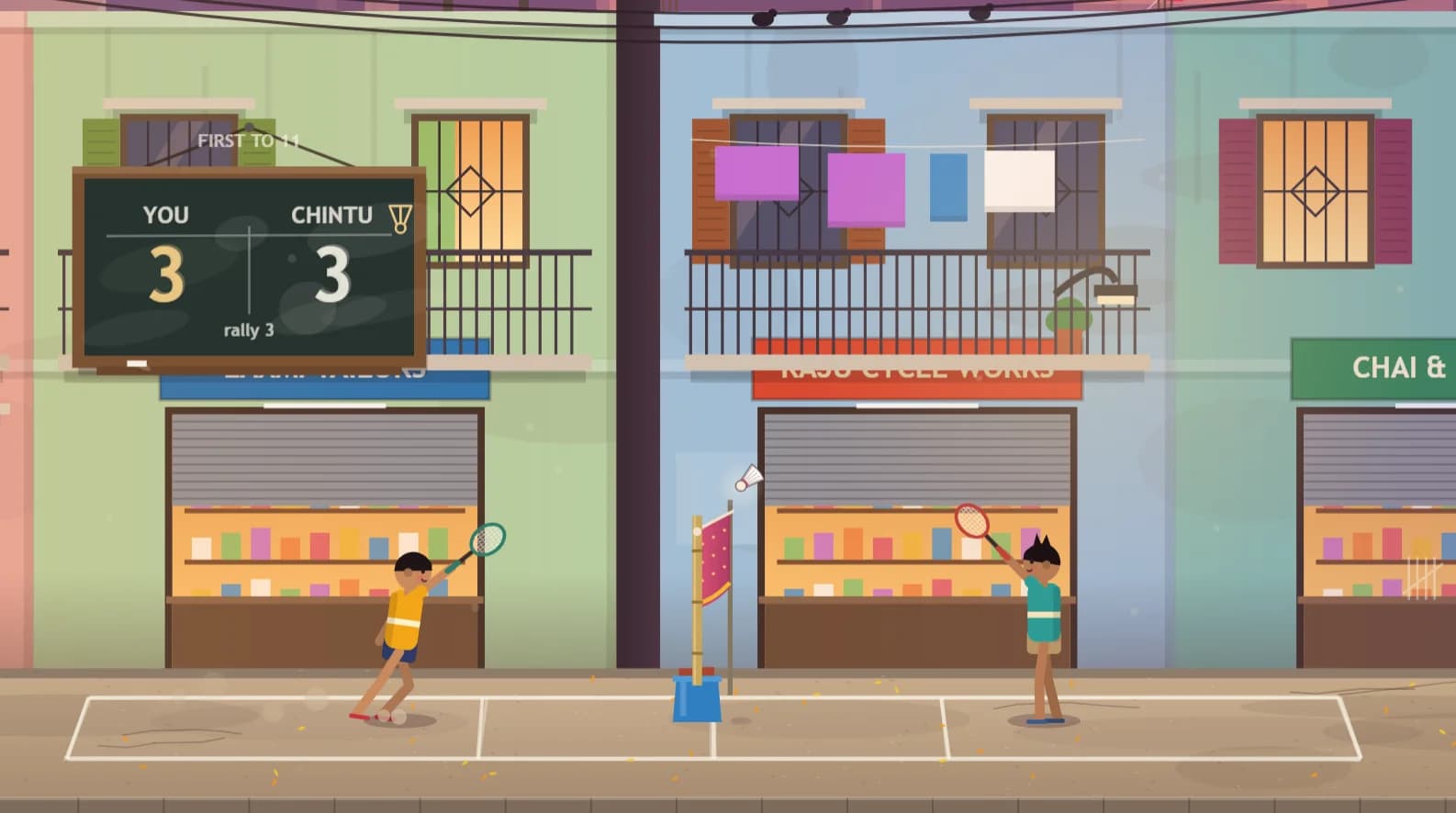
Real rally scoring and shuttle flight, played on a lane in an Indian neighbourhood.
Sports
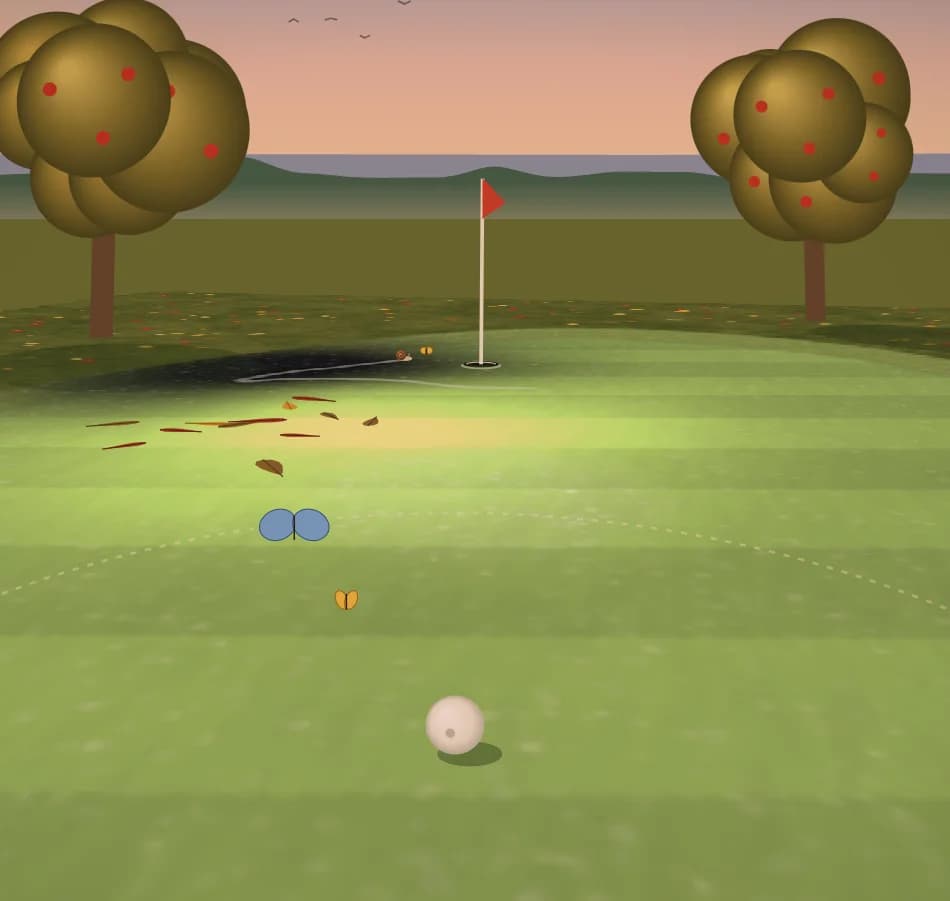
A putting game played from a low view behind the ball, where you brush ahead of a rolling putt to steer it.
Shooting
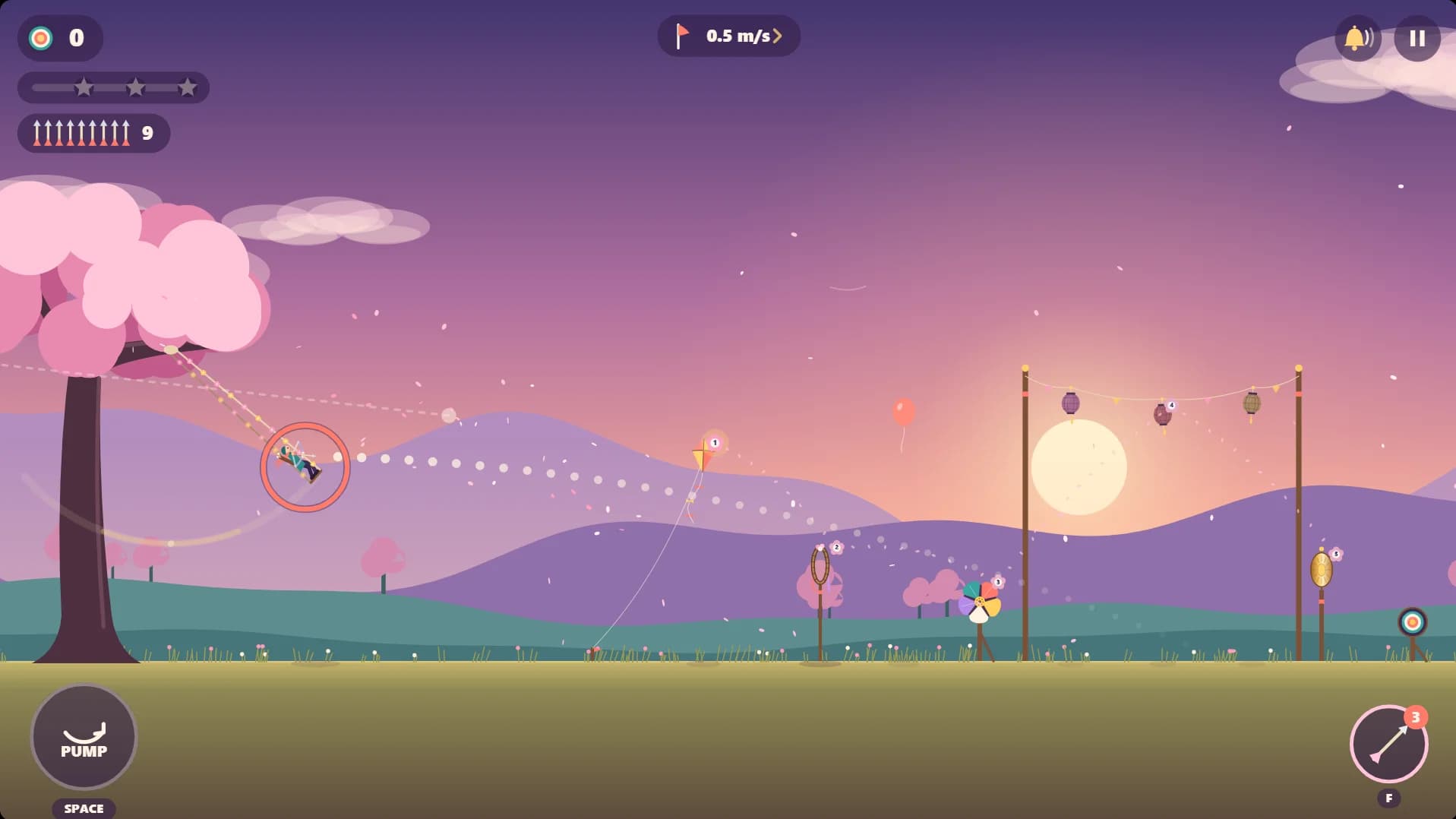
Rope-swing archery, for anyone who enjoys judging a release the way a jump shot asks you to.
Feet: two steps after you gather the ball, or a planted pivot foot if you caught it standing still. Hands: one dribble, then pass or shoot. Clock: 24 seconds to get a shot to the rim, with 14 more if your team rebounds it.
Sports
Golf scoring terms explained simply: what par means, every score name from condor to triple bogey, why golf names its good scores after birds, how bogey went from a good score to a bad one, how to read a leaderboard and a TV scorecard, and how to practise par on the putting greens of Unihfy Golf Greens.
Sports
Badminton rules explained simply: how scoring to 21 works, where to stand when you serve, the 1.15 m serve rule, singles and doubles courts, the faults most street players never learned, why a shuttle flies so strangely, and how to put it all into practice in Gully Badminton.
Sports
Discover the psychology behind why every cricket fan suddenly becomes a coach during live matches. Explore fan emotions, match-day behavior, superstitions, heartbreaks, tactical opinions, and the fascinating culture of cricket fandom.
Sports
A hilarious and relatable ranking of cricket fans based on panic levels during matches. Explore fan psychology, emotional reactions, superstitions, heartbreaks, last-over stress, and why every cricket fan slowly transforms into a nervous wreck.
Continue Exploring
Jump into browser games or challenge yourself in Quiz Arena. There's always something new to discover.