The Myth
01The highest score wins, like in most sports.
The Reality
In golf the lowest score wins. Every stroke adds one, so fewer strokes is always better.
No games found
Unihfy Games
Loading identity...
Quick Access
Golf scoring terms explained simply: what par means, every score name from condor to triple bogey, why golf names its good scores after birds, how bogey went from a good score to a bad one, how to read a leaderboard and a TV scorecard, and how to practise par on the putting greens of Unihfy Golf Greens.

Format
Curated Article
Reading Time
13 min read
Published
October 28, 2026
Written by
Developer · Game Reviewer
Kaushik Hirpara is a full-stack developer and game reviewer at Unihfy Games. He designs and builds every game on the site, gets them playing well on phones, and writes up what players need to know.
View Author ProfilePut golf on the television and within a minute the commentator says something like this: 'A birdie at fourteen takes him to four under, two clear of the field after that bogey on the last.' If you have never played, almost every word in that sentence sounds like a code. Birds, numbers below zero, and a score that sounds like something hiding under the bed.
The good news is that the whole code rests on one idea. Once you understand par, every other score name falls into place, and you can follow any leaderboard in the world.
This guide explains par first, then every score name from best to worst, where the strange names came from, and how to read a scorecard. After that, it shows how to practise the same idea on the greens of our golf putting game, where every hole has a par of its own.
Birdie
1 under par
Eagle
2 under par
Albatross
3 under par
Bogey
1 over par
Par is the number of strokes an expert golfer is expected to need to finish a hole. Every hole on a course has one, printed on the scorecard and usually on a sign at the tee. Most holes are a par 3, a par 4 or a par 5, and the number depends mainly on how long the hole is.
Here is the simple way to think about it. Par always includes two putts on the green. So on a par 3, a good player is expected to reach the green with one shot and then take two putts. On a par 4, it is two shots to reach the green and two putts. On a par 5, it is three shots and two putts.
Add up the par of every hole and you get the par for the course. Most full 18-hole courses have a par somewhere between 70 and 72. A player who takes 68 shots on a par-72 course has scored 'four under par', and that is the number you see on a leaderboard: -4. Exactly on par is called 'even', shown as E. Above par is shown with a plus, so +2 means two over.
In golf, the lowest score wins. Every stroke counts as one, so the aim is always to take fewer of them than par.
Finishing a hole in four strokes fewer than par. In practice it means a hole in one on a par 5, or two shots on a par 6. Only a handful have ever been confirmed, so most golfers will never see one.
Three strokes fewer than par, such as two shots on a par 5 or a hole in one on a par 4. In the United States it is usually called a double eagle. Even top professionals may make only one or two in a career.
Two strokes fewer than par, such as three shots on a par 5. Long hitters make eagles on par 5s fairly often in professional golf, and a hole in one on a par 3 also counts as an eagle.
One stroke fewer than par, such as three shots on a par 4. It is the score that wins tournaments, and for a club golfer a birdie is the shot they tell everyone about afterwards.
Exactly the number of strokes the hole is set at. For a professional it is a solid, ordinary hole. For a beginner, making par is a genuine achievement.
One stroke more than par, such as five shots on a par 4. A bogey often comes from one small mistake, like a missed green or three putts instead of two.
Two strokes more than par. This is usually the hole where something went properly wrong, like a ball in the water or a long stay in a bunker.
Three over is a triple bogey and four over is a quadruple bogey. Past that, most golfers simply say the number, or quietly stop counting.
A hole in one, also called an ace, is not a separate score on the ladder. It is named for what happened, not for how it compares with par. So a hole in one on a par 3 is an eagle, on a par 4 it is an albatross, and on a par 5 it is a condor. Most holes in one happen on par 3s, which is why an ace is actually far more common than an albatross.
In American slang of the late 1800s, a 'bird' was anything excellent, the way someone today might call a great shot 'sick' or 'fire'. The Atlantic City Country Club in New Jersey says the word birdie was born on its course around the turn of the twentieth century, when a player hit a shot close to the hole and called it 'a bird of a shot'. The club still tells the story proudly.
Once one under par was a birdie, the next names followed the same theme. A score better than a birdie needed a bigger, grander bird, so two under became an eagle, the national bird of the United States. Three under is rarer still, so it was named after the albatross, a seabird that is rarely seen. When golfers needed a name for four under, they chose another giant: the condor.
The pattern makes the ladder easy to remember. The bigger and rarer the bird, the better and rarer the score.
Bogey has the strangest history of all, because it used to mean almost the opposite of what it means today.
In Britain in the 1890s, golf clubs began measuring players against an imaginary opponent who made a steady, good score on every hole. Golfers named this opponent after the Bogey Man from a popular song of the time, the figure you could never quite catch. Before long he had a military rank as well, and became Colonel Bogey. The famous Colonel Bogey March, published in 1914, borrowed his name.
Around the same time, golfers began using another word, par, which came from finance, where a share 'at par' is worth exactly its face value. As equipment improved and players got better, par became the standard score for an expert, and bogey slid down to mean one stroke worse. So the colonel who was once hard to beat now stands for a small mistake.
A scorecard has a row for each hole with its length and its par, and a box where you write the number of strokes you took. At the end of nine holes you add them up for the 'out' total, and the back nine gives the 'in' total. Out and in together make the round.
On television, and on many players' own cards, scores are marked with shapes so you can see the story of a round at a glance. A circle around a number means a birdie, and two circles mean an eagle. A square means a bogey, and two squares mean a double bogey. A plain number is a par. A card full of circles had a good day. A card full of squares did not.
The leaderboard keeps it even simpler. It shows each player's total compared with par, not the number of strokes, so -6 leads -4, and E sits above +1. That is why commentators talk in unders and overs rather than raw scores. It lets you compare players even when they have played different numbers of holes.
Myth vs Reality
The Myth
01The highest score wins, like in most sports.
The Reality
In golf the lowest score wins. Every stroke adds one, so fewer strokes is always better.
The Myth
02Par is the average score on a hole.
The Reality
Par is what an expert should score. Most everyday golfers finish well above par, and that is completely normal.
The Myth
03A par 3 means you get three putts.
The Reality
A par 3 is the number of strokes for the whole hole, from the tee to the cup. It assumes one shot to the green and two putts.
The Myth
04A bogey is a terrible score.
The Reality
For a club golfer it is a good result. Golf even has a name for a player who averages about one over on each hole: a bogey golfer, and many players work for years to get there.
The Myth
05A hole in one is the rarest score in golf.
The Reality
It is rare, but most aces happen on par 3s, where they count as eagles. An albatross, and a condor even more so, are much rarer.
The Myth
06A gimme or a mulligan is part of the rules.
The Reality
A mulligan, a free do-over, is a friendly custom and is never allowed in official play. A gimme, a short putt the other player lets you skip, only counts in match play, where conceding a putt is allowed.
Go back to the rule that par always includes two putts. On a par-72 course, that means 36 of the 72 strokes are expected to be taken on the greens. Half of a perfect round is putting, even though putts are the shortest shots in the game.
That is why golfers say 'drive for show, putt for dough'. A long drive looks impressive, but a single extra putt on a hole turns a par into a bogey, and a holed putt from a long way turns a par into a birdie. Many birdies come from an ordinary approach followed by one good putt.
Good putting comes down to two skills. The first is speed: hitting the ball hard enough to reach the hole but not so hard that it races past. The second is reading the green: seeing how the slope will make the ball curve, which golfers call the break. Beginners usually worry about the line, but most three-putts come from bad speed, leaving the first putt far short or far past the hole.
Quick Reference
The area where each hole starts, and also the small peg the ball can sit on for the first shot.
The short, neatly mown grass between the tee and the green, where you want your ball to land.
The longer grass on either side of the fairway. It grabs the club and makes the next shot harder.
A hollow filled with sand, often called a sand trap. Shots from it are hard to control.
The very short, smooth grass around the hole, where players putt.
Water, such as a pond or stream, and other areas marked with red or yellow stakes. Hitting into one costs a penalty stroke. Before 2019 these were called water hazards.
The shout that warns people nearby that a ball is heading their way.
How much a putt curves because of the slope of the green.
A long putt hit mainly to stop close to the hole, so the next putt is easy.
Reaching the green in two strokes fewer than par, which leaves two putts to make par.
Getting the ball into the hole in two shots from off the green: one to get on, one putt to finish.
In stroke play, every stroke over the round counts. In match play, players compete hole by hole, and whoever wins more holes wins the match.
In match play, being ahead by exactly as many holes as are left to play, so you cannot lose in normal play.
A number that shows roughly how many strokes over par a player usually scores. It lets players of different skill levels compete fairly.
A grooved ramp that rolls a ball onto the green to measure its speed. The farther the ball rolls, the faster the green.
We built Unihfy Golf Greens, a free golf putting game that runs in the browser, around the part of golf that decides most scores: the green. You stand low behind the ball, the way a golfer crouches to look down the line, turn to aim, and pull back to set the strength of the putt.
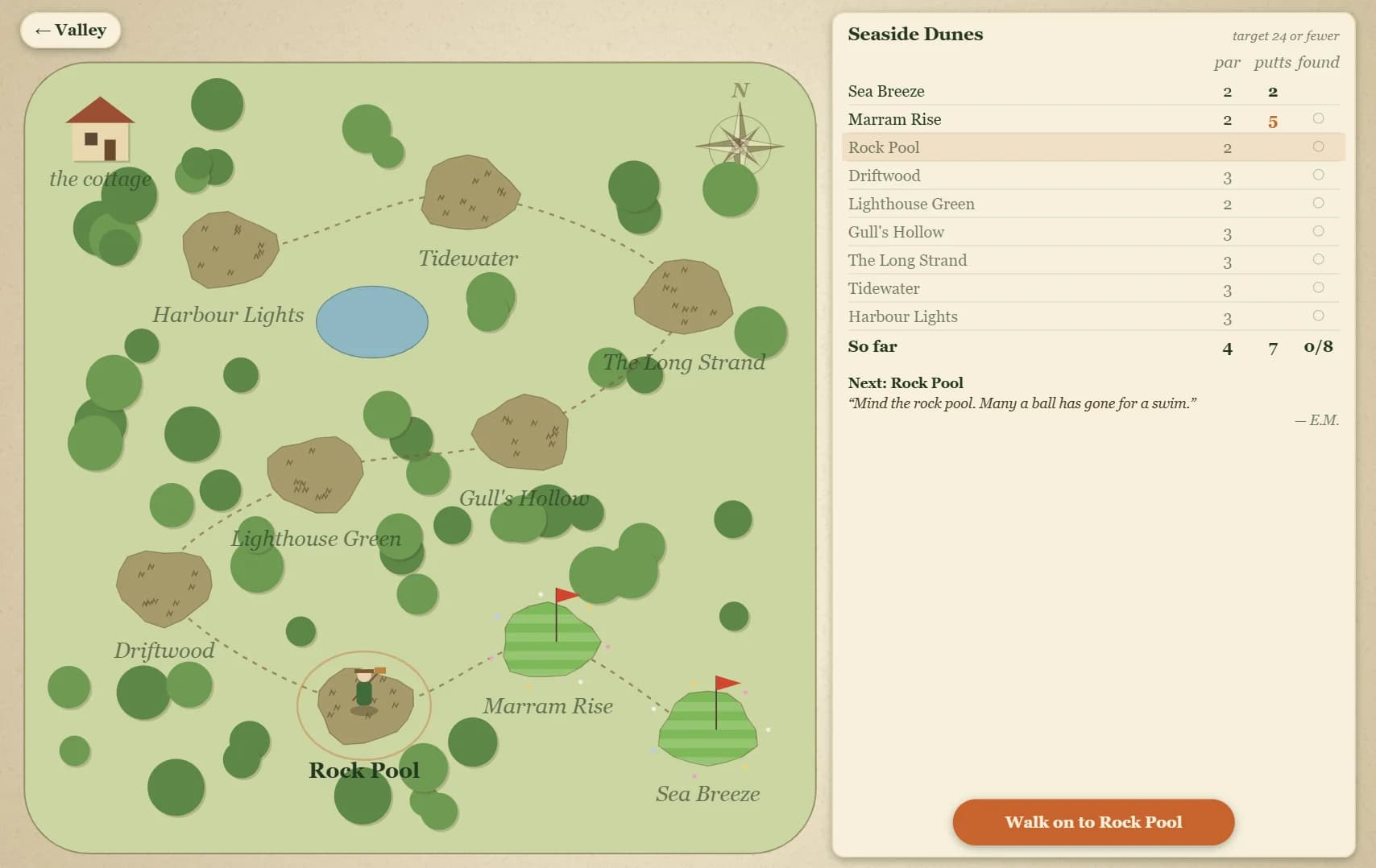
Every green in the game has a par, just like a real hole, and because it is all putting, most are a par 2 or a par 3. Hole out in fewer putts than par and you have made a birdie. Take one more and it is a bogey. The scorecard on the course map keeps a running total, so you always know whether you are under or over.
Your score for a course works exactly like a leaderboard number. It is how many putts under par you finished the nine greens, so a round of 21 putts on a par-23 course scores 2. Go over par and the score drops below zero.
How It Flows
It plays with a mouse, a keyboard or a touch screen. Here is a single green from start to finish.
Drag sideways on the grass to turn, or tap the spot you want to aim at. On a keyboard, the arrow keys or A and D turn you, and holding Shift turns you slowly.
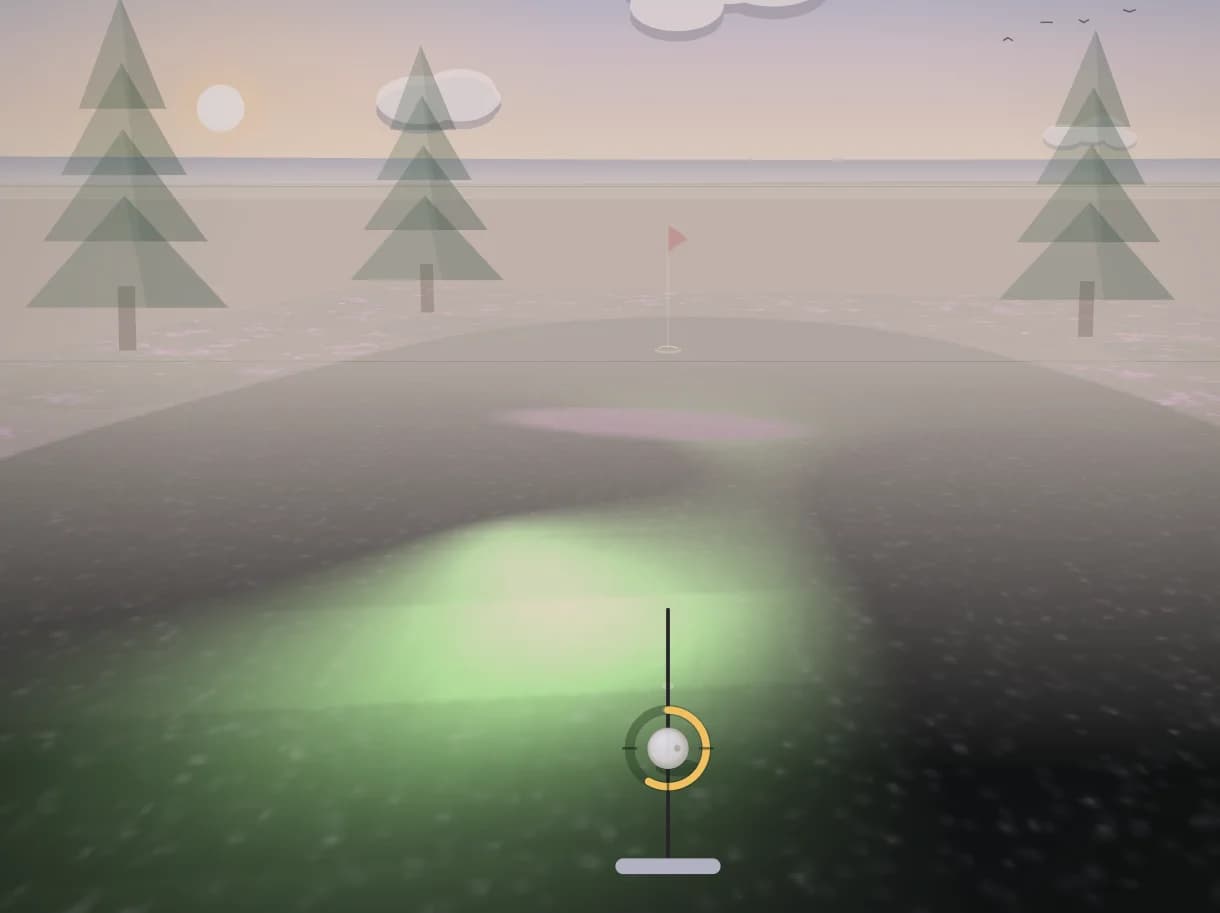
Tap READ (or press G) and drops of dew run downhill between the ball and the cup, leaving silver trails that show the slope. You only get one or two reads on each green.
Tap BRUSH (or press B) and swipe away sand, leaves, heather or frost before you putt. Each one slows the ball in its own way.
Press the ball, drag away from it and let go. The ring around the ball fills from cream to amber to red as the putt gets stronger. On a keyboard, hold Space and let go when the strength is right.
While the ball rolls, swipe the grass just in front of it. Brushed grass loses its dew and runs faster, and brushing one side draws the ball that way.
Once the ball drops, the green comes back to life on the course map, your putts go on the scorecard, and you walk on to the next green.
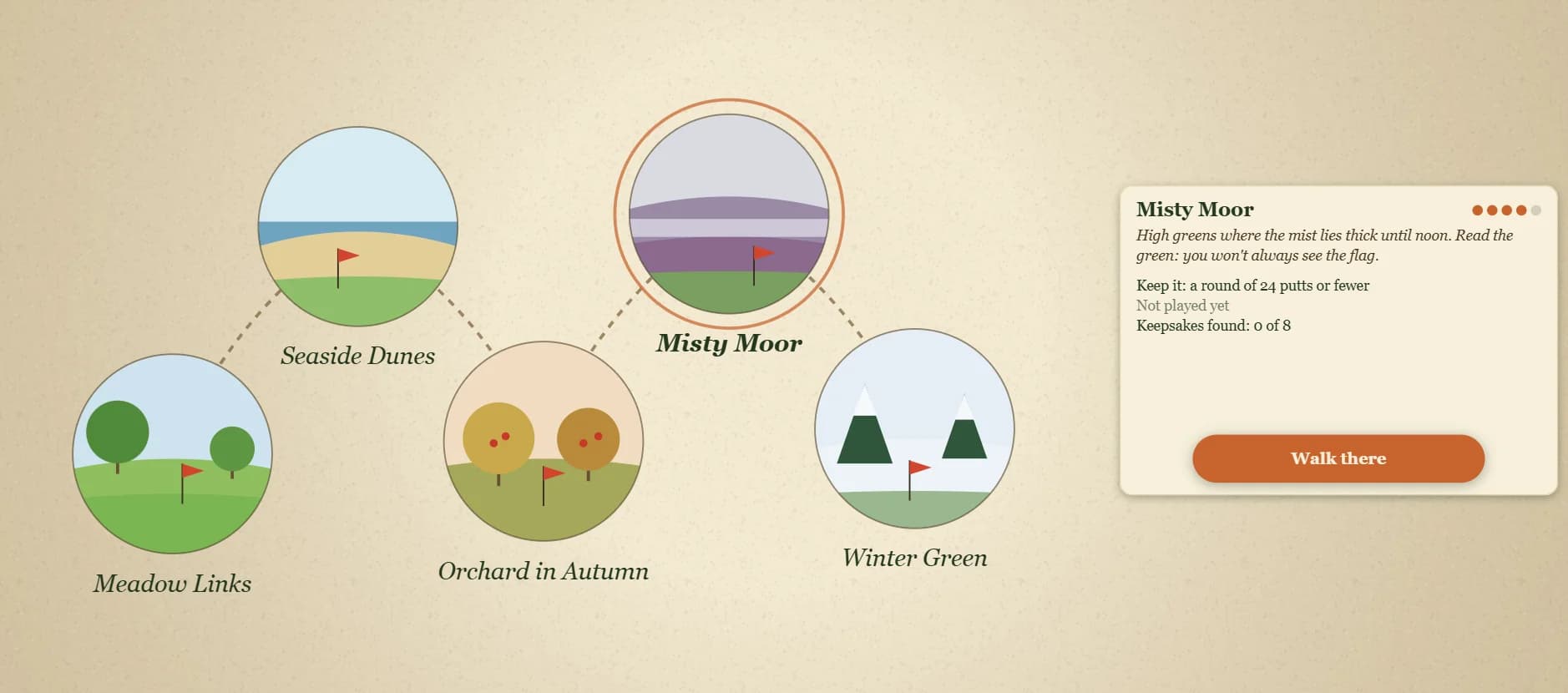
The valley has five courses of nine greens each: Meadow Links, Seaside Dunes, the Orchard in Autumn, the Misty Moor and Winter Green. To keep a course and open the next one, you need to finish its round in a target number of putts, and that target is set against par.
At Meadow Links, you can be two over par and still keep the course. At Seaside Dunes and the Orchard, you can be one over. On the Misty Moor and Winter Green, the target is par itself. So the game moves you up the same ladder a real golfer climbs, from 'a couple of bogeys are fine' to needing a birdie to make up for every mistake.
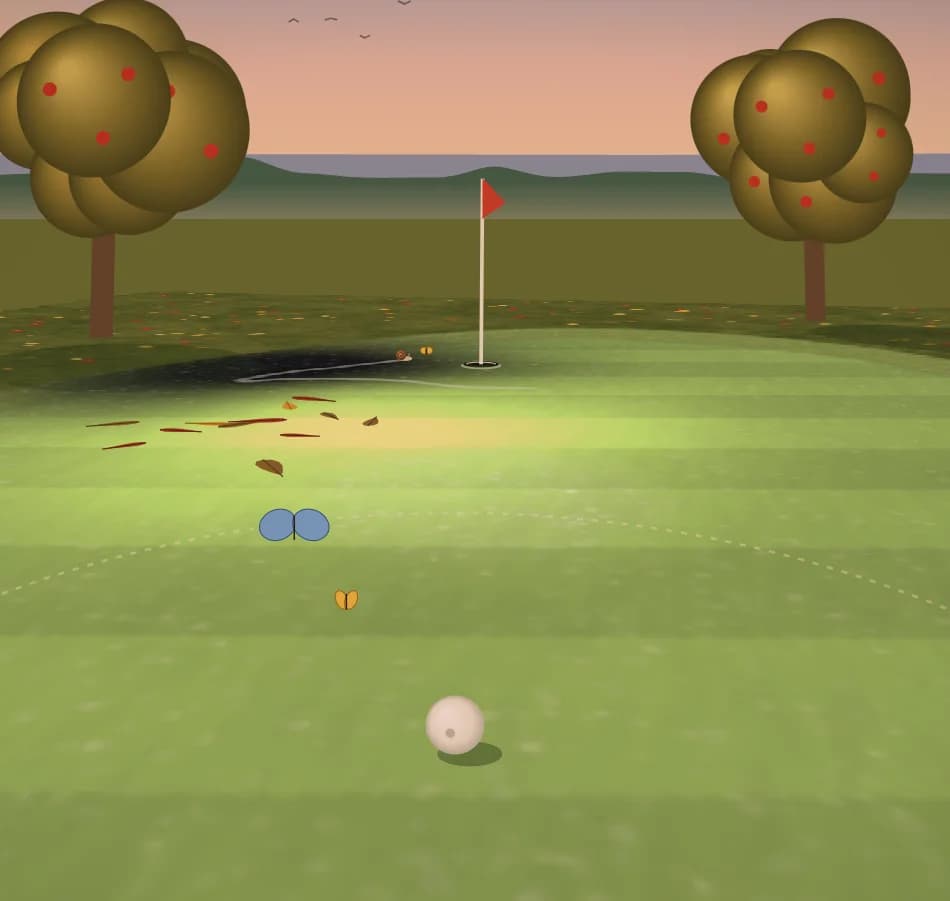
The greens get harder along the way, too. Slopes grow steeper, the brush runs out sooner, and from the Orchard onward the aim line no longer bends to show the curve, so you have to read the break yourself, just as you would on a real green.
Use the real terms to make it more fun. Before you start, agree the par for each hole, usually 2 or 3 on a mini golf course, and write it on the card. Then mark each score the way the television does: a circle for a birdie, a square for a bogey. By the last hole, everyone can see who had the better round without adding a single number.
Quick Picks
Our games are made in-house at Unihfy Games and run in the browser with nothing to install. These ones reward the same patience and reading that putting does.
Sports
A putting game across five courses, where every green has a par and you brush the grass to steer the rolling ball.
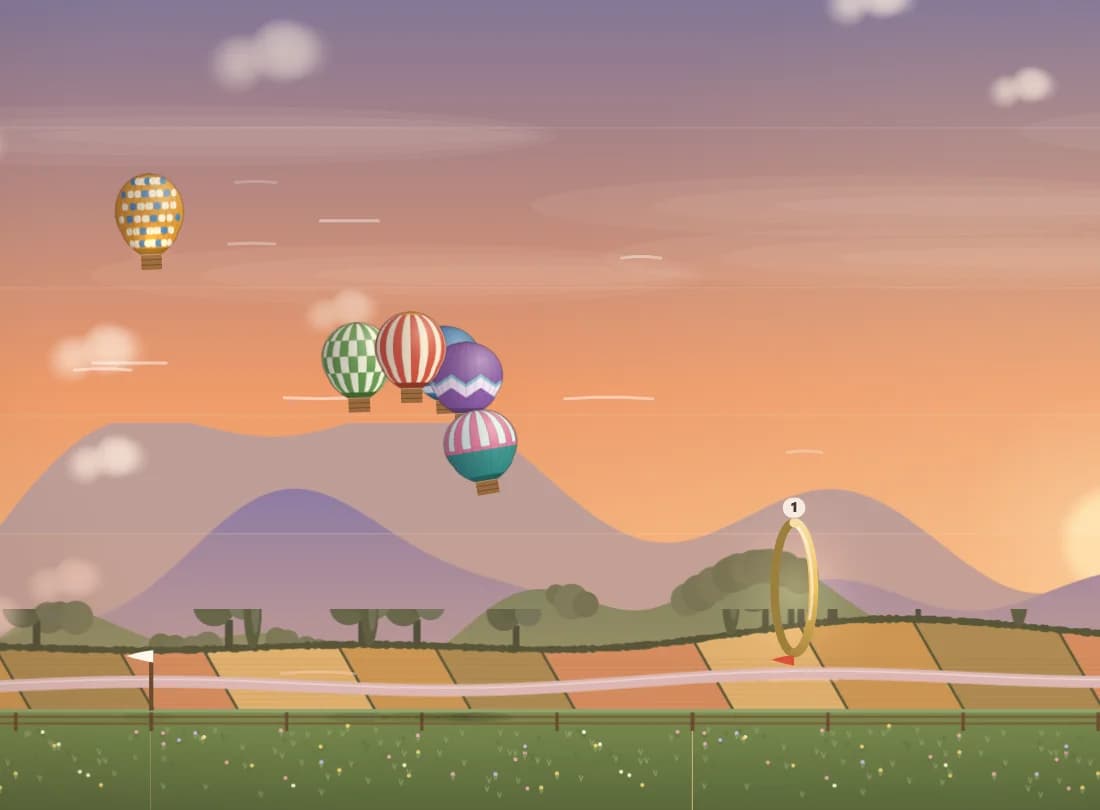
Racing
A calm hot-air balloon race where you read layers of wind instead of slopes, and try to beat a par time on each course.
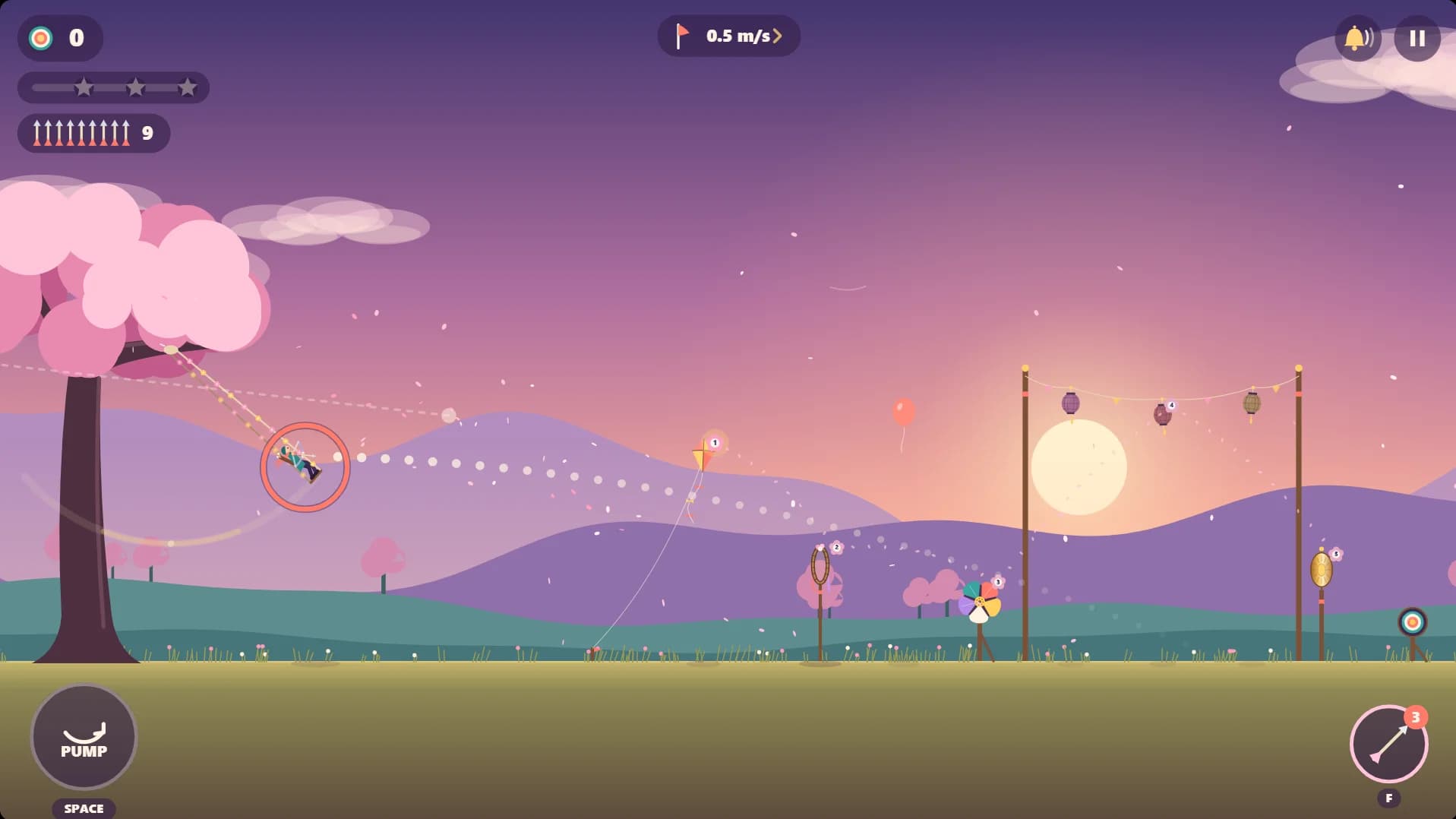
Shooting
Archery from a rope swing, where the wind and the swing's own speed both bend your shot, so timing matters as much as aim.
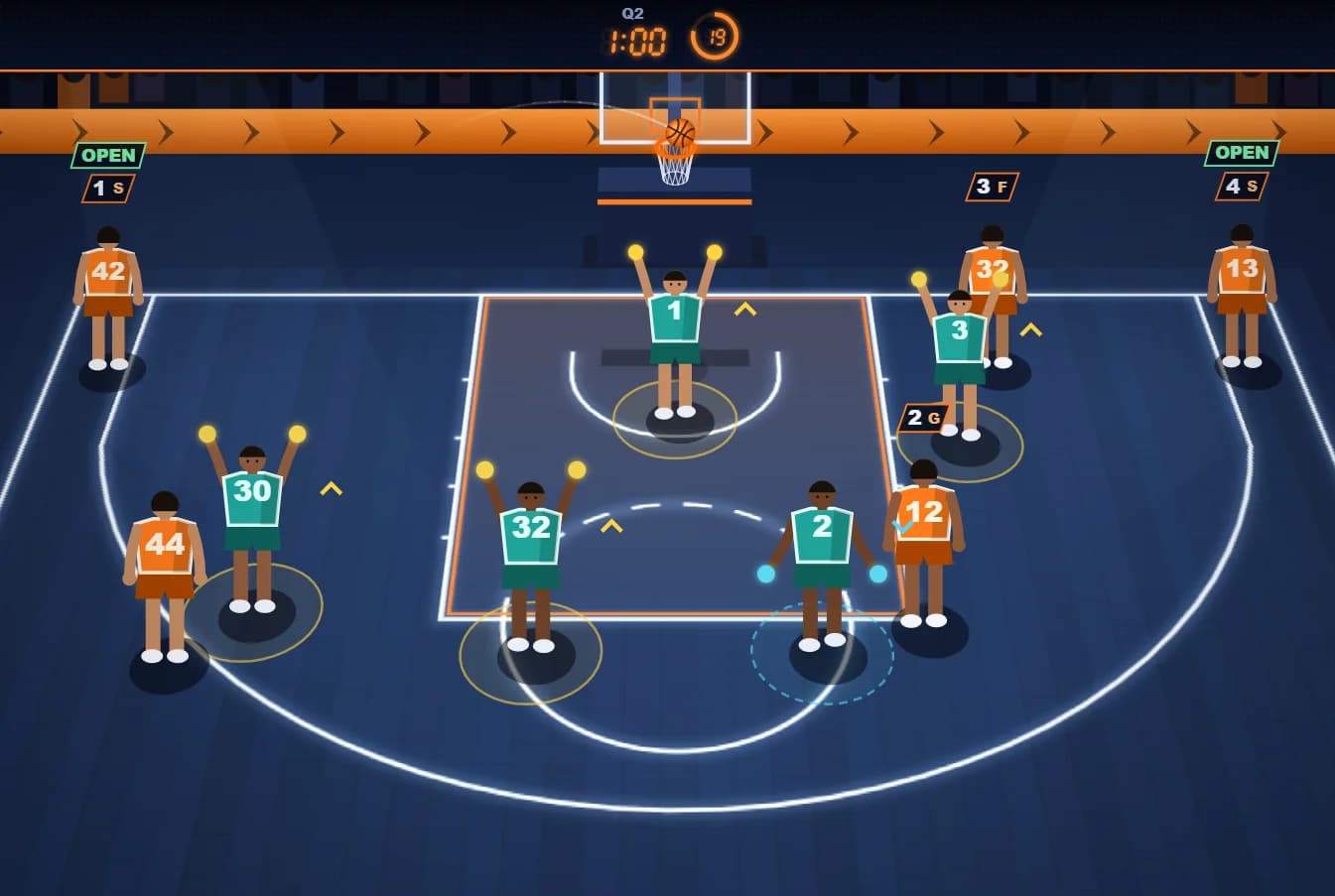
Sports
A basketball season where good passing grows the green on your release meter, so a patient build-up pays off.
Every golf score is measured against par, the number of strokes an expert should need for a hole. One under par is a birdie, two under is an eagle, three under is an albatross and four under is a condor. One over is a bogey, two over is a double bogey and three over is a triple bogey. The lowest score wins, leaderboards show totals against par, and because par includes two putts on every hole, half of a perfect round is played on the greens.
Sports
Basketball rules explained simply: how many steps count as traveling, what a double dribble really is, how the 24-second shot clock works and why it exists, how NBA and international rules differ, and how to play Unihfy Basketball Season, our free passing game.
Sports
Badminton rules explained simply: how scoring to 21 works, where to stand when you serve, the 1.15 m serve rule, singles and doubles courts, the faults most street players never learned, why a shuttle flies so strangely, and how to put it all into practice in Gully Badminton.
Sports
Discover the psychology behind why every cricket fan suddenly becomes a coach during live matches. Explore fan emotions, match-day behavior, superstitions, heartbreaks, tactical opinions, and the fascinating culture of cricket fandom.
Sports
A hilarious and relatable ranking of cricket fans based on panic levels during matches. Explore fan psychology, emotional reactions, superstitions, heartbreaks, last-over stress, and why every cricket fan slowly transforms into a nervous wreck.
Continue Exploring
Jump into browser games or challenge yourself in Quiz Arena. There's always something new to discover.