01
Step 01
Camera first
Without a scope, practise turning to look at targets around you. If you keep swinging past them, lower it a little; if a quick turn needs two or three drags, raise it a little.
No games found
Unihfy Games
Loading identity...
Quick Access
Find the one skill that is actually holding you back in BGMI. Seven common problems, from reaction time and sensitivity to recoil, game sense, phone heat and tilt, each with the symptom you notice, why it happens and a fix you can practise, plus a 7-day plan.
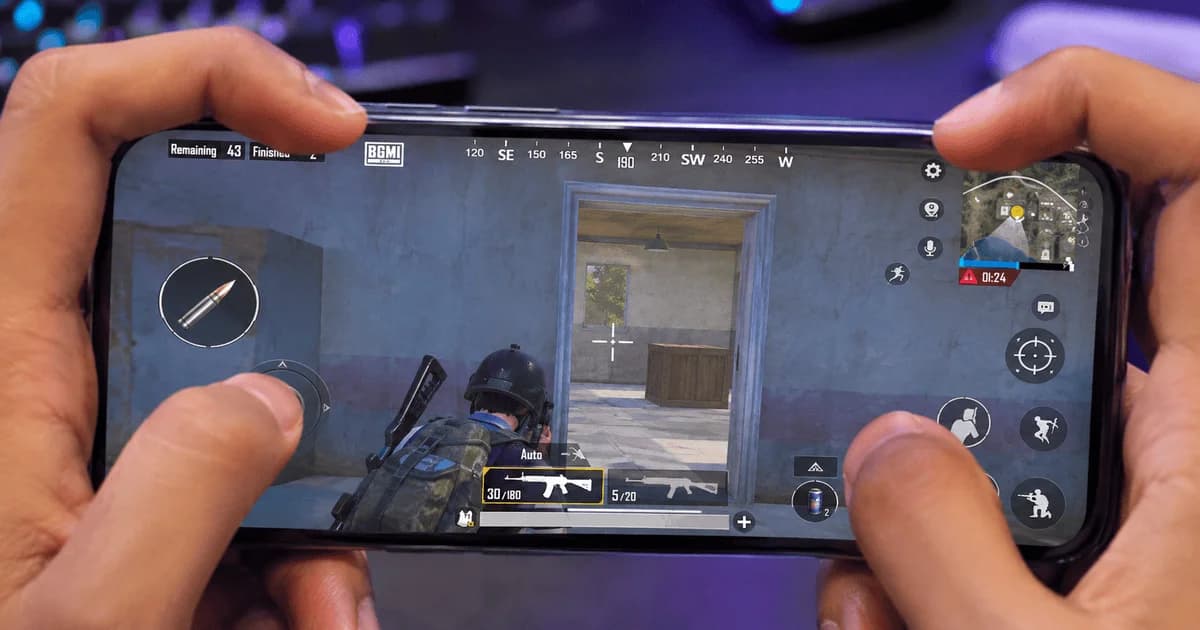
Format
Curated Article
Reading Time
10 min read
Published
November 20, 2026
Written by
Developer · Game Reviewer
Kaushik Hirpara is a full-stack developer and game reviewer at Unihfy Games. He designs and builds every game on the site, gets them playing well on phones, and writes up what players need to know.
View Author ProfileTwo friends start BGMI on the same day. They have the same phone, play the same number of matches and squad up every evening. Six months later one of them is pushing Ace and the other is still stuck in Platinum, losing fights they were sure they had.
It is tempting to call that talent. Usually it is not. The gap is made of a handful of specific skills, and most players are weak in only one or two of them. Without knowing which one failed, you end up practising everything a little and fixing nothing.
So this guide works like a check-up instead of a list of settings. Start with the symptom table below, find the line that sounds most like your last ten deaths, and read those sections first. If your problem is aim in general, across every shooter you play, our longer guide on how to improve your aim goes deeper. This one sticks to what is different about playing on a phone.
Read 1 (reaction time) and 2 (crosshair placement). Most of the time it is the second one.
Read 3 (sensitivity and gyro).
Read 4 (recoil control).
Read 5 (game sense and positioning).
Read 6 (phone and network).
Read 7 (tilt and mindset).
Reaction time is the gap between something appearing and you responding to it. In lab studies, a simple reaction to something you see usually takes somewhere around a fifth to a quarter of a second, and it varies from person to person and from day to day. Lack of sleep, tiredness and distraction all slow it down, which is one reason the same player can feel sharp at 7 pm and sluggish at 1 am.
On a phone, the hardware adds a little on top. The screen has to sense your finger, the game has to notice the touch on its next frame, and the display has to draw the result. At 60 frames per second each frame lasts about 17 milliseconds; at 120 it is about 8. A phone running hot and dropping frames can add more delay than any difference in reflexes between you and the other player.
Here is the honest part, though: reaction time is rarely the real reason you lose a fight. A few hundredths of a second matter far less than where your crosshair was when the enemy appeared. If it was already on them, you win even with slow hands. If it was on the floor, you lose even with fast ones. Measure your reaction time once so you know it is normal, compare it only with your own later scores on the same phone, and spend most of your effort on the next section.
Crosshair placement means keeping your aim where an enemy is most likely to appear, at the height their head will be, so a fight starts with a tiny correction instead of a big swipe. It is the single biggest difference between average and good players, and it is free.
On a phone it slips for a particular reason: your right thumb is busy. Looting, opening doors, switching weapons and checking the map all pull your view down or sideways, and when you look up again the crosshair is resting on the grass. Then an enemy steps out of a building and your first move is a long drag upwards while they are already shooting.
The fix is a habit, not a setting. Every time you finish an action, put your crosshair back to head height on the nearest place a player could appear: a doorway, a window, a ridge, the corner of a wall. When you push a compound, watch the upstairs windows as well as the doors. In TPP your camera can see over cover before your character can, which helps you spot enemies early, but it does not move your crosshair for you.
BGMI splits sensitivity into several groups, and mixing them up is the most common setup mistake. Camera sensitivity controls how fast your view turns when you drag without firing. ADS sensitivity controls how fast it moves while you are firing, which is what you use to pull against recoil. Free look is the separate eye button that lets you look around without turning your character. Gyroscope sensitivity controls how far the view moves when you tilt the phone itself. Each group has its own values for no scope, red dot and the higher scopes.
Sharing sensitivity codes is popular, and it almost never works as well as people hope. A pro's numbers suit their screen size, their grip, how many fingers they use and years of muscle memory built on exactly those values. The same number on a smaller screen, or with a thumb instead of a finger, turns into a completely different movement.
The better route is to tune your own settings once, carefully, and then stop touching them. Every change resets part of your muscle memory, so a player who changes sensitivity after every bad match is always starting again.
How It Flows
Do this in the game's training ground, not in a match, and change one group at a time. Write down your old values first so you can go back.
Without a scope, practise turning to look at targets around you. If you keep swinging past them, lower it a little; if a quick turn needs two or three drags, raise it a little.
Spray a full magazine at a wall from close to mid range while pulling down. If the bullets keep climbing, raise ADS a little; if they dive under the target, lower it.
Repeat the spray test with each scope you actually use, at the distance you would use it. Ignore the scopes you never pick up.
Change a value by a few points, test it, then change it again. Big jumps make it impossible to tell which change helped.
Once it feels roughly right, leave it alone for at least two weeks of normal play. Only then decide whether anything still needs a small adjustment.
Most players start with two thumbs, and plenty of good players stay there. Moving to a claw layout, with three, four or more fingers, lets you move, aim and shoot at the same time without lifting a thumb, which is why so many competitive players use one. Gyro does something similar for aim: tilting the phone handles fine aim and recoil while your fingers handle movement and buttons.
Neither is a shortcut. Both feel worse before they feel better, often for a couple of weeks, so never switch just before a ranked push. If you try one, change only that, use it every match for two weeks and judge it by your fights. For gyro, a sensible middle ground is to turn it on only while scoped, keeping thumb aim for turning.
If your first few bullets hit and then the rest go over their head, you are not pulling against recoil, or not pulling enough. Automatic weapons kick upwards and drift a little sideways while you hold the trigger, and you counter it by dragging down, or tilting the phone back if you use gyro, at the same rate the gun climbs.
Your ADS sensitivity decides how far your thumb has to drag to keep up, which is why the spray test in the steps above matters so much. Attachments help too: compensators, grips and stocks reduce how much a gun kicks, so pick them up when you can and check how they change the feel in the training ground.
The other half is choosing when to spray at all. Up close, a full spray is usually right, because the target is big and the fight is short. At longer range, short bursts or single taps let you reset your aim between shots. Many lost long-range fights are really a spray that went wide after the third bullet.
Recoil changes with game updates, so learn your two or three main weapons in the training ground again after each big update.
If you often die without knowing where the shots came from, your aim is not the problem. You were standing somewhere you could be seen from a direction you were not watching. Battle royale rewards whoever sees the other player first, and that is mostly about position.
A few habits cover most of it. Move from cover to cover, and pick your next spot before you leave the current one. Prefer high ground, which lets you see further and shows the enemy less of you. Wear headphones, because footsteps, vehicles and gunfire all carry direction.
Rotate early. Players who wait at the edge of the zone end up crossing open fields while everyone else is already in position. Moving while the next area is still quiet lets you choose a building or ridge instead of taking whatever is left. And after any fight, assume someone heard it: heal, reload and move before you loot.
Sometimes the problem really is the device. Choose a steady frame rate over pretty graphics. A game that holds its frame rate feels more responsive than one that looks better but dips every time smoke goes off. Try the highest frame-rate option your phone can hold through a full match, with graphics turned down to make room for it.
Watch the heat. Phones slow themselves down when they get hot to protect the battery and chip, and a slowed-down phone drops frames. Playing while charging, inside a thick case or in direct sun all make it worse. Close background apps before you queue, especially anything streaming or downloading.
Check your ping separately from your frames. Lag that looks like enemies teleporting is usually the network, and moving closer to the router or switching between Wi-Fi and mobile data helps more than any game setting. Many of the same causes, like heat and background apps, also show up in our guide to why browser games lag.
Tilt is when frustration from one match leaks into the next. You queue again instantly, push a fight you would normally avoid, die early, queue again faster. Each match is a little worse than the last, and none of them teaches you anything because you never stopped to look at what went wrong.
Replace the instant requeue with a ten-second review. After each death, ask one question: was it aim, position or a decision? After ten matches one answer usually stands out, and that is the section of this guide to come back to.
Set a stop rule before you start, such as two bad matches in a row, and take a real break when you hit it. Play ranked when you are fresh, not as the last thing before sleep, and warm up first so your hands are ready before the points are on the line.
Ranked often feels harder than Classic for this reason: the stakes make you tense, and a tense hand aims worse. Our aim guide explains why pressure changes your aim.
Through Time
Ten minutes of focused practice a day, on top of the matches you would play anyway. The point is to work on one skill, not everything.
Day 1
Play as normal, but label every death as aim, position or decision. Measure your reaction time once and note it down.
Day 2
Look at your labels and the symptom table. Choose the one skill behind most of your deaths and ignore the rest this week.
One skill only
Days 3 to 6
Before your matches, spend ten minutes on that skill: sensitivity tuning or recoil sprays in the training ground, crosshair placement while clearing buildings, or a reaction or tracking drill. Then play normally and keep labelling deaths.
Day 7
Count your death labels again and retest whatever you measured on Day 1. If the weak skill has improved, pick the next one for the coming week.
Tried the plan? Bring your Day 1 and Day 7 numbers to our Discord (the link is at the bottom of the page) and tell us which skill you picked. It helps other players to see what actually changed.
For me the main thing is confidence. After that come proper settings, which really means your sensitivity, and always staying focused on where your crosshair is. Practice is what makes you perfect. If you panic, you lose. And game sense matters too, but it only comes from losing: every match you lose teaches you something, as long as you think about why.
We made Flickyard, a free 3D aim trainer that runs in the browser on phones as well as computers. To be clear about what it can and cannot do: on a phone you drag to look and tap a fire button, and it has no gyro, so it will not copy your BGMI muscle memory. What it trains is your eyes, your timing and your tracking. Its Duel drill shows your average and best reaction time in milliseconds against a robot that fires back if you are too slow, and Tracking Strafer asks you to keep your crosshair on a robot that keeps changing direction. A few minutes on either is a reasonable warm-up before ranked, and an easy way to track the reaction number from Day 1 of the plan.
Quick Overview
Up to a point. A steady, high frame rate without overheating feels more responsive, but it will not fix crosshair placement, recoil or positioning.
Studies usually put simple visual reactions around a fifth to a quarter of a second, and phone tests often read a little slower because of touch and screen delay. Compare only with your own earlier scores.
Many strong players do, especially for recoil while scoped. It takes a couple of weeks to feel natural, so try it outside a ranked push.
Habits like crosshair placement can show results within a week. Sensitivity, gyro and recoil take a few weeks of steady settings, because your hands have to learn them.
Mostly pressure: people grip harder, rush first shots and take fights they would normally skip. Warm up, play fresh and set a stop rule.
Skill is one half; knowing the game is the other. Our BGMI Battlegrounds Master Challenge asks about maps, weapons, vehicles, ranks and mechanics, and the BGMI Esports Challenge covers the competitive scene. You will find more in the Gaming quiz category.
Players do not get stuck in BGMI because they lack talent. They get stuck because they keep practising everything instead of the one skill that is actually costing them fights. Label your deaths, pick the weakest skill, tune your settings once and leave them alone, and give each change a couple of weeks before you judge it.
Gaming
Most easy misses are not about slow hands. The six kinds of miss, crosshair placement, why your eyes should move first, the death grip, sensitivity in cm/360, the first bullet and how to practise, with a 15-minute routine to improve your aim in FPS games.
Gaming
Why do racing games feel so good, and why do we keep pressing restart? A look at the psychology of speed, risk, personal bests and fairness, and what that means for the racers you can play straight from a browser.
Gaming
Arcade games were built to be learned in seconds and to end on purpose. A look at the design ideas behind them, from a single control and a readable screen to rising pressure and risky rewards, and what to look for in a free arcade game online.
Gaming
A relaxing game is not one where nothing happens. A look at why gentle focus rests a tired mind better than doing nothing, how pace, sound, light and predictability shape a calm game, and what to look for when you want to switch off after a long day.
Continue Exploring
Jump into browser games or challenge yourself in Quiz Arena. There's always something new to discover.