01
Step 01
Find the head
Before you tap anything, find the head of the arrow you are looking at. On bent or long arrows, follow the body to the end that has the point. Many wrong taps come from reading the tail as the head.
No games found
Unihfy Games
Loading identity...
Quick Access
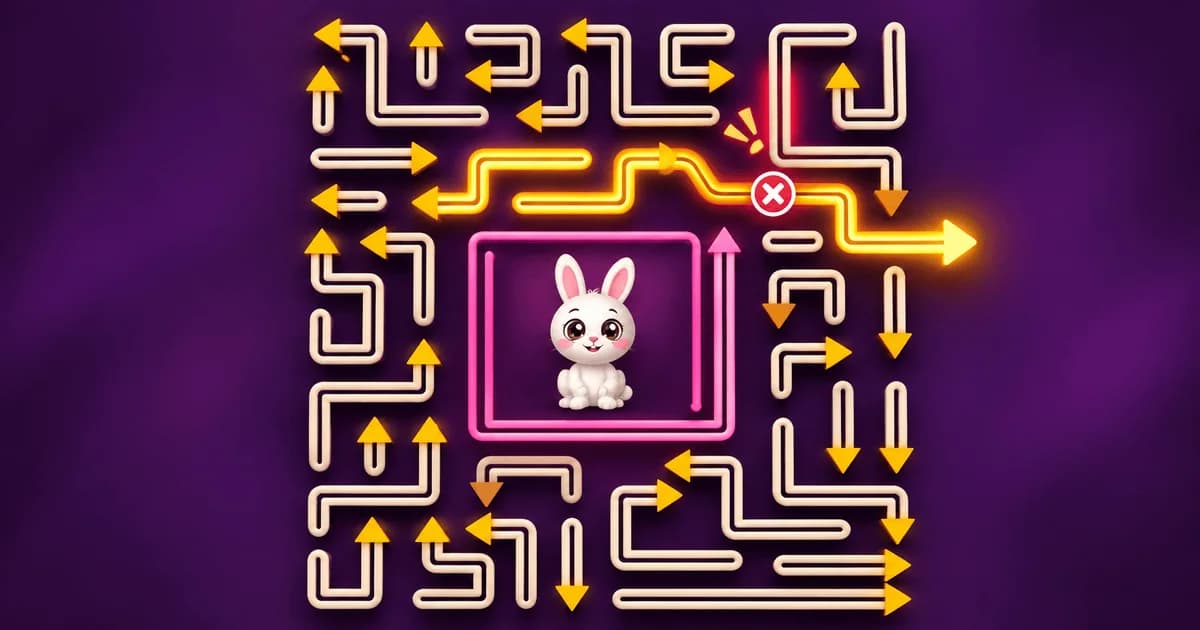
Stuck on an arrow escape puzzle? Learn the one rule behind every board, how to read bent and long arrows, how to find the real blocker, how to stop losing hearts, and how locked arrows, rescue levels and the daily puzzle work in our game.
Format
Curated Article
Reading Time
7 min read
Published
November 18, 2026
Written by
Developer · Game Reviewer
Kaushik Hirpara is a full-stack developer and game reviewer at Unihfy Games. He designs and builds every game on the site, gets them playing well on phones, and writes up what players need to know.
View Author ProfileThe first few boards of an arrow escape puzzle feel almost too simple. A handful of arrows, each pointing one way. Tap one, it slides off the edge. Tap the next. Done.
Then the board fills up. Arrows bend round corners, snake across half the grid and lie on top of each other's paths. You tap one that looked free, it thumps into a neighbour, and a heart cracks. A few taps later you have lost the level on a board you were sure you understood.
The good news is that almost every lost heart comes from the same few habits, and all of them can be fixed. This guide covers how to read a board, how to find what is really in the way, and how to finish big boards without guessing.
Every arrow escape puzzle runs on one rule: an arrow can only leave in the direction its head points, and only when every cell between its head and the edge of the board is empty.
Read that rule again, because the important word is head. The arrow's body does not matter when you tap it. A long arrow that winds all over the board slides out along its own line and follows its head off the edge. The only thing you need to check is the straight line from the tip of the head to the edge.
The body matters for everyone else, though. Every cell an arrow covers can block another arrow's line. So each arrow plays two parts at once: something you want to clear, and an obstacle in someone else's way.
On a classic arrow escape board, clearing an arrow only ever opens up space. It never puts a new obstacle anywhere. That means any arrow with a clear path is always a safe tap, and the order you clear free arrows in does not matter. You cannot make a board unsolvable by clearing the wrong free arrow. The only way to lose is to tap an arrow that is blocked.
How It Flows
This is the routine we use on new boards. It is slower for the first few taps and much faster overall.
Before you tap anything, find the head of the arrow you are looking at. On bent or long arrows, follow the body to the end that has the point. Many wrong taps come from reading the tail as the head.
Run your eye from the tip of the head straight to the edge of the board. If any cell on that line holds part of another arrow, this one is blocked. If the line is empty, it is safe.
Arrows sitting on the outer edge and pointing outwards have the shortest lines to check, so they are usually the first safe taps. Clear the rim and the board opens from the outside in.
When an arrow leaves, look at the cells it used to cover. Any arrow whose line ran through those cells might be free now. This is the fastest way to find your next move.
The last few arrows feel obvious, so this is when people tap fast and lose a heart. Check every last line just as carefully as the first.
When you are stuck, the usual instinct is to stare at the arrow you want to move. Turn it round. Ask what is blocking it, then ask what is blocking that.
Say the arrow you want points right, but a long green arrow lies across its path. The green one points up, and its line is crossed by a short blue arrow. The blue arrow points left, and its line to the edge is empty. That is your move. Clear the blue one, and the green one is free. Clear the green one, and your first arrow is free. One stuck arrow turned into a three-step plan.
We call this following the chain. Every blocked arrow is the start of a chain that ends at a free one. Find the free end, and the rest of the chain falls in order.
A good rule when you have several free arrows to choose from is to clear the one that is blocking the most others first. It does not change whether the board can be solved, but it opens the most lines at once and makes the rest of the board much easier to read.
Bent arrows are where most people slip. Your eye catches the part of the arrow nearest the edge and assumes that is where it will go. Always trace to the head, even when it feels obvious.
Long snaking arrows are worth spotting early for another reason: they cross many lines at once. A single snake can be the blocker for five or six other arrows. Clearing it is often the moment a crowded board suddenly opens up, so if a snake's head has a clear line, take it.
Shaped and picture boards follow the same rule as square ones. The outline only changes where the edge is, so trace each line to the true edge of the shape, not to an imagined rectangle around it.
Myth vs Reality
The Myth
01Clear the biggest arrows first.
The Reality
Size does not matter. Clear arrows that are free, and among those, the ones blocking the most others.
The Myth
02The order you clear free arrows in can ruin the board.
The Reality
On a classic board, clearing a free arrow only opens space, so it can never make the board unsolvable. Only blocked taps cost you.
The Myth
03If most of the line is empty, it is safe.
The Reality
One filled cell anywhere between the head and the edge blocks the arrow. Check all of the line, right up to the edge.
The Myth
04Hints are only for when you are completely stuck.
The Reality
A hint used early, on a crowded board you cannot read yet, can save more hearts than one saved for the end.
Many arrow escape games add twists once the basics are easy. Two common ones are locked arrows and levels with a special arrow that has to go last.
A locked arrow shows a number: it will not move until that many arrows have been cleared. In our game the count is any arrows, not particular ones, so a lock is really a reminder to work on the rest of the board first. Tapping a locked arrow costs nothing; it just tells you how many more clears it needs.
In our rescue levels an animal is caged in the middle of the board, and the cage arrow must be the very last to leave. Tapping it early counts as a mistake, just like a blocked tap. A clock also runs on these levels, so the routine above matters even more. Plan the chain once, then clear it without second-guessing every tap.
We built our own take on the genre, Arrow Escape Puzzle Daily Challenge Unblock, as a free browser game made in-house at Unihfy Games. It plays on phones with taps and pinch-to-zoom, and on computers with a mouse, trackpad or keyboard.
Every level starts with three hearts. A blocked tap makes the arrow in the way flash red and costs one heart. Lose all three and you can take a second chance with one extra heart, once per play-through, or retry the level. Clear the board with no mistakes for three stars, with one mistake for two, and with more for one. Any clear opens the next level.
Each level also gives you three hints, and a hint picks the free arrow that frees the most others, the same rule from the blocker section above. Two buttons help on busy boards. Lines draws the path every arrow would take, so blockers jump out at once. Colours gives every arrow its own bright colour, which makes tangled snakes much easier to follow. On a keyboard, Z takes back a move up to three times a level. Undoing a blocked tap gives the heart back, though the mistake still counts for your stars.
Levels
600
Chapters, each with a new idea
30
Hearts and hints per level
3 + 3
Colour themes to unlock
17
The 600 levels are split into 30 chapters of 20, and each chapter brings one new idea. It starts with bent arrows in Warm-up, then longer snakes, shaped boards and dense boards. Locked arrows arrive in chapter 5, and picture boards shaped like hearts, animals, stars and moons come later. The final chapters have giant boards with very long winding arrows, where pinching or scrolling to zoom really helps. Rescue levels appear a few times in every chapter from chapter 5, with more time on bigger boards and never more than four minutes.
There is also one daily puzzle, the same board for everyone, with a calendar and a streak. The day changes at midnight India time and your first clear counts. Our server checks each clear by replaying the moves, and signed-in players are ranked by stars and then time, with a separate board for the longest streaks. Since stars come from mistakes, the routine in this guide is also the way up the daily ranking: a careful clear with no blocked taps beats a fast one with two.
Quick Picks
All of these were made in-house at Unihfy Games and run in the browser with nothing to install.
Puzzle
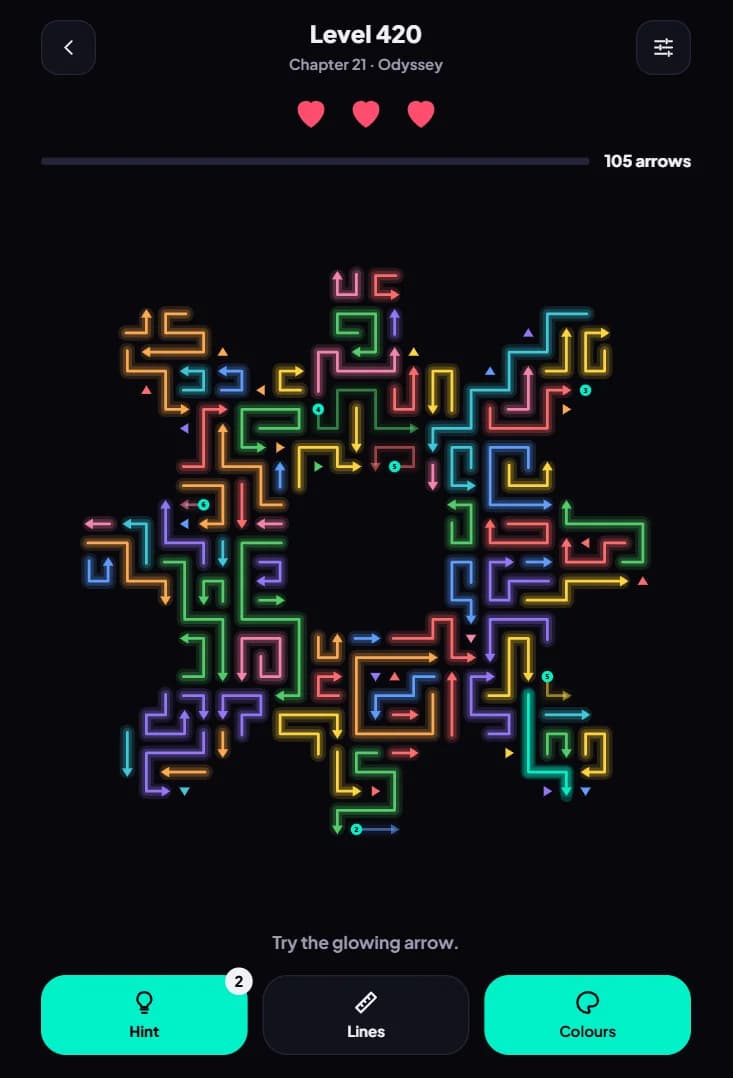
Clear every arrow off the board in the right order, with 600 levels, rescue levels and a daily puzzle.
Puzzle
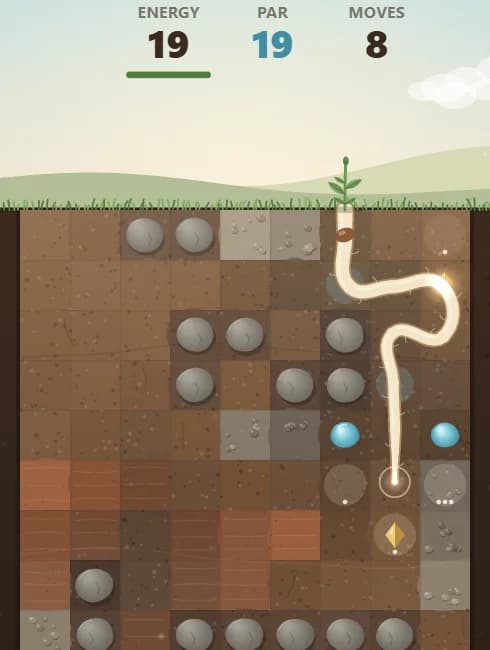
Grow a root down through soil, clay and stones and reach the water before your energy runs out.
Puzzle
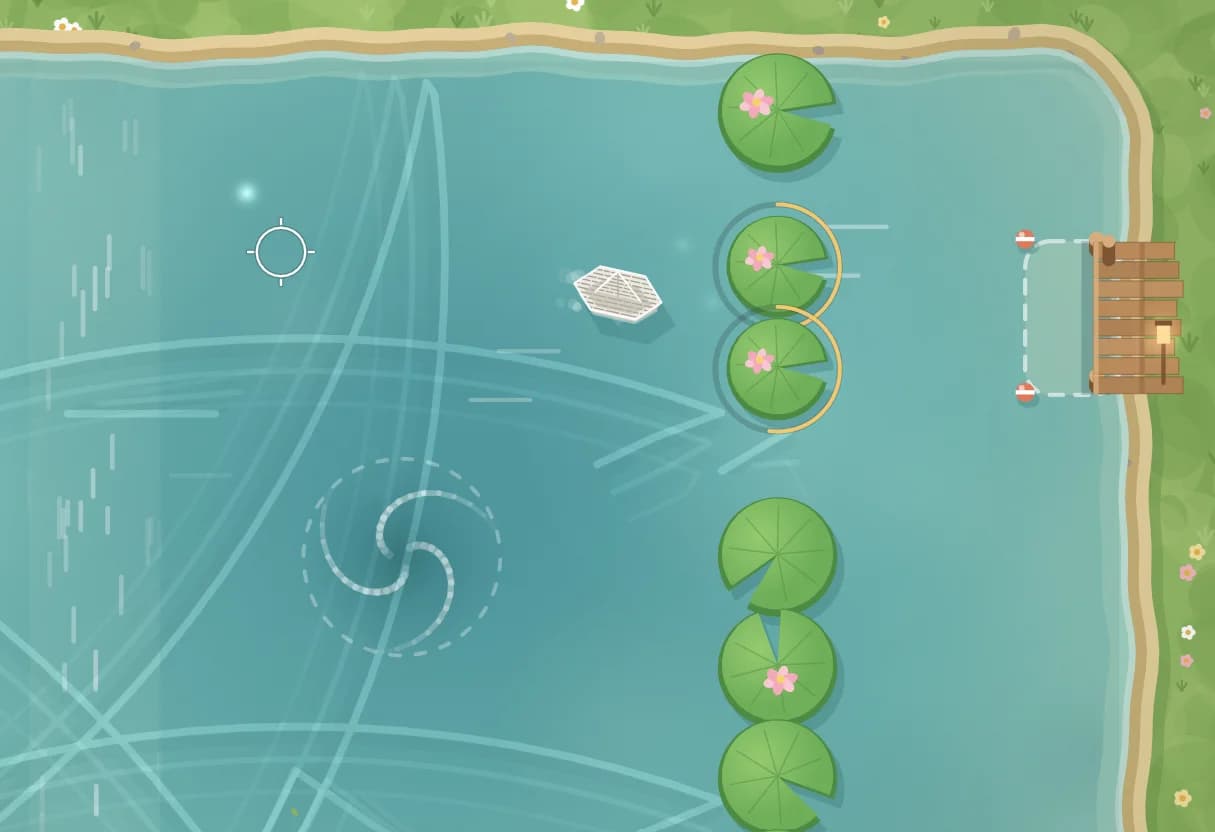
Tap the pond to make ripples and push a paper boat into its dock in as few taps as you can.
Puzzle
Search hand-drawn scenes for clues and keys and bring broken machines back to life.
An arrow leaves only when the line from its head to the edge is empty. Find the head, trace the line, start at the rim, and when you are stuck, follow the chain of blockers back to a free arrow. Clearing a free arrow never hurts you, so the only real mistake is tapping before you check.
Gaming
Discover the finest puzzle browser games meticulously engineered to elevate your cognitive skills, sharpen memory, and optimize your mental agility right from your web browser.
Gaming
Why are fireworks red, green, blue or gold? The two ways a firework makes light, which metal gives which colour, why blue is the hardest colour to make, what green crackers really are, and how our fuse puzzle game Wickrush turns a burning fuse into a route to plan.
Gaming
A relaxing game is not one where nothing happens. A look at why gentle focus rests a tired mind better than doing nothing, how pace, sound, light and predictability shape a calm game, and what to look for when you want to switch off after a long day.
Gaming
Browser games have come a long way since Flash. A look at why they fit the way we play now, what separates a great one from a forgettable one, what each genre does well in a tab, and what is true and false about browser game safety.
Continue Exploring
Jump into browser games or challenge yourself in Quiz Arena. There's always something new to discover.