The Myth
01Horsepower and torque are two different things an engine makes.
The Reality
They describe the same output in two ways. Horsepower is worked out from torque and engine speed, so one cannot change without the other.
No games found
Unihfy Games
Loading identity...
Quick Access
Torque vs horsepower explained in plain words, with the simple formula that links them, then how racing strategy really works: why fuel weight slows a car, how pit stops win and lose races, what the undercut and overcut are, what DRS was and what replaced it in 2026, and fuel strategy tips for the pit stops in Torque Rush.
Format
Curated Article
Reading Time
10 min read
Published
October 30, 2026
Written by
Developer · Game Reviewer
Kaushik Hirpara is a full-stack developer and game reviewer at Unihfy Games. He designs and builds every game on the site, gets them playing well on phones, and writes up what players need to know.
View Author ProfileWritten by
Developer · Quiz Editor
Omik Babariya is a full-stack developer and quiz editor at Unihfy Games. He writes most of the quiz questions, works on the sports and entertainment articles, and helps build the website itself.
View Author ProfileEvery car advert, review and spec sheet quotes two numbers for the engine: horsepower and torque. Most people nod at both and remember neither. Ask what the difference is and you often hear something vague, like 'torque is for trucks and horsepower is for sports cars'. There is a grain of truth in that, but it misses the actual idea, which is surprisingly simple.
This guide explains torque and horsepower first, in plain words and with one small formula. Then it moves from the engine to the race, because a fast engine is only part of winning. Fuel weight, pit stops, tyres and overtaking aids like DRS decide just as many races. At the end, it shows how the same ideas work in our car racing game, with tips on choosing a fuel plan.
Torque
How hard it twists
Horsepower
How fast it works
They meet at
5,252 rpm
Fastest F1 stop
1.80 seconds
Torque is a twisting force. Picture undoing a stiff jar lid, or pushing on a spanner to loosen a bolt. How hard you twist is the torque. Push twice as hard, or use a spanner twice as long, and you double it. That is why it is measured as a force times a distance: newton metres (Nm) in most of the world, and pound-feet (lb-ft) in the United States.
In a car, the engine turns a crankshaft, and torque is how strongly it turns it. More torque means a stronger shove through the wheels, which you feel as being pressed into your seat when you put your foot down. Torque is the number that tells you how hard the engine can push right now, at a given engine speed.
Horsepower is power, and power is how quickly work gets done. Think of two people carrying the same box up the same stairs. They both do the same amount of work, but the one who runs up does it faster, so they produce more power.
An engine is the same. Its power depends on two things together: how hard it twists (torque) and how fast it spins (revs, measured in revolutions per minute, or rpm). A strong twist at low revs and a weaker twist at very high revs can produce the same horsepower. That is why a small motorbike engine that screams to high revs can make lots of power without much torque, while a big diesel truck makes huge torque at low revs.
Horsepower = torque (lb-ft) × rpm ÷ 5,252. In metric, kilowatts = torque (Nm) × rpm ÷ 9,549. Engines are usually tested on a machine called a dynamometer, which measures torque, and horsepower is then worked out from it. Because of the 5,252 in the formula, the torque and horsepower lines on any engine graph cross at exactly 5,252 rpm when they are drawn in lb-ft and hp. Below that speed the torque number is bigger; above it, the horsepower number is bigger.
The honest answer is both, but in different ways, and neither number on its own tells the whole story. What really matters is the shape of the curve: how much torque, and therefore power, the engine makes across the whole range of revs you actually use. An engine with a big peak number that it only reaches for a moment can feel slower than one with a smaller peak that it holds for longer.
Gears are what join the two ideas together. A low gear multiplies the engine's torque so the wheels push hard, which is why first gear feels so strong. A high gear trades that push for wheel speed. A good gearbox keeps the engine near the revs where it makes the most power, and that is where the fastest acceleration lives.
Electric cars show the difference neatly. An electric motor can give its full torque from the moment it starts turning, which is why even an ordinary electric car feels so quick away from traffic lights. At higher speeds, power takes over again, and a car with more of it keeps pulling harder.
Then there is the thing no spec sheet shouts about: weight. The same push moves a light car faster than a heavy one. That simple rule is where racing strategy begins.
A full tank of fuel is heavy, and a race car carrying it is slower in every way. It accelerates more slowly, takes longer to stop and grips less in the corners, because the tyres have more mass to hold on to. As the fuel burns, the car gets lighter, and lap times fall on their own even if the driver changes nothing.
Formula 1 teams estimate the effect at roughly a third of a second per lap for every 10 kg of fuel, though the exact figure depends on the car and the circuit. Over a long race that adds up to whole seconds, so carrying even a few kilos more than you need is a real cost.
For years, F1 teams could refuel during a race, and that made fuel a strategy of its own. A team could start a driver light and fast, planning an extra stop, or heavy, planning fewer. Refuelling was banned from the 2010 season, for reasons of cost, safety and the character of the racing. Moving refuelling rigs to every race was expensive, and fuel fires during stops had always been a danger. Since then, cars start each race with all the fuel they will use and stop only for tyres.
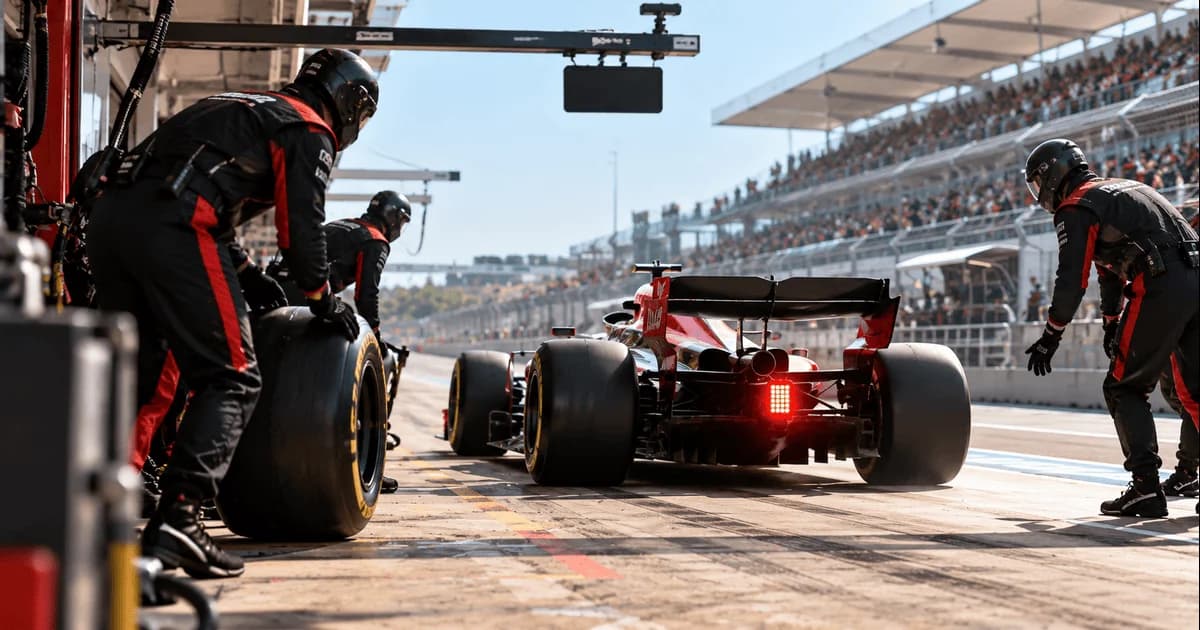
A pit stop costs time in two ways. There is the stop itself, when the car sits in its box while the crew works, and there is the trip down the pit lane, which has a speed limit and is usually longer than the stretch of track it replaces. Add them up and a stop can cost a large chunk of a lap.
The stop itself has become astonishingly quick. Guinness World Records lists the fastest F1 pit stop as 1.80 seconds, by McLaren on Lando Norris's car at the 2023 Qatar Grand Prix, beating Red Bull's 1.82 seconds from 2019. A slow stop, or a wheel that will not come off, can undo a whole race in a moment.
In a dry F1 race, each driver must use at least two different tyre compounds, so at least one stop is required. Softer tyres are faster but wear out sooner; harder ones last longer but are slower. Choosing when to stop, and which tyres to fit, is the heart of race strategy, and it is decided on the pit wall as much as on the track.
You stop before the rival ahead of you. While they keep going on old, worn tyres, you set faster laps on fresh ones. If you gain enough, you come out in front when they finally stop. It works best when new tyres warm up quickly and there is clear track to rejoin on.
The opposite: you stay out longer than your rival. If your tyres are still in good shape and the track ahead is clear, your laps can be quicker than theirs while their new tyres warm up. It tends to suit circuits where tyres last well and overtaking is very hard.
One stop means less time in the pit lane but longer stints, so tyres or fuel loads have to last. Two stops cost an extra trip down the pit lane but let the car run faster between them. Which is quicker changes from circuit to circuit.
When a safety car slows the whole field, a pit stop costs far less time than usual, because everyone on track is going slowly too. Teams watch for these moments and often call drivers in straight away.
Overtaking in F1 has always been hard, because a car following closely loses grip in the disturbed air of the car ahead. DRS, the Drag Reduction System, was introduced in 2011 to help. In marked zones, a driver within one second of the car in front could open a flap in the rear wing. That cut the drag, so the car went faster on the straight and had a better chance of passing.
DRS was retired for the 2026 season, when F1 brought in a new set of rules. Two systems took its place. The first is active aerodynamics: every car can now move both its front and rear wings into a low-drag 'Straight Mode' on the straights, then back into a high-grip 'Corner Mode' before the braking zones. Unlike DRS, this is not just for the car behind.
The second is 'Overtake Mode'. A driver who is within about a second of the car ahead gets access to extra electric power to help with a pass. Unlike DRS, it is not tied to one zone, and it is not free: it uses energy from the battery, so the driver must choose where to spend it.
The 2026 cars changed under the bodywork too. The electric part of the power unit now delivers up to 350 kW, almost three times the 120 kW it gave before, so electricity provides a far bigger share of the power. The engines must also run on fully sustainable fuel. Strategy now includes managing that battery energy across a lap, not just tyres and pit stops.
Myth vs Reality
The Myth
01Horsepower and torque are two different things an engine makes.
The Reality
They describe the same output in two ways. Horsepower is worked out from torque and engine speed, so one cannot change without the other.
The Myth
02The car with the most horsepower always wins.
The Reality
Weight, grip, brakes, tyres and strategy matter just as much. On a twisty circuit, a lighter car that corners well can beat a more powerful one.
The Myth
03F1 cars still refuel during the race.
The Reality
Refuelling has been banned since 2010. Today's stops are for tyres, and cars start with all their fuel on board.
The Myth
04Fewer pit stops is always faster.
The Reality
Every stop costs time, but running too long on worn tyres, or carrying too much weight, can cost more. Sometimes the extra stop wins.
The Myth
05DRS still decides most F1 overtakes.
The Reality
DRS was dropped for 2026. Passing now relies on active aerodynamics and Overtake Mode, which uses battery energy.
We built Torque Rush, a free car racing game that runs in the browser, around the idea that sits under all of this: fuel is weight. It brings back the refuelling era that F1 gave up in 2010. Before every race you choose how many pit stops to make and how much fuel to start each stint with, and that choice changes how the car drives.
A full tank keeps you out of the pits but makes the car heavy, slower to accelerate, lower at top speed and keen to slide wide in the corners. A light tank is quick and sharp but has to come in for more. Every race needs at least one stop, because even a full tank never lasts the whole distance, so the question is always one stop or two, and how much to carry.
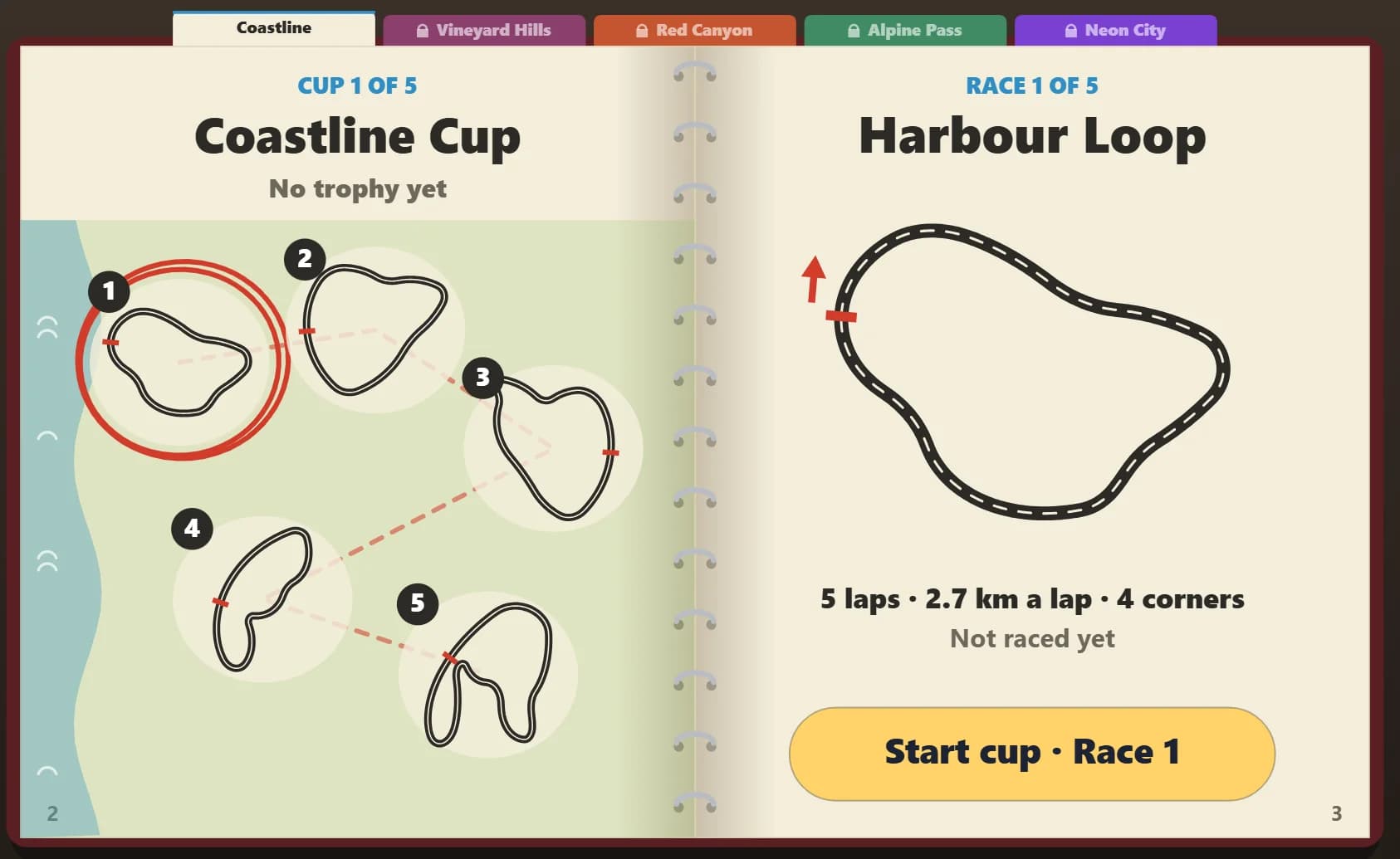
You start last of six on the grid, against five rivals who plan their own stops, some on one and some on two, and who brake for the bends and take a racing line. There are 25 circuits over five cups, from the Coastline to the night streets of Neon City, with championship points in every race.
When your fuel runs low, take the pit lane on the right of the final straight. Just like a real pit lane, it has a speed limit, and the car slows down on its own when you enter. You stop in your box, the crew fills the tank while you wait, and then you rejoin the race.
The pit lane is where the strategy comes together. A stop costs time in the lane and in the box, and the car you rejoin in depends on how heavy you chose to be. Two drivers can finish within a second of each other on completely different plans.
Quick Overview
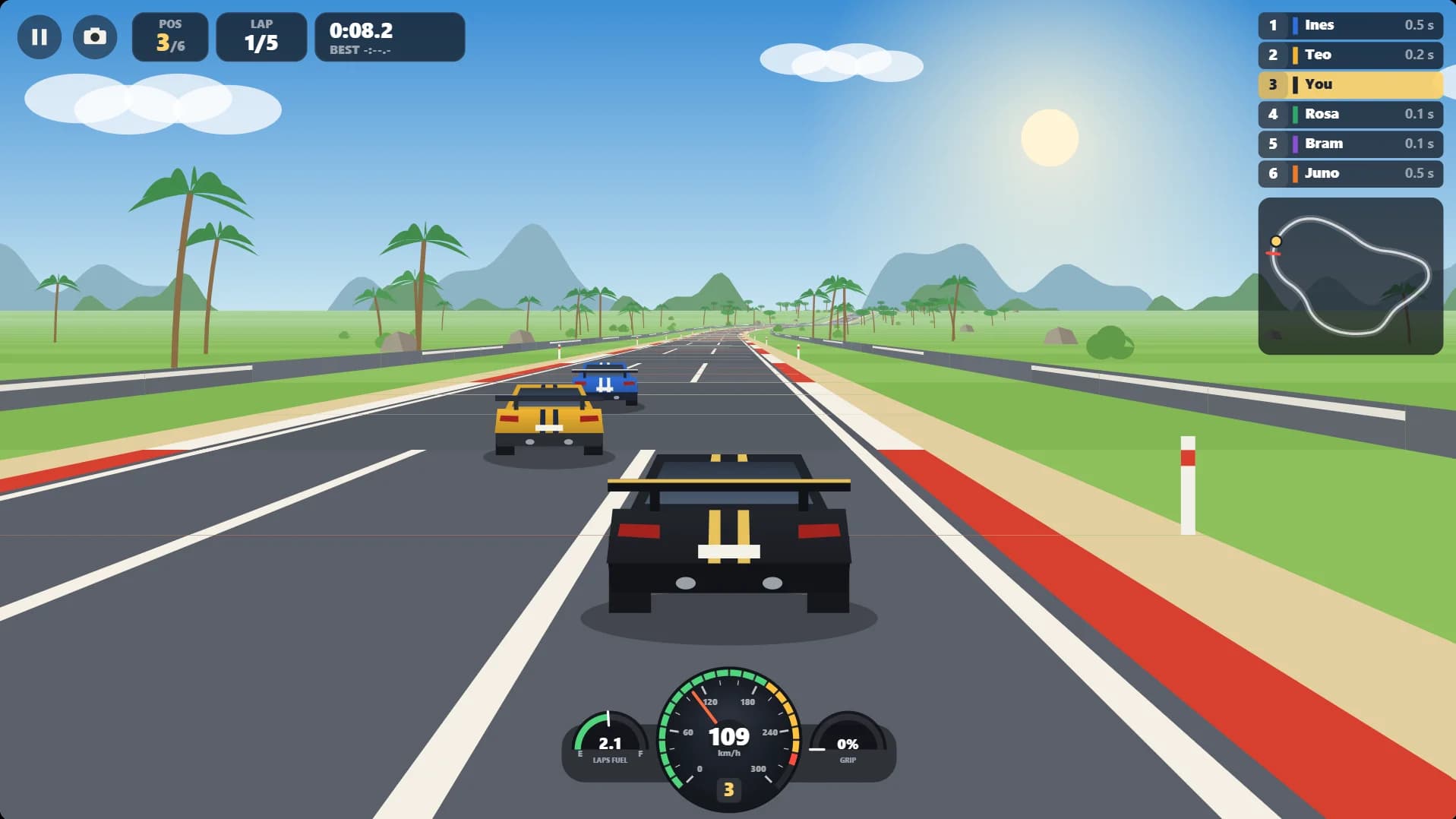
Pick the number of stops first. The fuel plan then suggests a load that lasts your longest stint. It is a safe starting point, and you can change it in 5% steps.
The plan card shows how many laps your load lasts next to your longest stint. Aim for a small margin above it, not a big one. Every extra lap of fuel is weight you carry all stint.
If the card says 'Runs dry!', your load will not reach the pit lane. Add fuel or add a stop. A car that runs out loses far more than a slightly heavy one.
One stop and two stops are often close, and the best choice changes from circuit to circuit. Race a circuit once with each, and remember which one suited it.
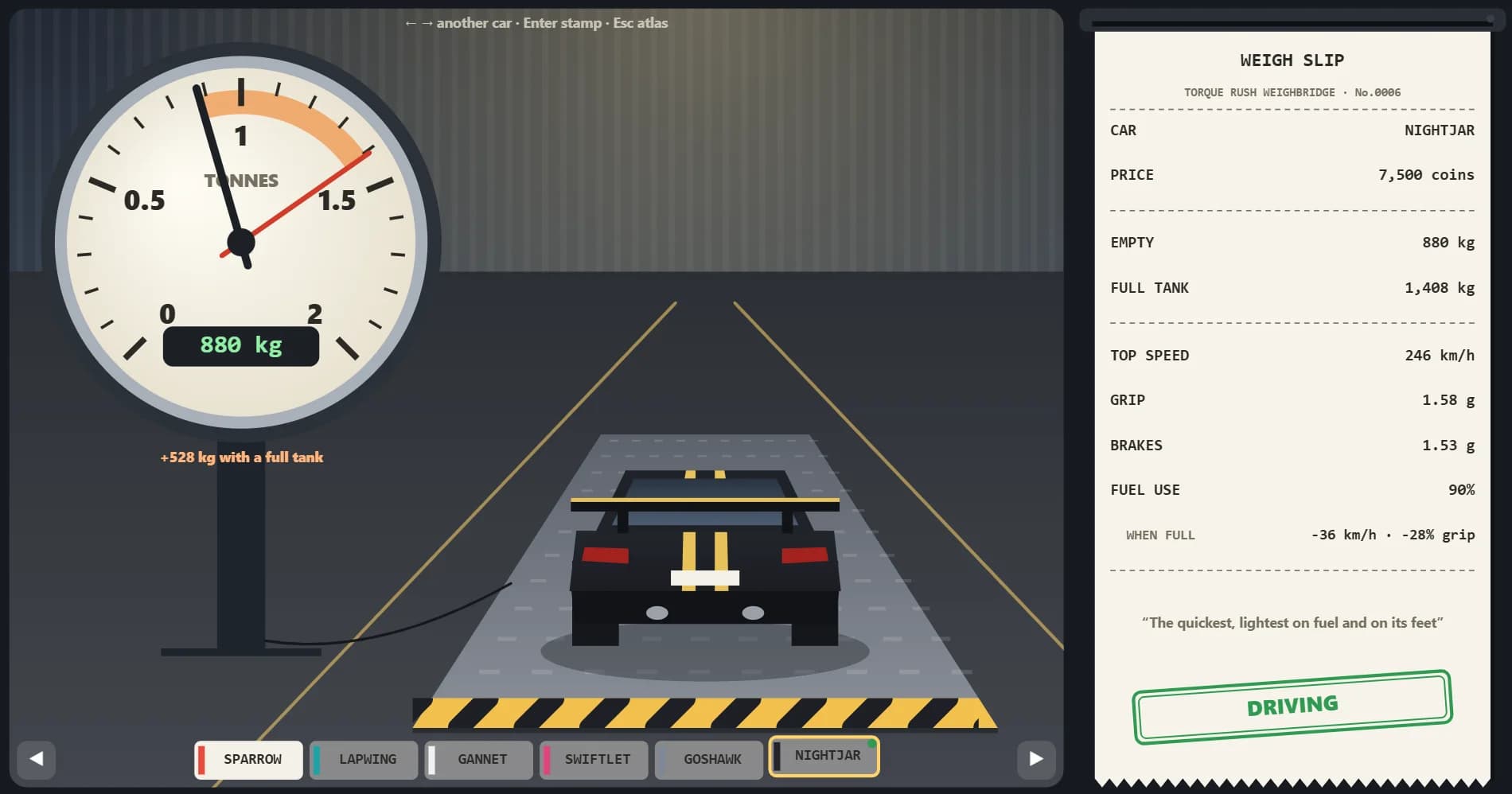
The Gannet grips hard when light but struggles when full, so it suits two stops. The Lapwing uses less fuel and carries a full tank well, which makes one stop easier. Check the weigh slip in the garage to see each car's fuel use.
On a full tank, brake earlier and turn in gently. As the fuel burns away, the car gets quicker lap by lap, so you can brake later and carry more speed.
Tapping the brake while steering hard through a fast bend starts a drift, which carries more speed through tight corners. With a heavy tank it is harder to hold, and the car tends to slide wide instead.
The grip gauge turns red when the tyres are past their limit, a sign you are too fast or too heavy for the bend. The track map shows where the next corner is and where your rivals are.
The weigh slip in the garage lists each car's top speed, grip, brakes and fuel use. Our circuits are full of corners, so a car's grip and brakes usually matter more than its top speed. That is the same lesson as torque versus horsepower: the biggest number on the sheet is not always the one that wins the race.
Quick Picks
Our games are made in-house at Unihfy Games and run in the browser with nothing to install. These ones are about speed, weight and choosing the right moment.
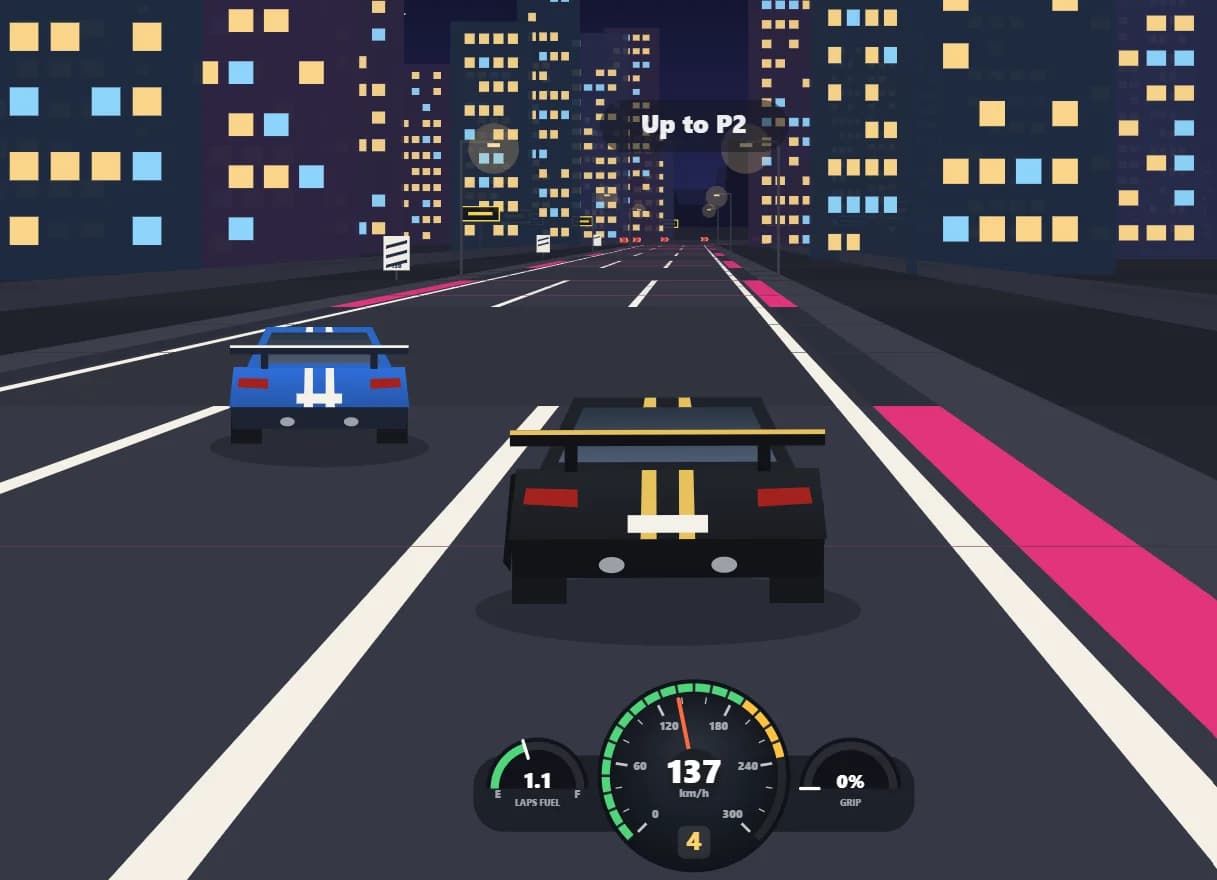
Racing
A championship car racing game where fuel is weight, and every race is decided by your pit stop plan as much as your driving.
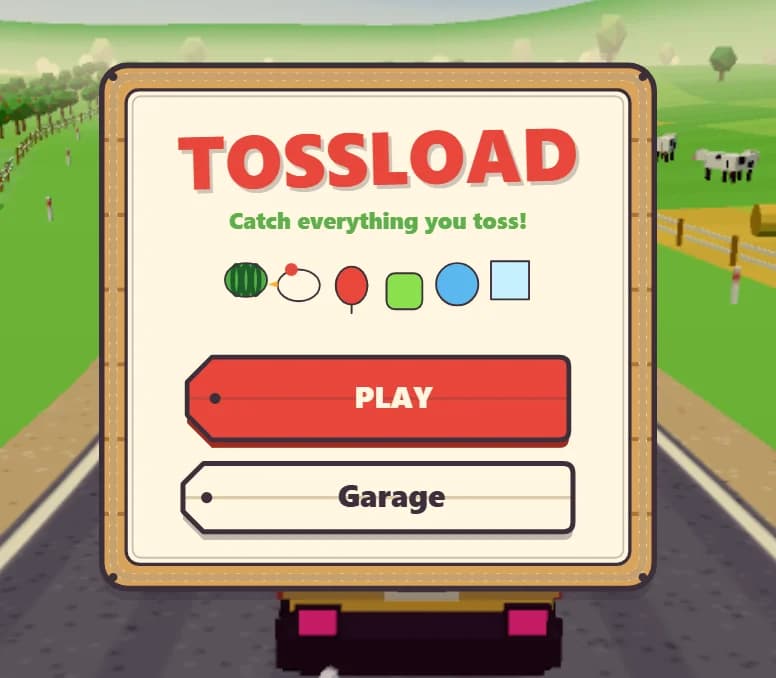
Racing
A pickup truck race where every bump tosses your cargo into the air, and you steer and brake to catch it back in the bed.
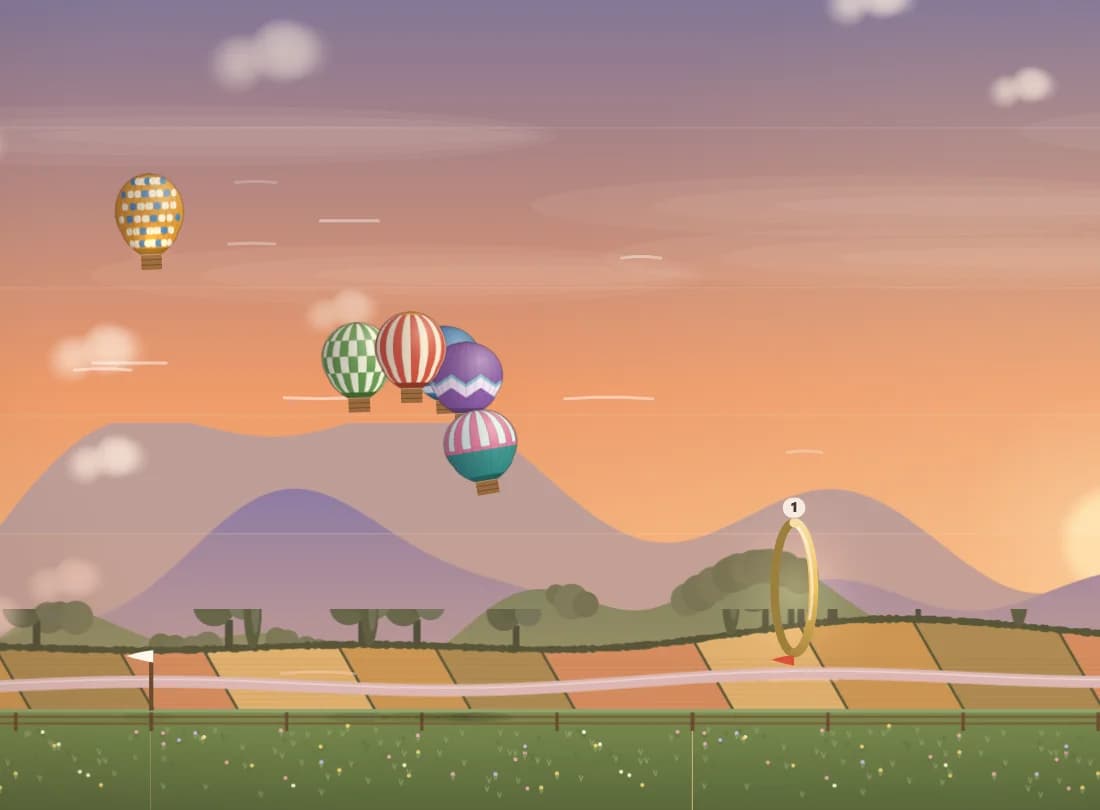
Racing
A calm hot-air balloon race where you climb and drop between layers of wind to find the fastest line.
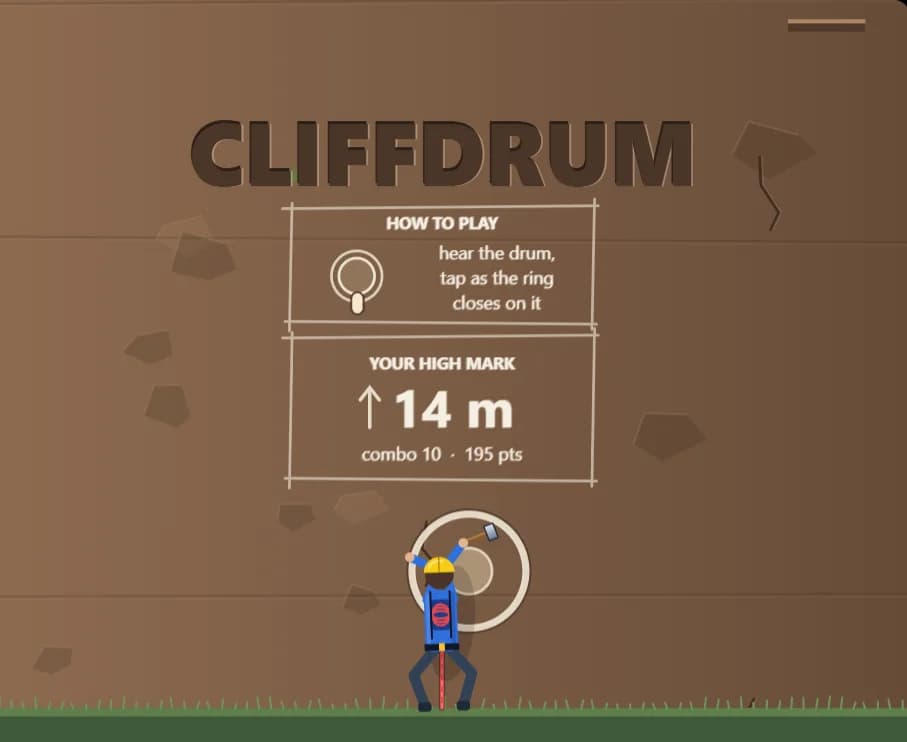
Action
A one-tap rhythm climb where every move has to land on the beat, so timing matters more than speed.
Torque is how hard an engine twists, and horsepower is how quickly it does that work; horsepower equals torque times rpm divided by 5,252. But races are not won by engine numbers alone. Weight slows a car in every corner, so fuel load is a strategy choice. Pit stops trade time in the pit lane for a faster car afterwards, the undercut and overcut decide when to make that trade, and in F1 the DRS rear-wing flap gave way in 2026 to active aerodynamics and an energy-based Overtake Mode.
Sports
Discover the psychology behind why every cricket fan suddenly becomes a coach during live matches. Explore fan emotions, match-day behavior, superstitions, heartbreaks, tactical opinions, and the fascinating culture of cricket fandom.
Sports
A hilarious and relatable ranking of cricket fans based on panic levels during matches. Explore fan psychology, emotional reactions, superstitions, heartbreaks, last-over stress, and why every cricket fan slowly transforms into a nervous wreck.
Sports
Explore the psychology and science behind last-over stress in cricket. Discover why fans panic, freeze, scream, create superstitions, and experience emotional chaos during the most dramatic moments in sports.
Sports
Explore the most painful ways a cricket match can end. From last-ball losses and run-outs to dropped catches and heartbreaking collapses, discover the psychology behind sports pain and why fans never truly recover.
Continue Exploring
Jump into browser games or challenge yourself in Quiz Arena. There's always something new to discover.