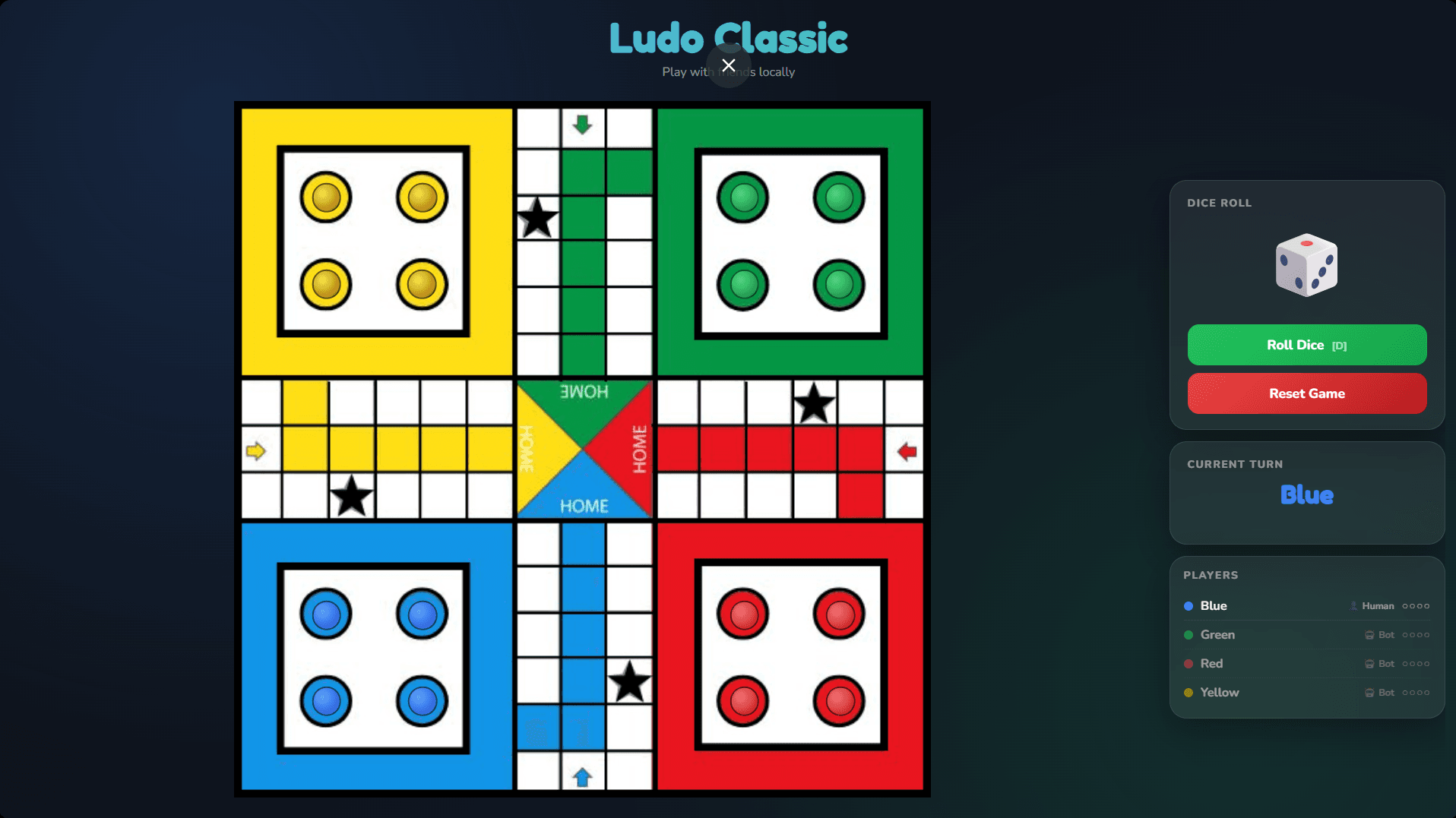
The bot follows a fixed order of priorities, not chance
When a bot has more than one legal move, it does not pick randomly and it is not simulating outcomes ahead of time either. It works down a short, fixed checklist: first, can any move land on and capture an opponent's piece? If yes, it takes the capture, always, regardless of what else is on the board. If no capture is available, can any piece reach home exactly? If yes, it takes that. Failing both, if the dice rolled a six, it prioritises bringing a new piece out of base. If none of that applies, it moves whichever of its pieces has travelled furthest around the board.
Knowing that order changes how you should play against it. A bot will never decline a free capture to protect a piece elsewhere, so leaving a token exposed near a bot is a real risk in a way it might not be against a cautious human. It also means a bot will not rush a piece toward home while ignoring an available kill - the capture always wins that comparison.
The furthest-piece rule at the bottom of the list is worth knowing too. When nothing more urgent is available, the bot consolidates progress on its lead piece rather than spreading movement evenly across all four, which tends to produce one piece racing ahead and three sitting further back.